

After our house burned down, we moved in with my in-laws. My hands were wrapped in thick, white bandages from pulling our dog out of the flames. And from the moment we stepped through the door, my mother-in-law made it clear we were not welcome.
Then she left for vacation—and handed me a task that crossed every imaginable line. What my husband did in response? Legendary.
Some people reveal their true colors slowly, like a sunset. Others? They hand you a jar and dare you to bleed for them.
My mother-in-law chose violence.
This is the story of how my husband became my hero—and taught his parents a lesson they’ll be reminded of for years to come.
My name’s Amber, and a week and a half ago, everything I owned burned to the ground.
The fire started in the middle of the night. I don’t even know how. One moment I was asleep, the next, smoke was pouring under the bedroom door. Dylan was shaking me awake, yelling at me to get out.
And then I ran back inside. For our dog, Max.
I know it was stupid. But Max was trapped in his crate, barking, terrified. I couldn’t leave him. I grabbed the crate handle and dragged it toward the door. The metal was scorching hot. My hands blistered instantly—but I didn’t let go.
Dylan pulled us both out just as the ceiling started to cave in.
At the ER, my hands were wrapped in thick white bandages. The doctor told me not to use them for at least two weeks. Maybe longer.
We had nowhere else to go. The house I’d inherited from my grandmother—the place filled with family memories—was almost gone. Everything inside destroyed.
We stood in the hospital parking lot at three in the morning, a dog at our feet, the clothes on our backs, and nothing else.
Dylan called his parents.
“Mom, our house burned down. Can we stay with you for a couple of weeks? Just until we figure things out and the repairs are done.”
There was a long pause.
“Fine,” his mother, Erin, said finally. “But only for a little while. We’re not running a hotel.”
Their house? Big. Two stories. Four bedrooms. Three bathrooms. Plenty of space.
But from the moment we walked in, Erin made it clear: we were guests on probation.
“If you’re living in our house, you cook what we like,” she announced the very first morning. “None of that spicy food Dylan’s always eating. And that dog should sleep in the garage. I won’t have fur all over my carpets.”
“And coffee in bed would be nice,” his father, Peter, added, not even looking up from his newspaper. “At least show some gratitude.”
I bit my tongue and nodded.
My hands throbbed constantly. Even holding a coffee mug hurt. But I made their coffee. I cooked their meals. I stayed quiet. Tried to be invisible.
“Just a little longer, Amber. Please. Just until the insurance comes through,” Dylan said over and over.
I loved him. I tried.
But Erin wasn’t done testing me.
She left passive-aggressive notes on the counters.
“The bathroom could use a scrub.”
“Did you remember to water my plants?”
“The living room looks dusty.”
All while my hands were bandaged.
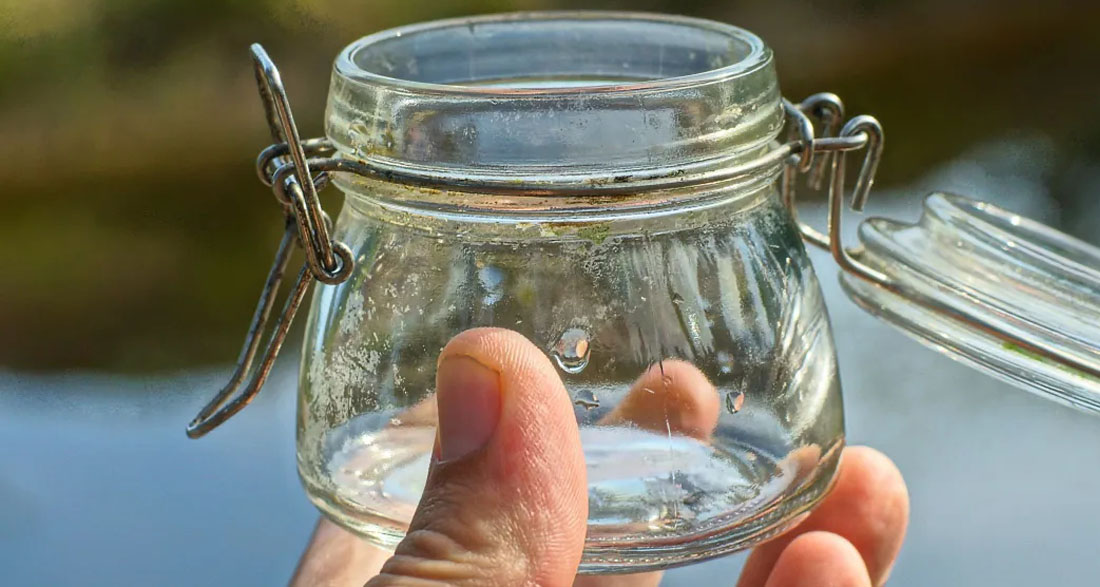
One morning, I woke up at six to make their coffee. Walking into the kitchen, I saw a note sitting on the counter next to a small glass jar.
My stomach dropped as I read it:
“To our DIL, we hid 100 safety pins around the house. This is to make sure you clean properly—every corner. Put ALL of them back in this jar. Show us how grateful you are for having a roof over your head. P.S.—We left for vacation.”
I sat on the kitchen floor and cried.
Dylan came downstairs twenty minutes later.
“Amber? What’s wrong?”
I handed him the note without saying a word.
He read it. His face went from concerned, to confused, to absolutely furious in about five seconds.
“Are you kidding me?” he growled. “Are they kidding me?”
He looked at my bandaged hands, then back at the note. “I know she’s my mother. But this crossed a line.”
He held out his hand. “Give me the jar. I’m going to teach her a lesson she’ll never forget.”
I handed it to him.
He made me sit on the couch while he paced, planning.
“They want gratitude?” he muttered. “Oh, they’ll get gratitude they won’t forget.”
He grabbed his phone and started dialing.
“Hi, yes, I need a premium cleaning service. Emergency deep clean. Today, if possible.”
He gave them the address and explained.
“No, I’m serious. My parents hid 100 safety pins. My wife’s hands are burned from saving our dog from our house fire. And they left us on a scavenger hunt.”
The cleaning crew arrived exactly one hour later: three people, supplies, cameras, very professional.
“Don’t worry,” said the lead cleaner, Maria, looking at my hands. “We’ll find every single one.”
And they did.
Pin number seven: inside the flour canister.
Pin number 23: rolled into the toilet paper in the guest bathroom.
Pin number 34: taped under the dining table.
Pin number 58: in a decorative vase on the mantle.
Pin number 67: in the utensil drawer.
Pin number 82: behind a family photo.
Pin number 91: inside a lampshade.
Pin number 100: inside the oregano jar.
They found them all in forty-five minutes.
Maria handed Dylan the invoice. “Deep clean: $400. Safety pin retrieval: $800. Total: $1,200.”
Dylan tipped them an extra $50. But he wasn’t done.
“Who does this to family?” he muttered. “Time to bill Mom and Dad. Oh, and I’m adding $200 for emotional damage. They earned it.”
Then he got creative. He made little plaques for each pin:
“Specimen #7—‘The Flour Bomb.’ Discovered in baking supplies. A passive-aggressive masterpiece.”
“Specimen #23—‘The Throne Trap.’ Found in toilet paper. Literally a crappy move.”
“Specimen #34—‘The Furniture Betrayal.’ Taped under dining table where family gathers.”
He did this for all 100 pins.
When the glass display case arrived, he arranged them in the living room like a museum exhibit.
Title card: “100 PINS OF SHAME: A Study in Elder Cruelty & The Weaponization of Hospitality.”
Subtitle: “Dedicated to DILs everywhere who deserve better.”
Then he posted photos to the neighborhood Facebook group. Caption:
“Art installation complete. Inspired by true events.
Context: house fire, burned hands, and a mother-in-law who thought up a ‘gratitude test’ forcing her injured daughter-in-law to hunt for 100 hidden safety pins to prove she was thankful for a roof over her head. #ModernFamily #PassiveAggression”
Comments poured in:
“Is this REAL?!”
“Who would do this to someone with injured hands??”
“Hi, just confirming, is this Erin and Peter’s place?”
Dylan grinned at me. “Oh, I’m not done yet.”
He went to the store. Returned with 500 safety pins.
“Returning the favor!” he muttered. He spent the afternoon hiding them:
Inside Peter’s clothes pockets. Erin’s jewelry boxes. Shoes. Slippers. Coat pockets. Drawers. Under the mattress. Pillowcases. Bathroom cabinets. Makeup bags. Towels. Everywhere.
He also moved their things: spices scattered, decorative items missing, pillows tucked away.
“They want a scavenger hunt?” he muttered. “I’ll give them a scavenger hunt.”
That evening, we packed our bags. Dylan left the original jar filled with all 100 pins, the cleaning invoice, and a note on the counter:
“Dear Mom & Dad, Found your 100 pins. All of them. Wasn’t hard when you hire professionals—which we did, since Amber’s hands are still healing from saving our dog from our BURNING HOUSE. Invoice attached. Consider it a gratitude gift.
We also added 500 more safety pins throughout your bedroom, bathroom, and car. Think of it as a scavenger hunt—your favorite! You’ll find them for months.
Maybe years. Oh, and we relocated some of your things. Happy hunting. P.S.—Check the neighborhood Facebook group. Your ‘Museum of Petty Behavior’ is quite popular. 847 shares and counting. With all the gratitude you deserve, Dylan & Amber.”
We took one last photo: Dylan pointing at the museum display, me giving a thumbs-up with my bandaged hand.
We checked into a cheap motel. Ordered pizza. Sat on the bed laughing. Max sprawled happily on the floor.
“I can’t believe you did all that,” I said.
“No one treats my wife like that. Ever,” Dylan replied, kissing my hands gently.
My phone buzzed. Contractor: repairs done early. We could move back in three days.
“We’re going home, Amber. Our home,” Dylan whispered.
Three days later, moving trucks outside our renovated house. Beautiful. Fresh start.
Dylan’s phone rang. His mom again. He declined.
“Should you talk to them eventually?” I asked.
“Eventually. When they apologize. To YOU. Not me. YOU.”
I looked around our home. The safety pins? They’re probably still finding them.
Good. Every single one should remind them: cruelty has consequences.
And gratitude? It goes both ways.