

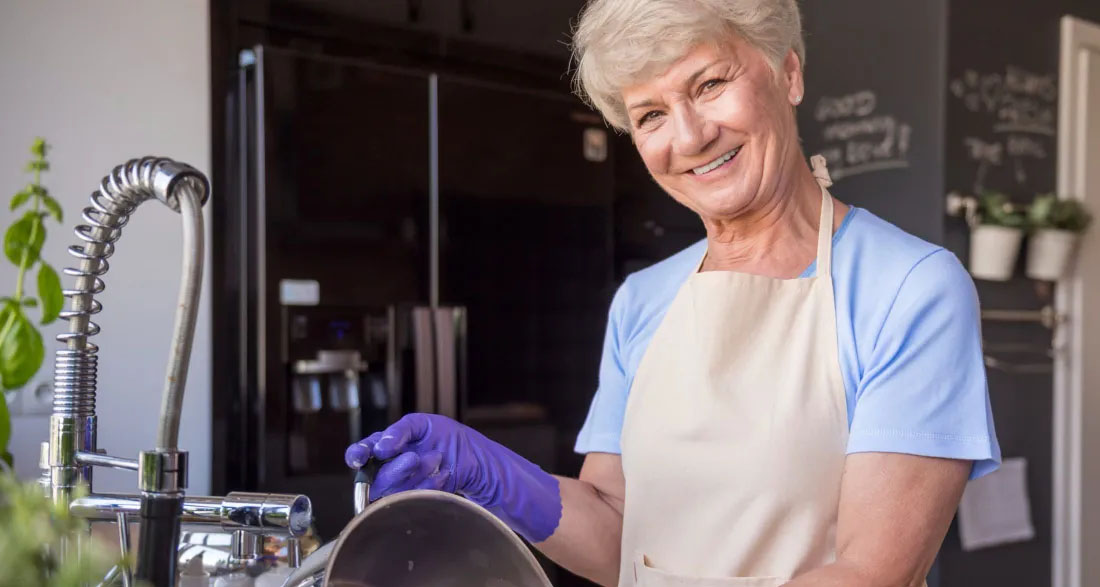
For four months, I trusted her completely—the woman who cleaned my house, folded my laundry, and even hugged my children like they were her own. Her name was Helen. She was kind, warm, and soft-spoken.
She had a way of making the chaos of my life feel manageable. But that trust shattered in a single, terrifying moment, when I finally saw what she’d been hiding under that tiny bandage on her wrist.
That’s when I realized Helen hadn’t just come into our lives to help—she had come with a hidden purpose.
I’m 38 years old, and my three little children are my world. Every decision I make, every sacrifice, is for them.
Going back to work full-time after my maternity leave had been brutal. The house was always a mess. The laundry piled up faster than I could fold it. And my three kids—bright, demanding, and endlessly energetic—needed me in ways I sometimes couldn’t give.
Some days, I was apologizing to my boss for sneaking out ten minutes early. Other days, I was promising my children I’d make it up to them for being twenty minutes late.
“I’m doing this for you guys,” I whispered one evening, tucking my youngest under her blanket. “It’s for your future. For stability.”
I knew, though, that eventually something had to give. And usually, it was me.
When the house finally went quiet at night, the weight of it all would settle over me. I’d sit on the edge of my youngest daughter’s bed, watching her sleep, and feel a heavy pang in my chest.
I’d wonder if she would grow up remembering me only as a blur of tired eyes and a phone pressed to my ear.
The thought was unbearable, especially because of how I’d grown up.
I was adopted when I was very young. Most memories of my biological mother are like glimpses through a thick fog—I can’t remember her scent, or picture her face clearly. But one image stayed perfectly sharp: a small blue bird.
I remember tracing its raised outline with my finger, the bumps under my fingertip, and a woman—my mother, I assumed—saying, “It shows my love for you—a love that will last forever.”
Except it didn’t last forever. She disappeared. My adoptive parents once mentioned she had surrendered me voluntarily, but the reasons were unclear. I didn’t want the full story. Some wounds, I decided, were easier left closed.
When I had kids, I promised myself I would never let them feel that same emptiness. I wanted to be present, truly present. But I was failing.
That’s why my husband and I contacted a cleaning agency for help. We needed someone reliable, someone to catch the things I was dropping.
The agency sent Helen.
She was 58, with soft gray curls and warm, crinkly eyes that lit up when she saw my children. On her first day, she held out a tin of homemade lemon cookies.
“Just to make a good first impression, dear,” she said with a bright smile.
Within a week, she knew exactly how my middle son liked his sandwiches cut. She could get my youngest to nap without a fuss. She became part of our household rhythm so seamlessly, I almost forgot the chaos I’d been struggling with.
Sometimes, we’d sit in the kitchen with steaming mugs of coffee, and she would tell stories about her childhood in a small town where families ate dinner together every night. I really liked her. She felt like the grandmotherly figure we were missing.
But there was one strange detail I couldn’t ignore. Helen always wore a small, flesh-colored bandage on her wrist. Every day, the same spot, never missing.
One morning, as she was drying a plate, I finally asked.
“Helen, is your arm okay? Do you need some ointment or a better wrap for that?”
She shifted subtly, covering the bandage. “Oh, it’s nothing serious, dear. Just an old wound. The skin hasn’t quite healed yet.”
I didn’t push it. People have quirks, I thought. Maybe she was embarrassed.
Four months passed. Helen became part of our lives, bandage and all. She scrubbed floors, washed dishes, and held my children in her arms, that little strip of skin always hidden.
Then came the day everything changed.
The kids were playing hide-and-seek, squealing and laughing as they dashed through the hallway. My oldest son came around the corner at full speed just as Helen was climbing the stairs from the basement, balancing a heavy laundry basket.
They collided. Towels flew everywhere, and the basket scraped her wrist, peeling back the bandage.
I rushed to help, but then I saw it—a sharp black point beneath the torn edge. Not a scab, not a scar, not a bruise. Ink.
Helen’s face went stiff, her warmth vanished, and she slammed her other hand over it.
“Watch where you’re going!” she snapped.
The hallway fell silent. My kids stared with wide eyes.
“I’m sorry, Miss Helen,” my son whispered, almost on the verge of tears.
Helen hurried into the bathroom and locked the door behind her.
I tried to tell myself it was nothing. Maybe it was just a tattoo she was embarrassed about. Maybe it was a strange mark from her past. But unease gnawed at me.
A few days later, my afternoon meeting was canceled. I went home early, thinking I’d surprise the kids with ice cream. The house was quiet, too quiet.
As I passed the guest bathroom, I noticed the door cracked open. Helen was inside. Probably cleaning, I thought, but then I saw her arm on the edge of the sink.
The bandage was gone.
My heart skipped. The black point from that day flashed in my memory. I tried not to stare. But when Helen moved her arm, I saw it.
It wasn’t a wound. Not a scar. It was a tattoo.
And it was the bird. The small blue bird I had traced with my finger as a child. The one my mother had told me represented eternal love.
I pressed my palm to my mouth, barely able to breathe. Helen wasn’t just our housekeeper… she was my mother.
The floorboard creaked, and she looked up. Our eyes met in the mirror first, then she turned to face me.
“You…” I stammered. “What is that?”
She stared at her wrist, color draining from her face.
“My mother had that tattoo,” I said, stepping fully into the bathroom. “She told me it symbolized a love that never ends.”
Helen’s hands rose in panic. “Please, I can explain.”
Just then, I heard footsteps downstairs. My husband called, “Hello? I’m home!”
“Upstairs!” I shouted.
He appeared on the stairs and froze, looking between us, confusion and alarm on his face.
“Say it,” I said to Helen. “Say who you really are.”
A single tear rolled down her cheek. “I’m your mother.”
My husband’s jaw dropped. “What? Helen?”
She nodded. “It’s true.”
“You lied to us?” he demanded.
“You left me,” I said, voice trembling. “You said you’d love me forever, then you just… disappeared.”
“I was so young,” she whispered, reaching out. “I was scared. I made mistakes I can never undo.”
“And so you applied to clean my house?” I shot back. “You held my children in your arms. You knew who I was the whole time?”
“I just wanted to be near you, and my grandchildren,” she said. “I was afraid… afraid you’d reject me if I came openly. I thought if I proved myself, I could earn a place in your life.”
“You don’t get to disappear for decades and then call yourself a ‘grandmother,’” I said.
“I was going to tell you… I wanted to, I really did,” she said.
“I’m calling the agency right now,” my husband said, stepping aside. “They need to know exactly who they placed in our home.”
“You’re fired, Helen,” I said firmly.
“Please, just let me explain everything,” she pleaded.
“If you want contact,” I added, “it will be on my terms. Therapy. Honesty. No more secrets. And you don’t come near my children again until I say so. Is that clear?”
“Yes… anything,” she whispered.
I watched her leave, a single look back at me before she got into her car.
“I do love you,” she said.
“Love isn’t something you hide under a bandage,” I said softly, closing the door.
I leaned against it, taking a long, steady breath. My husband came over, hand on my shoulder.
“You okay?” he asked.
I could hear the children playing outside, laughing and carefree. They didn’t know the world had just shifted beneath our feet.
“I’m shaken up,” I admitted. “But okay.”
For the first time in decades, the fog of my past lifted. I wasn’t the abandoned child anymore. I had built a life, a home, a family. And I would do whatever it took to protect it.