

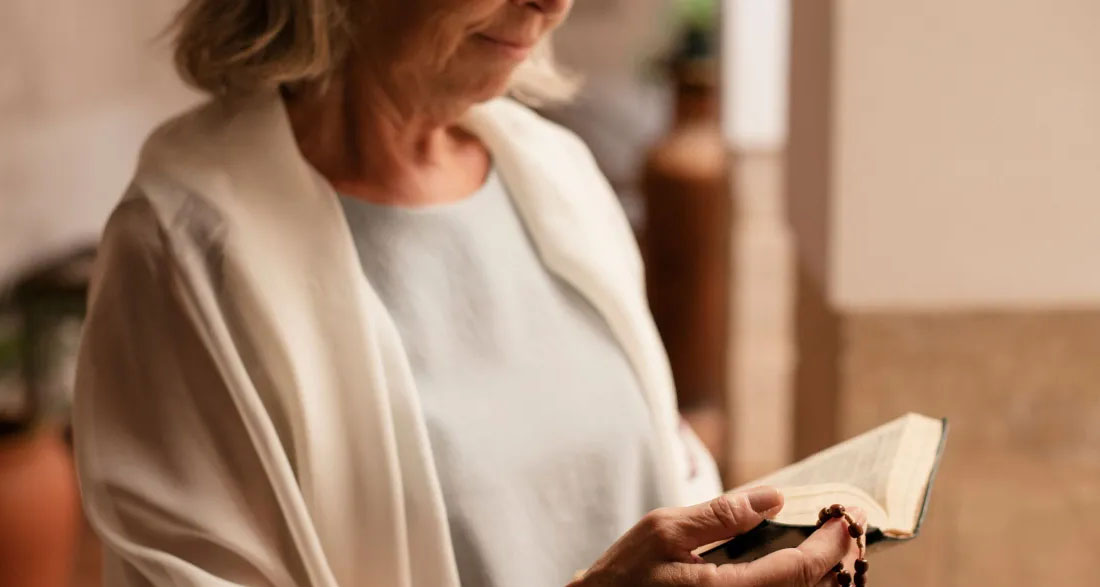
I thought I knew everything about the woman who raised me, but I was wrong. When my grandmother’s church turned its back on her, I saw a side of her I had never known.
In the days after her funeral, I learned just how far Grandma Jennifer would go to protect her truth — and how much she still had to teach me, even from beyond the grave.
I was still wearing black from Grandma Jennifer’s funeral when the lawyer cleared his throat and said, “There’s one last message Jennifer wanted played.”
Every head turned, including Pastor Milan’s.
I didn’t look down at the program in my hand. I couldn’t. My heart was hammering, and I already knew what was coming.
I’d helped Grandma record it — her last laugh, carefully planned for the church that had slowly forgotten her.
Grandma Jennifer used to call me her “truth-teller.” I was Leticia — Letty, if you wanted to be loved — too blunt for the church ladies, too loyal to let a slight go unnoticed. I always stood up when I saw wrong, and Grandma had always loved that about me.
I’d thought helping her record this message meant I’d inherit her favorite apron, or the battered Bible full of scribbled notes in the margins. I didn’t expect a front-row seat to the final showdown she orchestrated from the grave.
The room was full. Our messy, complicated family was all there. Mom and Uncle Paul avoided my gaze. Grandpa Patrick looked like he had aged a decade in six months. And, of course, Pastor Milan had the gall to sit right up front, knees crossed, hands folded like he was leading prayer himself.
If Grandma could see us, she’d be half-amused, half-annoyed. Maybe both.
The lawyer cleared his throat. “Per Jennifer’s wishes, there will be a final message before we proceed with the will.”
He pressed play on a small speaker, and the room fell silent.
I already knew what was coming. Nobody else did.
I’ll never forget Grandma Jennifer humming as she kneaded dough in the kitchen.
“The Lord doesn’t keep score, honey,” she said, glancing up from the flour. “But people do. And they almost always count the wrong things.”
She had given fifty years to that church — cooking for anyone who needed a meal, organizing funeral casseroles, raising money for the youth group, holding hands in the back pew. If there was a need, Grandma was always first in line.
I remember one Sunday I found her fixing peeling paint in the fellowship hall.
“Letty, grab me that brush,” she said, gesturing to the can.
“Why are you always the one doing this?” I grumbled.
She winked at me. “Because when you love something, you care for it — even if nobody thanks you.”
Pastors came and went. Grandma stayed, quietly doing what needed to be done.
Everything changed the year she turned seventy-three. Grandpa Patrick’s voice trembled over the phone when he called.
“There’s been an accident, Letty. She’s alive, but her back is broken.”
Hospital days blurred together. I set flowers on her windowsill one afternoon and said, “The church folks sent these.”
She gave me a thin, wry smile. “Nice of them. Did anyone come by?”
I hesitated. “Not yet. Maybe next week.”
Weeks became months. Grandma was homebound. Her pew sat empty. She called church friends and invited them over, but the visits stopped. Cards became scarce. Even Pastor Milan never came.
One night I asked her quietly, “How can they forget you so fast?”
She squeezed my hand, gentle but firm. “They’re busy, Letty. Don’t hold it against them. Love is patient.”
But I saw the hurt behind her forgiving smile, and it changed everything for me.
Last spring, the hospital bed arrived. I helped the hospice nurse fit it into Grandma’s living room while Grandpa Patrick adjusted the wooden cross by the window.
“You think she’ll like it there?” he asked, voice tight.
“She’ll love it, Grandpa. She always wanted the morning light.”
That night, I brought her crossword puzzles and Psalm bookmarks. She patted the bed.
“Sit, my Letty. Tell me everything outside these walls.”
I tried to make her laugh. “The neighbor’s dog chased the mailman again, and Grandpa finally gave up on that tomato plant.”
She smiled. “He never could keep anything alive except me.”
We watched Jeopardy! until she fell asleep. I stayed beside her longer than I needed to, pretending we still had time.
“Tell me everything outside these walls,” she had said.
Then Pastor Milan showed up. Shirt pressed, hair perfect, holding a sympathy card with the price tag still on the back. He perched on the edge of a chair and gave Grandma a thin, practiced smile.
“Jennifer, it’s so good to see you,” he said, a little too loudly.
She tried to sit up straighter. “It’s nice to be remembered, Pastor.”
He chuckled. “Oh, the church talks about you all the time. We’ve missed your spirit.”
“Is that so?” Grandpa mumbled from the hallway. “Nice of you to show it.”
They chatted about weather, old church dinners, and people who had moved away. Then Pastor Milan leaned in.
“It’s nice to be remembered. I know this isn’t easy, but many faithful members choose to remember the church in their wills. It’s a legacy that—”
Grandpa stiffened. “Pastor, this isn’t the time.”
“Of course, of course,” the pastor waved. “But Jennifer’s generosity has always inspired us. The church really depends—”
Grandma’s hand trembled. A single tear escaped, catching in the soft lines of her cheek.
“Pastor,” I said sharply, “maybe this could wait.”
Grandpa Patrick’s chair scraped the floor as he rose, towering over Pastor Milan.
“I think it’s time you left, Pastor. Now.”
“Patrick, I didn’t mean to—”
But Grandpa was already at the door, hand firm on the pastor’s elbow. “You heard me. That’s enough for today.”
The door clicked shut. For a moment, I sat there, numb. Then I heard a quiet, shuddering sob. I turned and saw Grandma’s shoulders shaking, face hidden in her hands.
I rushed to her side. “Hey, it’s okay. I’m right here.”
“I never… I never thought they’d treat me like this, Letty. Not after all those years,” she whispered.
I squeezed her hand. “They don’t deserve you, Grandma. Nobody’s going to forget what you did. Not while I’m around.”
She wiped her eyes and gave a small, tired smile. “You’re a good girl, Letty. Maybe too stubborn for your own good.”
I snorted. “Guess I learned from the best.”
She laughed softly, almost herself again.
That night, after Grandpa went to bed, she called me back into the living room.
“Letty,” she said, soft. “Will you help me with something?”
“Anything. You name it.”
She glanced toward the kitchen, making sure Grandpa couldn’t hear.
“I want to record a message, my dear. For the funeral. In case I don’t get to say everything I want.”
I hesitated, then nodded. “Of course, Grandma.”
She took my hand. “Promise you’ll play it, no matter what?”
“I promise.”
And that’s how we began.
“Promise you’ll play it, no matter what?”
She wrote her thoughts in careful, trembling script, then insisted on doing it in one take. I held the phone while she looked straight into the camera — tired, pale, unflinching.
“If you’re hearing this,” she began, “then I’m with the Lord. And if the pastor who asked me for money while I was dying is in this room, I pray he listens harder than he ever prayed.”
She paused, catching her breath.
“I loved the Lord, and I loved this church. But I didn’t need your fundraising speech. I needed a hand to hold. A hymn. A visit. I needed to be remembered before my funeral.”
I wiped a tear. “Grandma, that’s enough,” I whispered.
She shook her head. “They need to know, Letty. Sometimes the truth is the only thing that lingers.”
Grandma Jen survived another eight months. The hospice nurse called it stubbornness. I think it was unfinished business.
When she passed, the church sent flowers, and Pastor Milan called twice to offer “condolences and logistical help.” I didn’t answer.
“They need to know, Letty,” I whispered to myself.
Her funeral was packed. Faces from childhood picnics, Sunday bake sales, neighbors and friends — all sharing stories about Grandma’s pies, her endless Christmas cards, her warm hugs.
“Jennifer was the heart of this place,” Mrs. Dalton whispered, dabbing her eyes.
Grandpa and I held hands as people called her “faithful” and “generous.”
Then Pastor Milan stepped forward. Smooth, polished. “Jennifer served with a heart open to all,” he said. “Her life was a lesson in selfless giving.”
I bit my tongue. He didn’t say a word about hospice.
A few days later, we gathered at the lawyer’s office. Family buzzing, nerves high. Pastor Milan slipped in, acting like he belonged.
The lawyer cleared his throat. “Per Jennifer’s wishes, there will be a final message before we proceed with the will.”
Grandma’s voice filled the room:
“If you’re hearing this, then I’m with the Lord. And if the pastor who asked me for money while I was dying is in this room, I pray he listens harder than he ever prayed. I loved this church, but love is what you do, not just what you say.
When I was strong, I was surrounded. When I was weak, I learned who showed up — and who just remembered the collection plate. Let the people who serve from the heart be the ones we honor. That’s my last request.”
The lawyer paused, then added, “Jennifer’s estate funds a hospice volunteer scholarship in her name. The church is not a beneficiary.”
A silence heavier than grief filled the room. Pastor Milan gathered his things and left without looking back.
Grandpa whispered, “That’s my Jen,” and finally, for the first time all day, he smiled.
Later, I found Grandpa on the porch, coffee cold in hand. The porch light cast a pale circle around him, and for a moment, he looked smaller, grief hollowing him from the inside.
“She really did it, huh?” he said, almost smiling. “Your grandma never did anything halfway.”
I sat beside him. “She made sure nobody could rewrite her story.”
He looked at me. “You kept your promise.”
I pulled Grandma’s silver bracelet from my pocket, the one she wore to every church dinner and nearly every Sunday service. Cool against my palm, it felt like her hand again.
“Before she passed, she told me, ‘Letty, don’t ever let anyone make you feel small for speaking up.’”
Grandpa squeezed my shoulder. “You did her proud.”
We sat together, listening to the quiet night, crickets chirping, the soft creak of the porch swing.
“You kept your promise,” he said again.
Grandma had loved that church. Maybe part of her always would. But what stayed with me that night wasn’t the building or the people who had failed her. It was her voice. Her courage. Her truth.
And I knew I would tell it, always.