

I never imagined that a simple trip to Walmart could turn my life upside down. It was supposed to be just another ordinary day — pick up some groceries, maybe a new pack of socks, and be home before the afternoon heat made the air stick to your skin.
At sixty-three, I’d learned that life rarely delivered surprises that were actually good. I liked my quiet routines, my calm nights, and my predictable days. My beard had more gray than black, my face told stories I didn’t always want to remember, and my biker vest had seen more miles than I cared to count.
But that morning, standing in the cereal aisle with the mixed smells of floor cleaner and sugar filling my nose, life threw me a curveball I could never have expected.
Then I saw her.
She couldn’t have been more than six, a small whirlwind of blonde curls tangled from running, pink shoes scuffed and half untied, tears streaking her little face. She grabbed onto my vest as if it were a lifeline, and I felt the weight of her fear in those tiny hands. “Please,” she whispered, voice trembling, “pretend to be my dad.”
I froze for a heartbeat. My mind raced. Maybe she was just lost. Maybe her real dad was around the corner, and she’d panicked. But before I could say anything, a harsh, angry voice cut through the aisles. “Addison! Where are you, you little brat!”
My instincts kicked in. The ones that had kept me alive through street fights, motorcycle crashes, and countless dumb mistakes. They told me danger had walked into the store. And it was close.
Addison — that’s what she told me her name was later — pressed herself against my side, shaking so hard I could feel it through my vest. She wasn’t just scared; she was terrified. Not the kind of fear that comes from being lost, but the kind that comes from knowing the consequences if you’re found.
I put a hand on her shoulder, trying to steady her. “It’s okay, kid,” I murmured. “You’re safe right here.”
When the man turned the corner, everything clicked. He wasn’t huge, but the raw anger in his eyes made the air feel thick. He looked at Addison like she was property, then at me — and I saw the flicker of recognition that told him he’d lost control.
“Who the hell are you?” he barked, stepping closer.
Before I could answer, three of my old brothers from the bike club appeared behind me. They’d seen the whole thing from the next aisle and didn’t need an explanation. One glance and we all knew what to do. Leather vests creaked as they fell into place beside me, silent and solid.
The man’s bravado faltered. Shoppers had stopped, phones raised. I calmly pulled out my phone and hit speaker. “Yes, I’m at the Walmart on Route 19. There’s a child here saying she’s in danger. The man she’s afraid of is right in front of me.”
The operator asked a few questions. I kept my eyes locked on him. The instant he realized he wasn’t in control, he bolted — knocking over carts, slamming into displays — and disappeared.
Addison stayed pressed against me, clutching my vest like armor. She didn’t move until police arrived. Even then, she didn’t let go. Officers took statements, asked questions, and two of them drove to her home. One came back minutes later on the radio: her mother was alive but hurt, unconscious when they found her.
Addison’s small voice broke when she heard the news, trembling with relief and heartbreak all at once. She cried so hard it shook her little frame.
Child Protective Services arrived soon after, soft voices and clipboards in hand. But Addison wasn’t ready to leave. Every time someone tried to take her hand, she hid behind me. Finally, one caseworker sighed. “Maybe she’d feel better if you stayed for a bit.”
So I did. My friends did too.
That “bit” stretched into hours, then days, then weeks. We went to visit her mother in the hospital, sat with her during police interviews, and endured courtrooms that felt enormous to someone so small. Eventually, it was decided that until her mom recovered, Addison would stay with someone she trusted — me.
I wasn’t exactly prepared to be a temporary guardian for a six-year-old. My house smelled like oil and leather, not pancakes and cookies. Motorcycle parts cluttered the kitchen table more than plates.
But when she walked through the door with a backpack and a stuffed rabbit missing an ear, something inside me shifted.
My wife, bless her heart, took to Addison immediately. She made heart-shaped pancakes and showed her how to braid her hair.
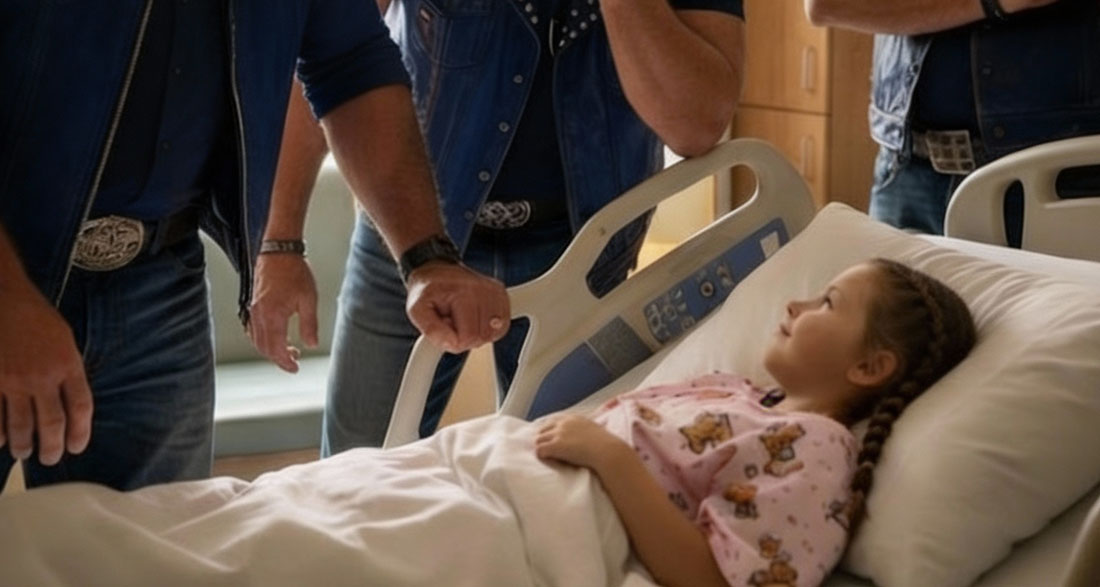
My biker friends, the same rough men people crossed the street to avoid, came by with coloring books and taught her card games. Addison called us “the motorcycle men,” and for the first time in years, laughter filled the house.
The nights were the hardest. She’d wake screaming, calling for her mom, shaking like the world was ending. I’d sit beside her bed, whispering, “It’s okay, you’re safe. No one can hurt you here.” Every time broke something inside me, but it also built a new kind of protectiveness I thought I’d lost.
Months passed. Her mother healed. Bruises faded. Strength returned. The day Addison went home, she clung to me, whispering she didn’t want to forget us. I told her she never would — and I meant it.
We thought that was the end. But life had more in store.
Seven years later, Addison is thirteen. Taller, stronger, curls still wild. She visits every month, sometimes more.
She roars down the street in her mom’s new husband’s old truck, jumps out, and runs into my arms. “Grandpa Bear!” she yells, a nickname she made up when she was eight because I “look like a bear but give the best hugs.”
Every visit is a celebration. She bakes cookies with my wife, leaves drawings on the fridge, and listens on the porch to our old biker stories. My friends still come by, and she greets each like family.
Her mom remarried a good, steady man. Addison has friends, hobbies, and a smile that lights up a room. But she never forgets where her life changed. Sometimes she asks me to retell the Walmart story. I always do, seeing gratitude, strength, and pride in her eyes each time.
We didn’t just protect a little girl that day. She changed us.
After that, the guys and I started charity rides — helping shelters, supporting families like hers. People stare at our leather, tattoos, and scars. But when they see Addison smiling between us, the looks change. They see that even the roughest men can be gentle.
Sometimes I think how easy it would have been to miss it all. A different aisle, a skipped stop, ignoring that tiny hand. But I didn’t. I stopped. I looked. And that one choice changed both our lives.
Addison still calls when she’s had a rough day, when school or boys or life feels overwhelming. I don’t always have the answers, but she says just hearing my voice helps. My wife jokes I’ve turned into a soft old teddy bear. Maybe she’s right.
When the guys and I ride, wind in our faces, engines growling, I think about her. About how fear became trust, and trust became family. One ordinary trip to Walmart became an extraordinary story.
People still cross the street when they see us. Tattoos, vests, scars — they think they know us. Addison knows better. She knows hearts can beat for something bigger than the open road.
She taught me that.
And every time she runs into my arms, laughing and yelling, “Grandpa Bear!” I remember that sometimes the toughest people are the ones who care the most. Sometimes the world gives you family in the strangest ways.
And sometimes, all it takes to change a life — or two — is a tiny hand reaching out in the middle of a Walmart aisle.