

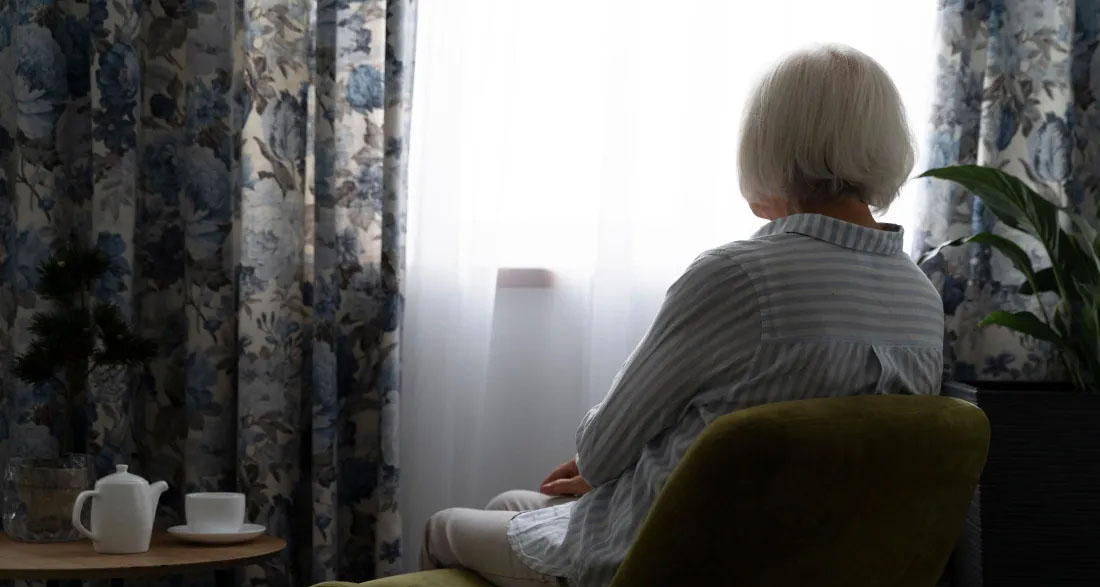
On a quiet Sunday morning, Tom made a choice that changed everything for his family. It was a choice between loyalty and love, between comfort and kindness. And in the stillness of that morning, he realized some ultimatums don’t just shake a home—they reveal who we really are.
The morning should have been peaceful. Pancakes on the griddle, the sweet smell of honey and bergamot from fresh tea, the faint sound of church music drifting from a neighbor’s window. Ordinary. Forgettable.
But it wasn’t.
It was the morning I broke my mother’s heart. The morning my wife looked at me and didn’t recognize the man she married. The morning everything changed.
Mom—Edna, though no one called her that except when selling something—sat quietly in the passenger seat. Her blue cardigan, frayed at the cuffs, was neatly folded around her wrists. She hadn’t spoken since we left the house.
The heater hummed softly. Outside, joggers passed, coffee shops were shuttered, and the lake glimmered in the distance. The world was calm, almost too calm. Too heavy with unsaid things. Every breath inside the car felt borrowed.
“Okay, Mom?” I asked gently.
She just looked out the window, blinking slowly, like someone being wheeled into surgery.
Three months ago, Mom had fallen outside her apartment. An icy curb, a shattered hip, a neighbor who didn’t call for help. She dragged herself inside, alone. That’s when she moved in with us.
It made sense at first. Just a few weeks, I told myself. Six at most. My wife Jenna, our daughter Mila, and I would be right there whenever she needed us. That was the plan.
But healing doesn’t follow a schedule. Slowly, it became clear that Mom’s recovery was taking longer. And Jenna’s patience? It slipped the moment Mom set her walker down in the hallway.
“She’s still using that thing?” Jenna asked one evening, arms crossed, leaning against the doorway. “She barely puts weight on it.”
“She needs it, Jen. Her hip was shattered. She’s not faking it.”
“I’m not saying she’s faking, Thomas,” Jenna said, rolling her eyes. “I just think she likes the attention. And anyway, I should be focusing on Mila, not your mother. Mila deserves my attention, not someone who can do things for herself.”
Her words cut sharper than I expected. I wanted to argue, to defend Mom, but the truth was… sometimes I was exhausted. Caring for Mom wasn’t hard, but after a long day of work, running after her drained me in ways nothing else did. And yet, I didn’t mind it. This was how I gave back for all she had done for me.
At first, Jenna’s remarks were subtle, little digs about crumbs on the rug, sighs when the TV was too loud. But Mom heard them all.
Soon, she began shrinking under their weight. Whispering apologies, refolding laundry three times, turning the TV down so low she needed subtitles. She smiled, but it was tight around the edges. She made herself smaller, quieter, less visible.
“I just don’t want to be a nuisance, honey. That’s all, Tom,” she whispered one evening. “I know the weeks feel long.”
And I let it happen.
I told myself I was keeping the peace. That things would settle once Mom healed. But peace built on silence never lasts.
One night, Jenna slammed a kitchen cabinet so hard a mug rattled inside. Her shoulders were tense, her hands wet from a plate she hadn’t finished scrubbing.
“I’m done playing nurse, Tom,” she said, back to me.
“Jenna—”
“No, let me speak. Either your mother moves out, or I do.”
I stepped back, needing the counter to lean on.
“She’s still healing,” I said. “Come on, Jen. You know what the doctors said.”
“And I’m losing my sanity,” she snapped. “I can’t pretend this is okay. Do you seriously expect me to run after your mother all day instead of our daughter?”
“You’re making it harder for her to be here,” I said, quieter now.
“Don’t turn this on me. I’ve done everything I can, Tom. I didn’t marry you to become her live-in caregiver.”
Then came the words I couldn’t shake:
“Choose. Choose between her and us, Thomas.”
I barely slept. Lying in bed, I stared at the ceiling, every creak of the house a judgment. By dawn, I knew my answer. And it broke me.
By morning, I had packed Mom’s things. She didn’t protest. Quietly, carefully, she folded sweaters, lined her medication along the suitcase edge like a soldier preparing for inspection. Hands trembling, she didn’t look at me.
“I’ll be fine, honey,” she said softly. “Let’s not upset Jenna. No need to make a scene.”
I nodded, throat tight. Mila’s bedroom door stayed closed, the flicker of her lamp beneath the frame a silent witness.
In the car, I tucked the blanket over Mom’s lap like she used to do for me when I was sick.
“She didn’t mean it,” I said softly.
“She did,” Mom replied. “But people say things when they’re stretched thin.”
“No, Mila hasn’t said that,” I admitted.
“People say things when they’re stretched thin,” Mom repeated, her eyes returning to the window.
When we arrived at the quiet neighborhood, Mom stiffened at the sight of a small cream house with blue shutters.
“Why here? Why here, Thomas?!”
I opened the car door, smiling softly.
“Tom… this isn’t a nursing home, is it?”
“No, Mom. I couldn’t do that to you. This is yours.”
I pulled out the small silver key. It felt heavy, carrying all the choices I had held in my heart.
Inside, it smelled of fresh paint and clean linen. Wide hallways, no stairs. The blue-and-gold tea box waiting on the counter, Mom’s favorite. A lightweight cane stood by the wall, tag still attached.
“This isn’t your home, honey. So, why are we here?” she whispered.
“I rented it,” I said. “Six months at least. I used my savings. I’m thinking of renewing, maybe even buying it. We’ll sell your apartment—the money will help.”
“You would do that for me?” she asked, hand over her mouth, astonished.
“Yes. You deserve a home where you feel safe and wanted.”
She reached for my arm, shaking.
“I thought you were bringing me somewhere to get rid of me.”
“I would never. Not to you.”
Tears streamed down her face. “I didn’t expect this, honey. Not from anyone.”
What she didn’t know was that I had packed my own bag too. A small duffel, my laptop, and Mila’s drawing of our family taped to the fridge. I left a note for Jenna: no arguments, just the truth.
“I’m not choosing between my family and my mother. I’m choosing basic human decency. I’ll fetch Mila after school tomorrow. She deserves her grandmother.”
The next three days were simple. Warm. Healing. Movies, homemade soup, porch talks while Mila told us stories about her classmates. Mom laughed. Mila held her hand as she fell asleep.
Finally, Jenna called. Hesitant, small, apologetic.
“Tom… I was wrong. I was cruel. I was scared.”
“We’ll come home,” I said. “But you need counseling. What you did to my mother wasn’t okay. We need to fix this.”
“I’ll do it,” she whispered. “I want us back. I want you, Mila… even your mother around. But at a distance.”
And we didn’t go back right away. Not until I saw my mother laugh again, until Mila fell asleep holding her grandmother’s hand. Until I remembered what love sounds like when it isn’t tiptoeing around fear or anger.