

I grew up invisible in my own home.
Not ignored in an obvious, dramatic way. Not shouted at. Not abused. Just… unseen. I was an afterthought in my father’s second marriage, a shadow that moved quietly along the walls while everyone else stood in the light.
So years later, when my stepmother died, no one was more shocked than I was to learn what she had left me.
When the lawyer slid the envelope across the large mahogany desk, my palms turned clammy.
The wood was polished so perfectly I could see my pale reflection staring back at me. I had expected a simple will reading. Something quick and formal. A polite goodbye to a woman I had not spoken to in decades.
What I did not expect was to walk out as the sole heir of a three-million-dollar house that didn’t even feel like it belonged in my world.
But before I tell you about the inheritance that shattered every relationship I thought I had severed years ago, I need to take you back to the moment when everything in my life first split in two.
I was ten years old when my mother died.
One day she was there, humming softly in the kitchen while stirring her famous chicken soup. I can still hear the spoon clinking against the pot. I can still smell the garlic and herbs in the air. She looked over her shoulder and smiled at me.
“Dinner’s almost ready, sweetheart,” she said warmly.
And then, almost without warning, she was gone.
An illness swept through our lives like a thief in the night. Quick. Merciless. Final.
After her funeral, the silence in our house became unbearable. The walls felt too big. The rooms echoed. My father and I would sit across from each other at the dinner table, pushing food around our plates.
“We’ll be okay,” he whispered one night, his voice breaking. “It’s just us now.”
We clung to each other like survivors of a shipwreck, floating in a sea of grief.
Two years later, he remarried.
Her name was Helen.
To outsiders, she was elegance personified. Immaculate hair. Pressed suits. A faint trace of expensive perfume that followed her everywhere. She walked like she belonged in every room she entered.
But to me?
She was a wall.
I remember the first night she came into our home. She didn’t come alone. She brought her three children: Lisa, Emily, and Jonathan.
They were loud. Confident. Territorial. Like a pack of wolves stepping into new territory and immediately claiming it as their own.
“This is Anna,” my father said proudly, resting his hand on my shoulder. “My daughter.”
Lisa, the oldest, looked me up and down slowly. Her lip curled into a smirk sharp enough to cut skin.
“She’s… quiet,” she said, raising an eyebrow.
“She’s shy,” Helen corrected smoothly, her smile polished but her eyes cold. Then she leaned toward me slightly. Her voice sounded sweet, but there was something dismissive underneath it. “You’ll get along with my kids just fine if you try, won’t you?”
“I… I’ll try,” I whispered.
But even at ten years old, I knew the truth.
I was already an outsider in my own home.
From that day on, dinner became a stage. But I had no lines.
The spotlight was always on Helen’s children — their piano recitals, their sports trophies, their perfect report cards.
“Lisa got first place again,” Helen would beam.
“Emily’s teacher says she’s gifted,” she’d announce proudly.
“Jonathan scored the winning goal,” she would add, clapping her hands in excitement.
And me?
I sat at the edge of the table, invisible. If I spoke, no one noticed. If I stayed quiet, no one cared.
My father tried, sometimes. He would glance at me and ask softly, “How was school, Anna?”
“Fine,” I would say.
And that was it. The moment passed like smoke.
When I turned eighteen, the weight of it all finally broke me.
By then, my father had already passed away. His death felt like losing the last piece of ground beneath my feet.
One night, I stood in my room, staring at the suitcase on my bed. My hands were shaking as I zipped it closed.
“I can’t do this anymore,” I whispered to myself.
Leaving meant cutting ties with Helen. With her children. With the house that never felt like home.
I walked out without a backward glance.
I never imagined I would hear her name again.
Until the day I learned she was gone too.
And that’s when the real story began.
Fast-forward nearly twenty years.
By thirty-eight, I had rebuilt myself into someone unrecognizable from the lonely teenager who once slipped out of Helen’s house.
I had a husband who adored me. A steady job that kept me grounded. A home that finally felt safe. Warm. Mine.
The ghosts of my childhood rarely visited anymore.
But that night, they came knocking.
I had just dragged myself home from work. My heels hit the floor with a dull thud as I kicked them off by the door. My bag slumped onto a kitchen chair. I reheated leftovers in the microwave, watching the plate spin in tired silence.
The quiet felt like a balm.
I poured myself a glass of water, sat at the table, and finally let out a deep breath.
Then my phone buzzed.
An unfamiliar number flashed across the screen.
I almost ignored it.
Bill collector? Telemarketer? Wrong number?
But something — intuition, fate, maybe dread — made me swipe to answer.
“Hello?”
“Is this Anna?” The voice was calm and professional.
“Yes…”
“My name is Mr. Whitman. I’m an attorney. I represent your stepmother, Helen.”
The fork froze halfway to my mouth.
My throat closed.
I hadn’t heard her name spoken out loud in years. It felt like a ghost whispering through the phone.
“Helen?” My voice cracked.
“Yes,” he said gently. “I’m very sorry to inform you… Helen has passed away. And I need you to attend the reading of her will.”
The air in the room changed. Heavy. Tight.
“I… I haven’t spoken to Helen in decades,” I blurted. “Why would you be calling me?”
“I can’t discuss details over the phone,” he replied calmly. “But your presence is required.”
Every instinct told me to hang up.
But curiosity wrapped its claws around me.
After a long pause, I whispered, “Alright. I’ll come.”
“Good,” Mr. Whitman said softly. “You might be surprised at what Helen left behind.”
The following week, I drove to the law office with my hands gripping the steering wheel so tightly my knuckles turned white.
The old brick building stood tall and formal. Brass handles gleamed at the entrance.
“You can do this,” I whispered to myself before stepping out.
Inside, the air smelled of polished wood and faint cologne. The receptionist led me down a carpeted hallway into a conference room.
And there they were.
Lisa.
Emily.
Jonathan.
Lisa noticed me first. Her arms were crossed tightly over her chest.
“Well, look who showed up,” she muttered.
Emily barely glanced up from her phone, chewing gum loudly.
Jonathan leaned back in his chair and muttered, “Unbelievable.”
I took a seat at the far end of the mahogany table. No greetings. No smiles.
I was still the intruder.
Mr. Whitman entered with a leather folder tucked under his arm.
“Thank you all for coming,” he began. “We are here today to read the last will and testament of Helen.”
The room fell silent.
He adjusted his glasses and began.
“To my stepdaughter, Anna, I leave my residence on Lakeview Drive, valued at approximately three million dollars.”
For a split second, no one breathed.
Then chaos exploded.
“What?!” Lisa shot to her feet, her chair screeching. “That’s ridiculous! She must have forged it!”
Jonathan slammed his hands on the table. “Why would Mom leave you anything? You weren’t even family!”
Emily threw her phone down. “This reeks of manipulation. What did you do, Anna?”
“I didn’t do anything,” I whispered, but my voice barely came out.
Mr. Whitman raised his hand. “Please let me finish.”
He continued.
“As for Helen’s biological children — Lisa, Emily, and Jonathan — each of you will receive a bequest of four thousand dollars.”
The silence shattered again.
“Four thousand?!” Lisa shrieked. “That’s an insult! She spent more on a handbag!”
“She lost her mind!” Jonathan shouted.
“This is your fault!” Emily snapped at me. “She despised you for years!”
I sat frozen. I had no answers.
I truly did not know why Helen had chosen me.
After the meeting, I drove straight to Lakeview Drive.
When the wrought-iron gates opened, my breath caught.
The mansion stood tall and stunning. Ivy curled up stone walls. Sunlight blazed against tall windows.
“This… this is mine?” I whispered.
Inside, everything was immaculate. The grand staircase curved beautifully. The air smelled faintly of lavender polish.
Drawn by instinct, I walked into her study.
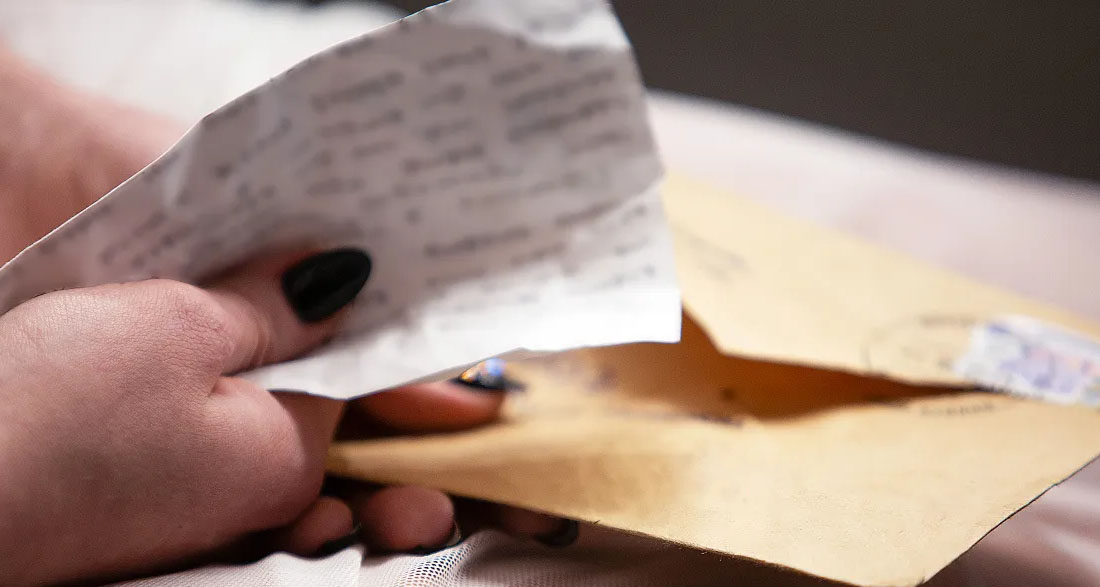
A sealed envelope sat on the desk.
My name was written in her elegant handwriting.
My hands trembled as I opened it.
“Dear Anna,” it began. “If you are reading this, then my time has passed…”
She wrote about her children’s distance. Their hunger for money. She admitted her failures. Her coldness.
And then she wrote about me.
“You were quiet, excluded, yet resilient. I admired you for it. Leaving you this house is not about money. It is about giving you something I denied you when you were younger: a place where you belong.”
I broke down.
For years, I believed she had never seen me.
But she had.
Maybe too late.
But she had.
Her children didn’t accept it.
Lisa posted online: “She manipulated our mother!”
Jonathan left angry voicemails: “We’ll fight this until it’s overturned!”
Emily whispered to relatives, “She preyed on her when she was weak.”
But the will was airtight.
The house was legally mine.
At night, I stood by the lake, staring at the moonlight on the water.
“A place where you belong,” I whispered.
And for the first time in decades, I believed it.
I didn’t flaunt the inheritance.
I didn’t change who I was.
I turned one upstairs room into a library. Shelves filled with books I once borrowed from libraries because I couldn’t afford to own them.
On weekends, I cooked warm dinners for friends.
Laughter filled halls that once held silence.
Eventually, the fighting stopped. They couldn’t change the will.
Sometimes I sit by the lake with her letter in my lap.
I think about my father. He had asked Helen to look after me.
She admitted she failed.
But in the end, she tried to make it right.
One evening, as I placed the letter back in the drawer, my husband stood in the doorway.
“You still read it every night,” he said gently.
“Yes,” I answered softly.
“Why?”
I traced Helen’s handwriting with my fingers.
“Because every time I do,” I said, my voice steady now, “I believe her words a little more.”
And finally, after a lifetime of feeling invisible, I understood something powerful:
I was never nothing.
I was simply waiting for someone to say—
“You belong.”