

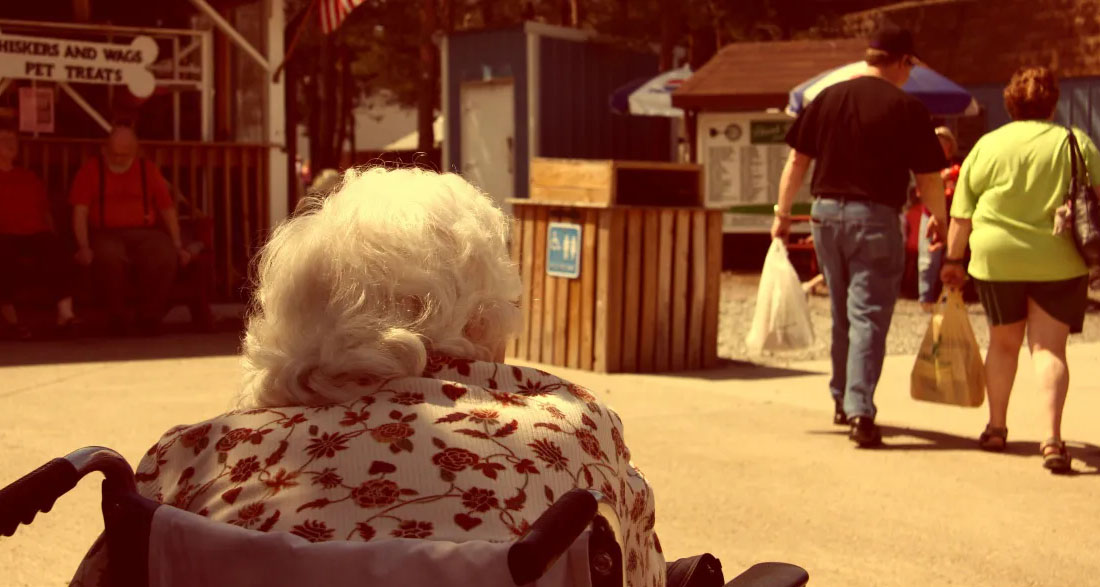
I’m 83 years old, and for most of my life I thought I understood what loneliness felt like. I believed it was something you slowly got used to. But nothing prepared me for the emptiness my own sons created when they decided I wasn’t worth their time.
And when they finally came back—only for my inheritance—they discovered the choice I’d made. A choice that would haunt them for the rest of their lives.
My name is Mabel, and I raised two boys who grew up to forget I existed.
Trenton and Miles were good kids once. At least, that’s what I told myself on the long nights when sleep refused to come and memories were the only company I had. But somewhere between childhood and adulthood, I turned into background noise—just a soft hum behind their bigger, more important lives.
I raised two boys who grew up to forget I existed.
I tried everything to stay connected—because that’s what mothers do. We try even when it hurts. We try even when the heart feels like it’s cracking right down the middle.
I baked their favorite chocolate chip cookies and mailed them across the country, each cookie wrapped like it was a small piece of love I was scared would break on the journey. I sent holiday letters and birthday calls. I showed up at graduations with flowers and a forced smile even when they barely looked up from their phones.
After my husband died seven years ago, everything felt worse. The distance between me and my boys became a canyon—wide, empty, impossible to cross. I lost my partner… and realized I’d already lost my sons long before that. But nobody told me. I had to figure it out alone.
Trenton moved to the West Coast for a tech job that apparently required him to forget his mother existed. Miles settled in the Midwest with a wife who never liked me and children I’d only seen twice in photographs.
They sent excuses disguised as apologies—words with no heart behind them.
“Mom, I’m swamped with work right now.”
“Mom, the kids have soccer, and we just can’t make it this year.”
“Mom, maybe next Christmas.”
But next Christmas never came. Eventually I stopped asking. The rejection hurt more than the silence.
Last year, I got pneumonia and spent a full week in the hospital. I called both my sons—because no matter how old a mother is, she still reaches for her children when she’s scared.
Trenton didn’t answer. His wife picked up and said, “He’ll call you back.”
He never did.
Miles sent a text: Hope you feel better soon and added a thumbs‑up emoji. A thumbs-up. For his sick mother.
Lying in that hospital bed, surrounded by strangers’ voices and machines that beeped like sad metronomes, I realized my sons had decided I wasn’t worth the trouble.
That was the moment I learned the real meaning of loneliness:
Not being alone… but being forgotten by the people who were supposed to love you the most.
When I went home afterward, the house felt too big, too quiet, too full of echoes from a life that wasn’t there anymore. At 83, I felt invisible even to myself.
That’s when I decided to rent out the guesthouse.
Clara answered my ad one Tuesday afternoon in March. Something warm and familiar lived in her voice, and I said yes before I even saw her in person. Sometimes your soul recognizes another lonely soul.
She came with her teenage daughter, Nora. Both of them stood at my door with eyes that looked tired but hopeful.
“I can’t afford much,” Clara said gently, resting a protective hand on Nora’s shoulder. “But we’re quiet and clean, and I promise we won’t cause any trouble.”
I didn’t need the money. What I needed was to stop feeling like every room in this house was swallowing me whole.
“Let’s talk about rent after you settle in, dear,” I said as I opened the door wider.
At first, I kept my distance. But Clara and Nora—they came into my life like sunlight through dusty curtains. Slow, soft, gentle… but unstoppable.
Clara loved mystery novels just like I did. We started trading books, then discussing them over tea. Nora found my old recipe box one afternoon and begged, “Mabel, can you teach me how to make that apple pie?”
Soon Saturday mornings were filled with flour-covered aprons, laughter, and the sound of a teenage girl calling, “Wait, wait! I messed up the cinnamon again!”
Soon, they weren’t tenants at all. They were the family my heart had been silently waiting for.
Clara checked on me every morning before work to make sure I’d taken my medication. Nora did her homework at my kitchen table and asked me questions about everything—history, cooking, life.
For the first time in years, someone actually wanted to hear what I had to say.
Then one afternoon, I tripped over the rug and fell hard. Before fear even hit me, Nora rushed over.
“Mabel, don’t move! I’m calling Mom!” she cried.
She held my hand until Clara ran home from work. I could see the terror on both their faces, and it broke me open in a way I didn’t expect. This child—this girl who didn’t owe me anything—held me like I was precious.
“You’re okay,” she whispered. “We’ve got you.”
Those three words… “We’ve got you”… I hadn’t heard that in years.
When I caught a cold that settled deep in my chest, Clara took three days off work to take care of me. She lost a paycheck just to sit beside me, feed me soup, and read aloud when I was too tired to hold a book.
“You don’t have to do this,” I whispered.
She frowned like I’d said something silly. “Of course I do. You’re family.”
My own sons couldn’t spare a phone call.
Months later, my doctor gave me news I half expected. My heart was failing. Slowly but surely.
“How long?” I asked.
“Hard to say. Months… maybe a couple of years.”
I walked out of that office knowing I needed to act while I still had the strength.
I called my lawyer.
“I want to change my will,” I said.
“Are you absolutely certain?” he asked.
“More certain than I’ve been about anything in years.”
The reading was set for Thursday. I sent formal notices because my sons didn’t answer my calls anymore—but the word “inheritance” works better than any ringtone.
Trenton arrived first, wearing an expensive suit and a fake smile. Miles showed up ten minutes later, wearing an expression that said he’d rather be anywhere else.
No hugs. No warmth. Miles gave me a stiff nod and said, “Mom.”
That was it.
Clara and Nora were already in the room, sitting quietly in the corner.
“Who are they?” Miles asked.
“You’ll find out,” I said.
My lawyer began reading, and the room went still.
Everything—the house, the savings, the investments—was left to Clara and Nora.
My sons received two silver goblets. That was it.
The silence was so sharp it felt like glass.
Miles exploded. “This is INSANE! You can’t do this!”
“I absolutely can,” I said. “And I have.”
Trenton looked pale. “Mom, these are strangers!”
“They’re not strangers,” I said calmly. “They’re my family. More loving than either of you has been in years.”
“We’re your sons!” Miles yelled.
“Then you should’ve acted like it.”
They threatened lawyers. My lawyer explained gently—and professionally—that I was of sound mind and their case would be pointless.
They stormed out.
Clara rushed to me. “Are you okay?”
“I am,” I said.
“You didn’t have to do this,” she whispered. “We didn’t expect—”
“You deserve it,” I said firmly. “You loved me when no one else did.”
Three weeks later, my sons came back. I suppose guilt takes time to carve through pride.
Trenton stepped out of the car. “Mom, can we talk?”
“About what?”
“We just… want to get some things from our old rooms. Just memories.”
Memories. Now they wanted memories? After they spent years making sure I wasn’t in theirs.
“Clara and Nora own the house now,” I said. “You’ll need to ask their permission.”
They both froze, but Clara nodded kindly. “Of course. Take any personal items you want.”
But I stood where I could see them. I knew my sons. They weren’t looking for childhood treasures—they were looking for something they could use.
Then Miles found the envelope I’d placed under the bed, right where I knew he’d look.
He opened it, hands shaking, and read aloud.
“Dear Trenton & Miles… I know you believe you’re entitled to everything I have because you’re my sons. But being born to someone doesn’t give you the right to break their heart over and over again…”
His voice cracked.
“I’m choosing the people who chose me… I forgive you, but you must learn from this. Show up for your own children. Love them before it’s too late…”
Miles looked up, eyes wet. “Mom… this isn’t… we didn’t mean—”
“Yes, you did,” I said softly. “You meant every moment you chose not to call.”
Trenton whispered, “We’re your sons. We’re your blood.”
“And Clara and Nora are my heart.”
They left with nothing. Like they always did.
That night, we ate dinner together—me, Clara, and Nora—my real family.
“Are you okay?” Nora asked softly.
I squeezed her hand. “I’m better than okay. I’m home.”
Clara’s eyes filled with tears. “We love you, Mabel.”
“I love you too,” I said. “And that’s worth more than any inheritance.”
Next week I turn 84. My doctors say time is running faster now, but I’m not afraid. I’ll take my last breath in a house full of love—not in a cold hospital room.
My sons might never understand what they lost. They’ll stay bitter, convinced they deserved something they never earned. That’s their burden.
I’m done carrying pain I never deserved.
Now, with whatever time remains, I’m choosing joy. I’m choosing the people who stayed. I’m choosing the daughters life sent me when love from my sons faded away.
Family isn’t about blood. It’s about showing up, day after day, because you want to.
My sons lost a mother.
But I gained a family.
And that is the greatest inheritance of all.