

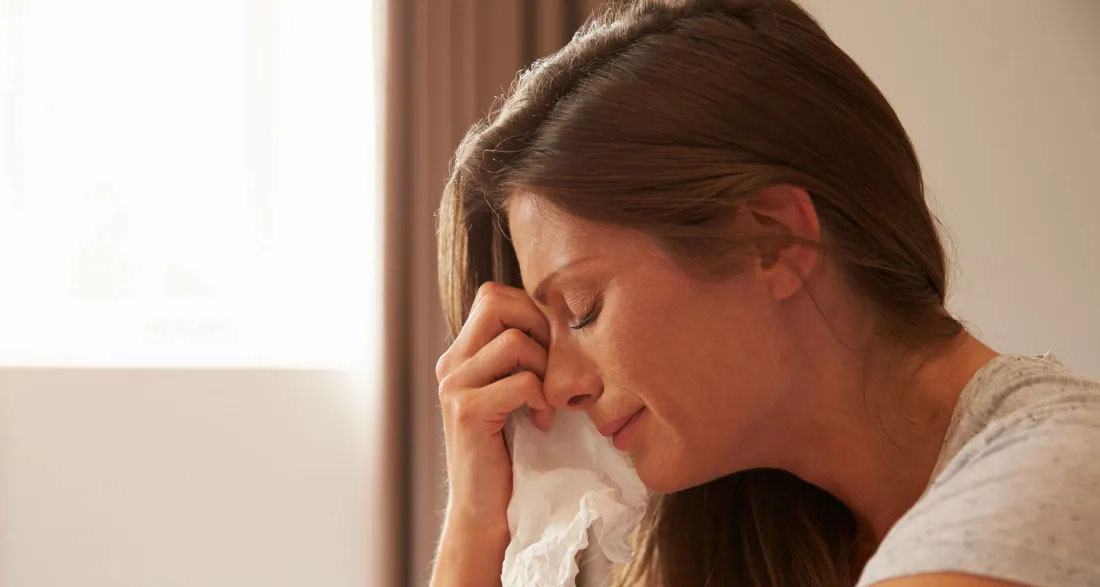
For two whole years, Ethan and I tried to build a family. We thought the problem was biology. We thought the universe was playing tricks on us. But the real danger wasn’t infertility at all — it was pressure, disguised as love, wrapped in the voices of the people I had trusted my whole life.
And when my parents forced me into a corner and told me to choose… I picked the wrong side.
It started on a random Tuesday morning. I was sitting at my parents’ kitchen table, still sleepy, still hopeful about life. My mother stirred her tea with that slow, sharp clinking sound that always made me anxious. It sounded like a countdown.
Then, without blinking or lowering her voice, she dropped the first grenade.
“You’re wasting your life,” she said, her tone as casual as if she were commenting on the weather.
“A woman deserves a family. And you’ll never get one with him.”
The spoon tapped the edge of the cup again—metal on porcelain, sharp enough to slice the air between us.
I blinked hard. Did she really just say that?
“Excuse me?” I whispered.
Her eyes, cold and steady, met mine. She didn’t flinch. She didn’t soften.
“You heard me. You’re thirty-four. You’ve wasted two years chasing something that isn’t going to happen. At what point do you admit it’s his fault?”
But Ethan never blamed me, not once. When I cried into his chest, he always wrapped his arms around me and whispered,
“We’re already a family. A child would be a blessing, not a requirement.”
And he meant it — I saw it in the way he touched my cheek, in the way he held me after every doctor’s appointment. But my parents lived by a different gospel:
If I was healthy, and we still had no baby, then the problem had to be Ethan.
My mother said it like a fact from a textbook.
“You’ve always been healthy. If you had married a real man, you’d have a child by now.”
“I love him,” I said quietly.
“Well, love won’t give me grandchildren,” she snapped.
I should have stood up. I should have defended Ethan, defended myself. Instead, I just sat there, frozen, listening as the people who raised me took apart my marriage like they were fixing a broken toaster.
Then my father added his own punch.
“A woman without children has nothing to show for her life.”
Nothing.
That word slid into my skin like smoke, impossible to wash out.
Soon it wasn’t concerns — it was a chorus.
My mother whispered,
“He’s the problem. Biology doesn’t lie.”
My father muttered over dinner, stabbing at his plate,
“He’s selfish. He’s stealing your future.”
Once, my aunt sighed dramatically and said, loud enough for Ethan to hear,
“Poor girl… she deserves better.”
Ethan never raised his voice. Not once. But I saw how his jaw clenched, how his shoulders stiffened, how his heart sank a little lower every time.
Then the campaign escalated.
My mother sent me articles like “When to Start Over” and “Why Waiting Could Ruin Your Life.”
My father took me for coffee just to say,
“You need a real man, sweetheart. One who can give you something.”
Photos of Ethan and me? They wanted those gone too.
Memories? Erased.
Our quiet Sunday mornings dancing in the kitchen? Rewritten as “wasted years.”
And then came the night that changed everything.
We had just returned from yet another specialist. The doctor had spoken in that careful tone — using words like unlikely, complicated, and not impossible, but…
I had cried in a parking garage stall, shaking and exhausted.
When we walked through the door at home, my parents were already inside.
Not visiting.
Waiting.
My mother stood up dramatically and took both my hands, like some actress in a soap opera.
“Sweetheart, we’ve talked about this. It’s time to be realistic.”
My father leaned forward slightly, his face carved from stone.
“If you don’t end this,” he said slowly, “we’re done. No insurance. No safety net. No inheritance.”
Then he added the word that wrapped around my throat like a rope.
“Choose.”
Behind me, I felt Ethan standing still, rigid, terrified of the answer.
My voice was barely a whisper. “Do you want this?”
His answer landed like a punch straight to my chest.
“No.”
He didn’t say it because he wanted me gone.
He said it because he wanted me free from this pressure — the guilt, the shame, the fear. He didn’t want to be the reason my parents turned their backs on me.
My mom didn’t even look at him.
“He’ll never give you what you deserve,” she said.
“Stay with him, and you’ll wake up at thirty-five full of resentment.”
Resentment.
The word burned. Not because I feared hating Ethan… but because I feared hating myself.
Two months later, with hands shaking, I signed the divorce papers.
Ethan didn’t fight.
He didn’t argue.
He stood silently in the doorway as I packed, his face hollow, like someone had turned off his soul.
“If this is what you want,” he said quietly, “I won’t beg.”
My voice cracked. “It’s not what I want.”
He looked at me with broken eyes.
“Then why are you doing it?”
I didn’t answer, because the truth felt pathetic.
Because I was tired.
Because my parents had backed me into a corner.
Because fear can be louder than love.
So I left.
My parents acted like they’d rescued me from a burning building. My mother even brought flowers.
“To new beginnings,” she said cheerfully.
“Now we’ll find you someone who actually wants a family.”
They pushed me toward dates with men who talked too loudly and smiled like salesmen.
“Great job,” my mother whispered after one date.
“Strong jawline… imagine the genetics.”
I didn’t feel like a woman.
I felt like a malfunctioning clock being rewound.
Eight months after the divorce, the phone rang. It was my doctor.
“I want to run one more test,” she said.
“I may have overlooked something.”
I didn’t think much of it.
Until the results came in.
It wasn’t Ethan.
It was me.
A condition.
Manageable.
Treatable.
Not a dead end.
In that moment, hope was both beautiful and horrifying.
Because I had destroyed the one relationship that had never stopped loving me.
I couldn’t tell my parents. They would twist it into their own story again.
One cold night, I found myself parked outside our favorite bookstore — the place Ethan used to buy me peppermint tea after difficult days.
My fingers shook as I called.
He answered on the second ring.
“Hi,” I breathed.
There was a long silence. Then softly,
“Are you okay?”
After everything… that was his first question.
I told him everything — the missed diagnosis, the pressure, the ultimatum, the fear.
He didn’t yell.
He just exhaled, long and trembling.
“I never wanted you to leave.”
“I know,” I whispered.
“I wanted you,” he said.
“Even if it was just us.”
That broke something inside me.
Not pain — but a dam holding back everything I had buried.
We didn’t magically snap back together. Love isn’t a light switch.
It was slow. Messy. Raw.
There were long nights talking about the past.
Silences that felt heavy but honest.
Counseling sessions where we sat across from each other like two people learning how to share oxygen again.
But real love doesn’t die.
It hides.
It waits.
And slowly, it came home.
Two years later, I sat on the bathroom floor laughing and crying at the same time, staring at a test showing two bright pink lines.
Ethan burst through the door barefoot, breathless, his eyes wide.
“Oh my God,” he whispered, dropping to his knees and pulling me into his arms.
We told no one for months.
Finally, halfway through the pregnancy, I sent my mother a short message:
“I’m pregnant.”
Nothing more.
She called instantly, screaming like she had won the lottery.
My father planned a celebration.
My mother kept repeating,
“Finally, finally…”
But I wasn’t the same daughter they once controlled.
Our daughter, Lina, arrived on a quiet October morning — tiny, loud, and perfect. Ethan cried harder than I did. She had his dark hair and my stubborn chin.
No one met her for three months.
My mother begged.
My father complained.
But Ethan stood beside me and said,
“Do what you need. I’m right here.”
When I was finally ready, I picked a neutral café with big windows. Ethan came with me. My parents arrived overdressed, carrying a plush bear like it was a peace offering.
When I walked in with Lina sleeping on my chest, my mother gasped.
“She’s perfect,” she whispered, reaching forward.
I raised my hand.
“Before you touch her,” I said calmly, “you need to listen.”
They froze.
“You forced me to leave my husband because you decided he was the problem. You threatened to cut me off. You humiliated him. You made me choose between your approval and my marriage.”
My father blinked rapidly.
My mother’s smile faded.
“This is my family now. Ethan. Lina. Me.
You can be part of it — but only if you respect us.
No guilt.
No pressure.
No rewriting what happened.”
My father’s voice cracked.
“We were wrong.”
My mother looked at Lina, her face softening.
She whispered, “I’m sorry.”
I didn’t say it was okay. It wasn’t.
But I whispered, “Thank you.”
Only then did I place Lina into her arms.
Lina blinked up at them, yawned, and gave them that unimpressed baby face — like none of this drama mattered to her at all.