

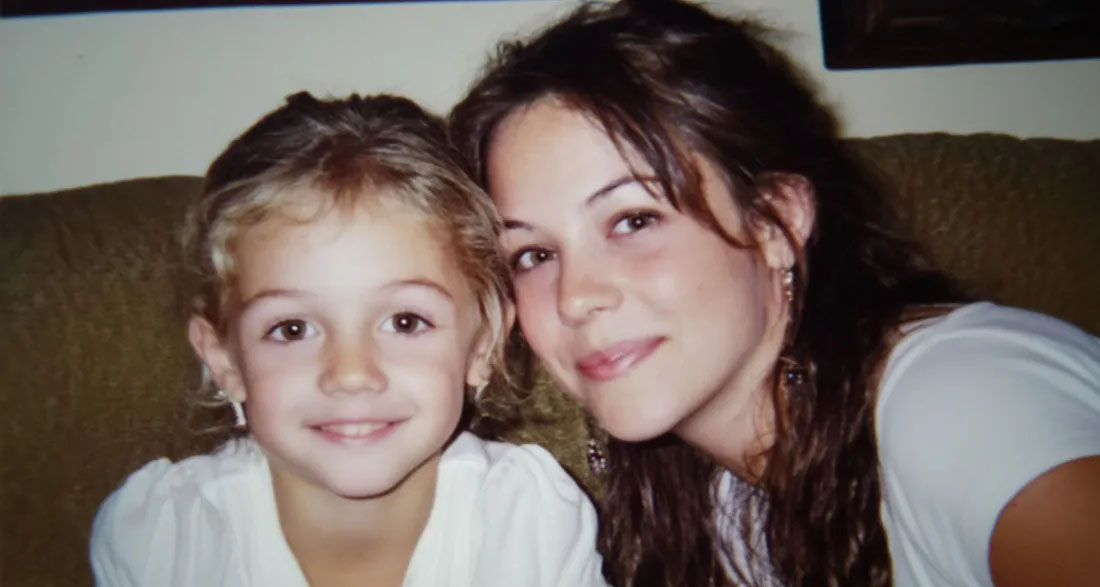
My parents didn’t die. They just left.
Not like in the movies, with slammed doors and packed bags. No, Tanya and Charlie disappeared in pieces. Sometimes they argued about who had to take care of me for the week, as if I were some stray they forgot to claim.
I was ten when I realized the truth. They didn’t want me anymore. Not because I’d done anything wrong. Not because life was too hard. They just… moved on.
My father, Charlie, married Kristen. She was his “long-time friend,” the kind who wore perfume so strong it made your nose sting, and smiled like she carried secrets you weren’t allowed to know. She had a son, Travis, just a year younger than me. Not long after their wedding, she had a baby girl with honey-colored curls.
“Our perfect little sunshine,” Charlie called her.
They became his family. The one he showed off at barbecues and sent on Christmas cards.
And me? I was the leftover child.
My mother, Tanya, married Donnie. He had thick forearms and a voice that never rose above a grumble—but somehow, that quiet voice scared me more than yelling ever could. Donnie didn’t like disruptions: crying during movies, needing help with homework.
When my half-sister Rosie was born, my mother’s world shrank to bottles, sleep schedules, and apps telling her when to nap the baby. Her hugs became one-armed pats. Her words shorter, thinner.
“Ivy, you need to be quiet. Donnie just worked a double shift,” she said one evening when I tried to show her a sketch of our backyard.
I remember the night they stopped pretending altogether. Their voices leaked from behind the closed bedroom door.
“She’s not my kid, Tanya. Seriously. I didn’t want kids. It’s just different with Rosie because she’s my blood,” Donnie grumbled.
“Well, she’s not his either. Charlie doesn’t even call anymore, Don,” my mother hissed.
“What do you want me to do?”
“She’s not my kid, Tanya. Seriously. I didn’t want kids,” Donnie repeated.
Then, not five minutes later, my father’s voice crackled over speakerphone.
“We’ve got our own routine now, Tanya,” he said. “It’s not easy with two kids. Kristen’s not comfortable with another one. Ivy… she doesn’t fit in here.”
Later, my mother set me at the kitchen table, holding a lukewarm cup of tea.
“Honey… it might be better if you stayed with Aunt Carol for a while. Just until we figure… things out.”
The next morning, my father arrived. Together, they packed my life into three trash bags. Not suitcases, not boxes. Trash bags.
When we reached Aunt Carol’s tiny yellow house, she opened the door, drying her hands on a dish towel. Her brow creased as she looked at me standing between my parents, two people pretending this was normal.
“Hi, Ivy, baby,” she said warmly. Then she noticed the bags. “Why does she have… luggage?”
Tanya laughed too brightly. “You two are going to have so much fun together! We’ll pick her up later, Carol! Thank you!”
Aunt Carol didn’t yell. She didn’t ask questions. She just crouched down, arms open.
“Come inside, sweetheart. Let’s get your room ready,” she said.
My parents were gone before I could look back.
That night, Aunt Carol tucked me into a quilt that smelled of fabric softener and old books. She sat on the edge of the bed, brushing hair from my face.
“You’re not a burden, Ivy,” she whispered. “You’re a blessing. And I mean that, my little love.”
Something inside me cracked—not from hurt this time, but relief.
Weeks turned into months. She gave me my own key to let myself in after school, let me paint my walls sky blue—and when I changed my mind, she brought new rollers and white paint.
“Let’s start over then, Miss Van Gogh,” she said. “Even the prettiest flowers get replanted sometimes.”
She never called me stubborn or messy. She called me growing.
“Blossoming takes work, my Ivy. I’m here whenever you need me.”
By fourteen, my art corner had taken over the hallway. By sixteen, I was winning local contests. By twenty, I traveled to fairs in other states, lugging my battered portfolio and a thermos of Aunt Carol’s iced tea with lemon bars.
My parents? Shadows.
Occasionally, a card arrived. My name misspelled as “Ivi,” with a scribbled signature from my mother.
When I was twenty-two, I entered an international art competition. My piece, “Inheritance,” was raw: a girl building a ladder from scraps while two faceless figures watched from the edges. Overnight, it went viral. I won. The prize? $250,000.
The local press called me “the artist who bloomed through abandonment.”
Three days later, they showed up.
I was wiping tables at the café when my coworker Erin tapped my shoulder.
“Ivy, a couple’s asking for you outside. They look… emotional.”
I froze.
Tanya’s mascara was smudged. Charlie carried a half-wilted bouquet from a gas station.
“Honey! My sweet, sweet Ivy! Look at how you’ve grown. You’re gorgeous!” Tanya exclaimed, grabbing my arms.
“Man, I’m proud of you, kiddo,” Charlie said, smiling.
I just waited. For the shoe to drop.
They begged for dinner.
“As a family,” my mother said.
I agreed—not to reconnect, but to watch the story they had rehearsed.
They chose the local diner. Of all places.
Tanya barely touched her salad. Charlie poked at his burger. I picked at soggy fries.
“I’ve prayed for this moment,” Tanya said, blinking. “I want us to be a family again. I know things weren’t perfect, but… what is?”
I almost laughed.
“Reconnecting is important, Ivy,” Charlie added, like a speechwriter.
Then, the cracks appeared.
“Carol twisted things,” my mother said. “She filled your head with poison. She used you—my girl.”
“She didn’t give us a chance,” Charlie added.
I stayed silent. My silence said it all.
“My car’s dying,” Tanya said.
“We’re trying to move,” Charlie added. “We need a little help.”
Ah. Of course. They hadn’t come for me. They came for the money.
“Okay,” I said calmly. “I’ll help. But one condition.”
“Anything, Ivy!” they said.
“There’s an event this Saturday. You both must be there.”
Saturday arrived. The community center buzzed with people, press, and fans. A banner stretched across the stage:
“Honoring the Woman Who Built an Artist.”
Tanya and Charlie arrived early. My mother wore pearls and a pale pink blouse. My father looked stiff in a blazer two sizes too big.
“It looks like a big night, Ivy,” Charlie whispered.
“It is,” I said. “Enjoy the presentation.”
Then, the side doors opened. Aunt Carol entered quietly, clutching a bouquet of red and white roses. Her eyes scanned the crowd, landing on me—and then them. Her face froze. Confusion. Disbelief.
I squeezed her hand. Silent promise: you’re safe. You’re seen.
The lights dimmed. A slideshow of my life appeared: Aunt Carol at my sixth-grade art fair, brushing paint off my nose, signing guardianship papers, hugging me after a contest win. The crowd murmured. Tanya gripped her purse. Charlie stared at his shoes.
When it was my turn, I stepped onstage.
“Tonight is for the only parent I’ve ever had,” I said. “The woman who didn’t leave when things got hard. Who never handed me off like I was too much. Who never asked me to shrink into the wallpaper… To Aunt Carol, the reason I’m here and whole.”
Applause erupted.
“You said you needed to fix your car,” I said to Tanya.
“Yes, well—” she began.
“And a condo,” I said to Charlie.
They opened their mouths, then closed them.
“My condition,” I said, stepping closer to the mic, “was that you show up tonight. So you could hear this: You get nothing. Not a cent. You lost the right to ask the day you packed my life into trash bags and left me on someone else’s doorstep.”
Gasps. Standing ovation.
“But you said—” Tanya’s voice cracked.
“No. I offered a lesson. Now you’ve had it. Leave us alone.”
That night, under a sky full of stars, I walked home with Aunt Carol’s roses in my arms. Not once did I look back.
“Leave us alone,” I whispered.
And this time, they did.