

The first time I realized grief could hit you physically was the moment my mother’s house stopped smelling like her.
It wasn’t just a missing scent—it was a punch to the chest. The next thing I realized about grief? Sometimes it’s loud. Mine wasn’t. Mine crept in quietly, almost invisible.
It moved through the rooms of her house like it had keys to every door, like it owned the place, rearranging the air, dimming the sunlight, making shadows seem longer than they should be.
I walked through her rooms that first afternoon, fingertips brushing doorknobs, counters, anything I could touch. As if, by muscle memory alone, I could bring her back. But I couldn’t.
I had come to clean. That was my job.
Fold away the linens, box the dishes, decide what stayed and what went to charity. Decide what parts of my mother should remain in this world, and which should slip quietly into someone else’s hands.
I had come to clean.
Her Bible sat on the kitchen counter. The same one she’d always left there. The yellowed landline number was still tucked inside, just like it had been for decades.
I’m 52 years old. I know how it works: someone dies, and someone else cleans up. You know it in your head, but it doesn’t make it easier when the air still smells faintly of lemon soap, dust, and her lavender lotion that always sat by the bathroom sink.
It took me two days to notice her Bible properly.
“Oh, Mom,” I said aloud to the empty room, my voice cracking. “I should have buried this one with you. I’m sorry, I didn’t think about it sooner.”
It wasn’t hidden. My mother never displayed it like a treasure, but it was always there, on the corner of the counter, next to a jar of pens and a stained envelope of grocery coupons she never used.
I picked it up without thinking. The leather cover was soft with age, the pages gold-edged and worn from decades of turning. I opened it, and my eyes immediately landed between Psalms and Proverbs.
There it was. A yellowed slip of paper, folded neatly in half. An old landline number, written in her precise cursive. She had kept it there since I was a child.
I remembered asking her once—maybe I was twelve—what it was.
“That’s not something you need to worry about,” she had said.
And that was it. No lecture, no explanation. She wasn’t cold. She was precise. She folded shirts like origami, measured tablespoons perfectly when she cooked, treated emotions like a storm—acknowledge it, prepare for it, carry on.
“Acknowledge it, Andrew,” she once told me. “Then prepare for it. And carry on, son. That’s the key to life.”
I slipped the paper into my pocket, not yet out of curiosity, just instinct.
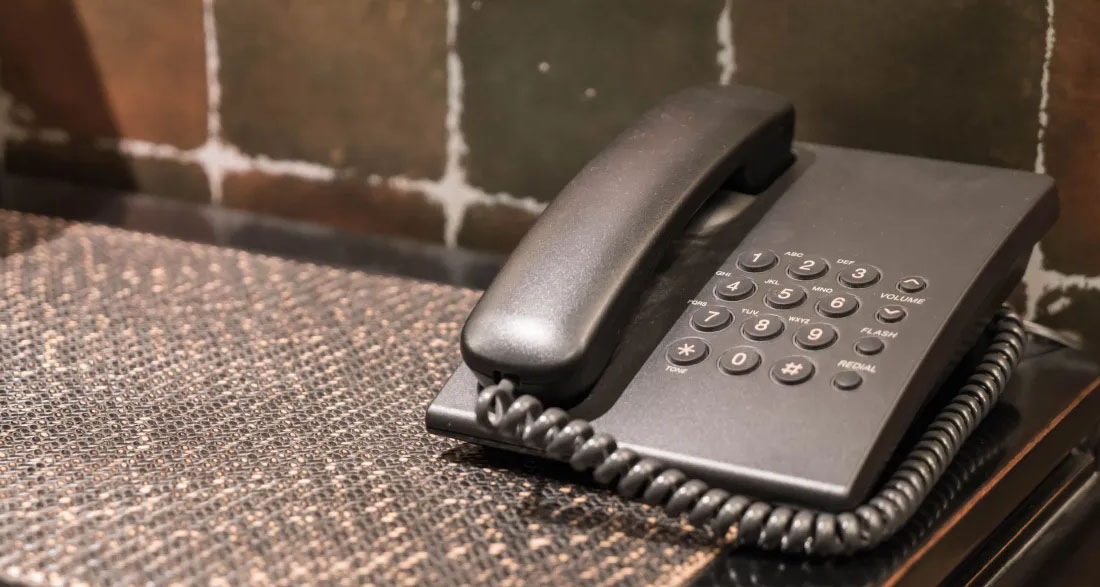
Later that night, the house shifted around me. Floors creaked as if they were sighing. The silence wasn’t soft—it pressed against me. And then I noticed the landline, still mounted on the wall: beige plastic, coiled cord, receiver worn smooth.
My fingers hovered above it.
I told myself it was ridiculous. That number probably led nowhere by now. But I had to know. I had to see what she had kept alive for all these years.
“Why not, Andrew?” I asked myself out loud.
I lifted the receiver and dialed. One ring. Two rings. Then a voice, rough and startled:
“Helen… is that you, darling?”
I froze. The voice was older, male, and carried something I wasn’t ready to feel.
“No,” I said after a pause. “I’m Helen’s son, Andrew.”
A silence stretched. I thought he’d hang up. But then:
“She kept it.”
“She did,” I said softly. “In her Bible. All these years.”
“I’m William. But she called me Will.”
The name landed like a stone in my chest.
“I wasn’t sure this number would still work.”
“I never disconnected it,” Will said. “Not in what… forty years?”
“You were waiting for her call?” I asked, trying to picture him.
“I wouldn’t say waiting. But I wondered. I just… couldn’t call. I promised your father I wouldn’t.”
“My father? You knew him?”
“Yes. Roger found me. Back in ’74. He told me Helen was happy, that she was expecting. He asked me to let her go… let her live her life.”
“And you did?”
“I had to. I’d already lost her. Asking for more would have been selfish.”
The pieces were falling. My father, long gone, had known about this man. About my mother. About… something deeper than I’d ever imagined.
“Why now?” he finally asked. “Why are you calling me?”
“Mom passed away a few weeks ago. I’m just… sorting through the house.”
“Oh. I’m so sorry.”
“She kept your number,” I said. “Right where she always kept it.”
“I kept the line for the same reason. Just in case.”
I barely slept that night. My mind kept replaying the conversation. Memories I’d never questioned before suddenly felt incomplete. Not wrong… just unfinished.
By morning, I called Aunt Diane.
“Can you come over, please?” I asked. “I found some… stuff.”
“You found Helen’s Bible, didn’t you?” she asked, her voice tight. “I told her there would come a day when you’d find it and ask questions.”
“I called the number.”
“I’ll be there soon, sweetie.”
When she arrived, she looked around as though the house itself might judge her.
“I always wondered if you’d call him,” she said softly.
“You knew about William?”
“We all did, son,” she said, smiling faintly. “Here, I brought some pastries.”
“So, everyone knew, and no one thought I should?”
Aunt Diane sighed, dropping her purse. “Was there some kind of affair? How did William know my dad? How does it all tie together?”
“Andrew, your grandmother never approved of William. When he left, she intercepted their letters. She thought she was protecting Helen the entire time.”
“Protecting her from who?”
“From being in love,” Diane said bitterly.
“So, everyone knew, and no one told me?”
“What do you mean? And your dad?”
“He knew. He asked us not to tell you. Said it wouldn’t change anything but your peace. There was never a question of who your father was. Roger and Helen were married and thrilled when she got pregnant.”
“But?”
“He asked us not to tell you.”
“But William was still in love with her. He’d never had a chance to say goodbye in a way that made sense to either of them. That string… it always tied them together.”
“And everyone just decided I didn’t need the truth?”
“Your mother made that choice too, Andrew. She wanted to move forward. She loved your father. And she loved you. From the moment you were born, she let go of everything else.”
I didn’t respond. I went back to the kitchen and picked up the Bible. That’s when I saw something I’d missed before—taped inside the back cover: an envelope with my name, written in my father’s handwriting.
I stood frozen, then slowly opened it, hands trembling:
“Andrew,
If you’re reading this, your mother’s gone… and so am I. I’m sorry.
You’ve found the number like I knew you would. I knew about William. I knew he was there before me. I knew Helen was already pregnant when I asked her to marry me.
Whatever that was, it wasn’t a scandal. It was unfinished.
She never lied to me. Not once. And I never questioned whether you were mine. Because you were, in every way that mattered.
I raised you, my boy. I watched you grow. I taught you to drive, to build shelves, to apologize when wrong.
If you choose to speak to the man who loved your mother before me, I only ask one thing:
Don’t do it with anger. Do it with gratitude. Without him, I wouldn’t have had you.
—Dad”
I sat with the letter open in my lap. My world didn’t feel broken. But it had shifted. My father wasn’t my biological father, yet he had been everything a father could be. He had loved me fully, without hesitation.
I pressed the letter to my chest and picked up the phone.
Two days later, I called William again. He answered immediately.
“I found a letter,” I said. “From my father.”
William was quiet.
“He knew about you. He knew I wasn’t his by blood. But he raised me anyway. He loved me anyway.”
“I never doubted that,” William said. “Helen wouldn’t have stayed with someone who didn’t love you fully.”
“He asked me not to be angry. To be grateful.”
“And are you?”
I nodded. “I think I am.”
“Then Roger did right by all of us. Would you like to meet me?”
“Yes, Andrew,” he said after a pause. “I’d like that very much.”
An hour later, we met at a quiet park. William carried a photograph.
“It’s the only one I have,” he said. “I never had the heart to throw it out.”
We looked at it together. They were young and sunlit, her hand resting on his shoulder.
“You look like her,” he said softly.
“I see both of them in the mirror,” I said. “But today… I feel like someone new.”
We sat facing the water.
“I thought I’d be angry,” I said.
“You have every right,” he said gently. “But I’m grateful you’re here.”
“Thank you for holding onto her memory so tightly.”
“And thank you for giving me this moment.”
That weekend, I invited a few people over. Maggie brought lemon pie. Aunt Diane brought the albums. I brought Roger’s letter.
“To Roger,” Diane lifted her mug. “A great man. I didn’t read the whole thing—just this line: ‘Don’t do it with anger. Do it with gratitude.’”
We all raised our mugs—not to secrets, but to love that keeps its promises.
That night, I slipped the letter and the number back into the Bible. Not to hide them, but to keep them close.
I used to think secrets weigh people down. But some truths… they hold you up.
We raised our mugs to love that keeps its promises.