

“You and your child mean nothing to me.”
Those words still echo in my head, every single day. They were the last words my mother-in-law, Deborah, said before slamming the door in my face. Two days after my husband, Caleb, died, she threw me out like I didn’t exist.
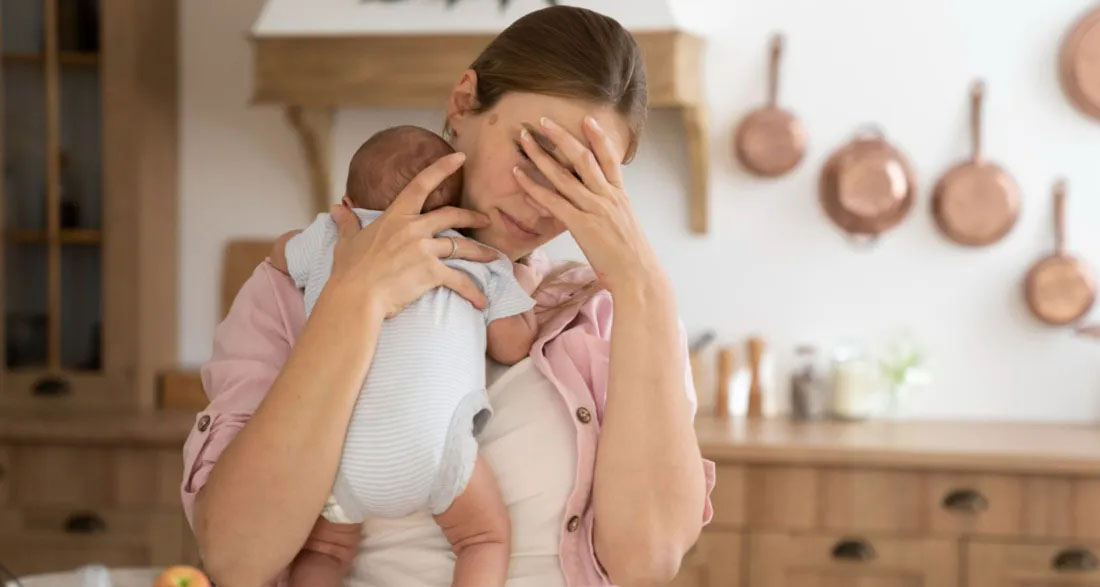
I’m Mia. I was 24, holding my three-week-old son, Noah, in my arms, still wearing the same clothes from Caleb’s funeral. My suitcase, diaper bag, and Caleb’s hoodie—the only thing that still smelled like him—were all I had left.
“Where am I supposed to go?” I whispered, my voice trembling.
Deborah’s eyes were cold, empty. No recognition that I was her daughter-in-law. No care that I held her grandson. “Not my problem,” she said, her lips curling like she’d tasted something bitter.
And then she closed the door. The lock clicked.
I stood frozen for a full minute. Noah started crying, tiny fists punching the air. That sound yanked me back to reality. I slung the diaper bag over my shoulder, grabbed my suitcase, clutched Caleb’s hoodie to my chest, and walked out into a world that suddenly felt enormous and cruel.
Let me take you back so you understand how it all got this way.
Caleb and I had tried for years to have a baby. Tests. Doctors. Silent crying in bathroom stalls. Pretending we were fine while the pain crept in.
When I finally got pregnant, we cried on the bathroom floor together. Caleb whispered to my belly, “We’ve been waiting for you, my love.”
Then Noah was born. And my heart stopped. A huge birthmark covered half his face. The room fell silent, and it wasn’t the kind of quiet that’s comforting—it was the kind that made you shrink under the weight of judgment.
I panicked. I knew how cruel the world could be.
But Caleb didn’t hesitate. He kissed Noah gently. “Hey, buddy. We’ve been waiting for you, my love.” His words, soft and certain, wrapped around me like a warm blanket. Suddenly, I felt a spark of hope. Noah was wanted. Noah was loved. Fully, without question.
Deborah, however, didn’t share our joy. She stared at my baby, then at me, like I’d painted that birthmark myself. She whispered things like, “Well, you never know what really happened,” planting seeds of doubt, suspicion, cruelty.
Caleb always tried to shield me. “Ignore her, Mia. She’ll come around.”
He was wrong.
One ordinary day, and then the phone call that froze me in place. Caleb had suffered a heart attack. At 27. Just like that, he was gone. The funeral was a blur. I held Noah like he was an anchor, afraid that if I let go, I’d float away into grief and never come back.
Deborah cried, of course. Loudly, theatrically, as if she needed the world to witness her pain. But beneath it all, I began to see her true self.
A week after the funeral, she showed up at our apartment unannounced. She let herself in—it was in her family’s name, after all.
“You need to leave,” she said flatly, as if it were just a casual suggestion.
“I… I just need time,” I stammered. My body was a fog of postpartum exhaustion, grief, and disbelief. I reached for the bed, for Caleb, before remembering he was gone.
Her eyes darted to Noah, then back to me, venom in every syllable: “He probably isn’t even Caleb’s. You got pregnant somewhere else and tried to trap my son.”
Her words hit me like a gut punch. “You have no right to this apartment. Be grateful I’m not calling the cops.”
And just like that, I left with a suitcase, a diaper bag, Caleb’s hoodie, and my newborn son.
The next weeks were pure survival. I bounced from friends’ couches to cheap motels, carrying Noah everywhere. Every cry of his, every stare at his birthmark, made me want to vanish.
One afternoon, walking home from the grocery store, a car splashed water all over us. The driver leapt out, furious, until she saw Noah and me. Her expression softened immediately.
“Oh my God. Are you okay? What happened?”
I couldn’t hold it in. I told her everything. Caleb’s sudden death. The funeral. Being thrown out. Deborah’s cruelty. The sleepless nights. The endless fear that I was failing my son.
She listened. And then, gently, she said, “I’m Harper. I’m a lawyer. And I can help you.”
Harper told me her stepmother had done something similar after her father’s death—thrown her out, tried to take what was hers. “I know that kind of woman,” she said softly. “I know the pattern. I know the cruelty hidden behind family.”
I held her number like a lifeline. And soon enough, I needed it.
A few days later, Deborah called. Sweet, soft, warm. Pretending. “Mia, I want you and the baby to come for dinner. I don’t want us to be enemies.”
I knew better. I wanted to believe. A part of me hoped she’d seen Noah and realized he was the last piece of Caleb.
I went.
The house smelled like home-cooked meals. Candles glowed. Deborah cooed at Noah, calling him “my precious grandson.” She even touched my hand. I almost cried. Maybe I’d been wrong about her.
Then came the trap.
“Caleb saved a large amount of money,” she said casually. “He was planning to buy you a house. He left it to you in his will. But… I think we should discuss how it gets divided. After all, I raised Caleb. I sacrificed everything for him.”
Her sweet mask slipped. Her eyes hardened. “I deserve most of that money. You were just his wife. You need to know your place.”
I couldn’t breathe. “I want to see the papers.”
Her voice dropped icy. “If you don’t agree, you’ll get nothing. I’ll fight you until you’re broke.”
I left, shaking, holding Noah close. I called Harper immediately.
“She wants everything Caleb left for us,” I whispered.
Harper’s voice was steel. “Let me handle this.”
The next weeks were terrifying but different. Letters, legal papers, proofs of ownership, clear evidence. Deborah tried to twist everything, call me a gold digger, even hint at grandparent rights. Harper never flinched.
Finally, Deborah lost. The money Caleb had saved, his dream for us, was ours. I sat in Harper’s office, holding Noah, and whispered, “It’s done.”
I cried then. Ugly, messy, laughing-and-sobbing grief. Relief carved a space into the shadow grief had left.
A month later, I signed papers for a small house. Nothing grand—just a place with a quiet bedroom, a little kitchen, and a yard where Noah could someday run.
On moving day, sunlight poured through the windows. Noah’s birthmark glowed gently. I whispered to the silence, “You’re here. We’re here. We made it.”
Deborah never apologized. I don’t need her to.
I learned something important: love doesn’t end when someone dies. It transforms. Caleb’s love became the roof over our heads, the safety net he built without me knowing.
Family isn’t just blood. It’s showing up. Protecting. Fighting for those who can’t fight for themselves. Harper showed up when my family didn’t. She became my family by choice.
Now, rocking Noah to sleep in our new home, I tell him about his father. About how Caleb loved him. About how love, even in the darkest times, finds a way to protect.
Because that’s what real families do. They protect. They fight. They show up.
And that’s the family we built.