

I’m 91, and for a long time, I had already accepted how my life was going to end.
Quietly.
No visitors.
No phone calls.
Just me and the ticking clock, counting down the hours in an empty house.
Sometimes it felt like I had already died—I just hadn’t had the decency to lie down yet.
My husband had been gone for decades. I still slept on my side of the bed, out of habit, even though no one slept on the other side anymore.
My children grew up, moved away, and built lives of their own. At first, there were visits. Then phone calls. Then texts on holidays.
Then… nothing.
Birthdays became just me, a cupcake from the grocery store, and the TV playing something I didn’t really watch.
Holidays were frozen dinners and old reruns. Most days, the loudest sound in the house was the hallway clock ticking and the wood creaking, like the house itself was trying to speak because no one else would.
That kind of loneliness makes you feel invisible. Like you could walk right through the world and no one would notice.
No one ever called for me.
Then Jack moved in next door.
He was 12 years old. Tall and skinny in that awkward way kids get before they grow into themselves. His hat was always turned backward, and his skateboard was glued to his hand like an extra limb.
Every evening, I saw him outside. Riding up and down the sidewalk. Practicing tricks. Falling. Getting back up. Falling again.
Other kids would hear doors open.
“Dinner!”
“Homework!”
“Get inside!”
But no one ever called for Jack.
His house stayed dark most nights. No car in the driveway. No lights glowing through the windows. Just silence.
At first, I told myself I wasn’t being nosy. I was just observant. That lie worked—until the night I heard him crying.
It was late. I woke up to a sound that wasn’t the TV and wasn’t the pipes. It wasn’t a baby, either.
It was crying.
Soft. Broken. Like someone was trying not to be heard.
I held my breath and listened.
There it was again. Muffled sobs.
I pulled on my robe and slippers and shuffled to the front window, moving the curtain just enough to see outside.
Jack was sitting on his porch.
His shoulders were shaking. He was wearing only a T-shirt, even though the night was cold. His knees were pulled to his chest, arms wrapped around them like he was trying to hold himself together. His cap lay beside him on the step.
There was no porch light. No glow from inside the house.
Before I could talk myself out of it, I opened my door and stepped outside.
“Jack?” I called softly. “Honey, are you okay?”
He jerked his head up. His face was streaked with tears. He looked terrified, like I’d caught him doing something wrong instead of crying his heart out.
“I’m fine,” he blurted. His voice cracked. “I’m fine.”
“Are you cold?” I asked gently. “Is your mom home?”
I took one small step closer.
He stared at me for a second, panic all over his face. Then he grabbed his hat, ran inside, and slammed the door.
The sound echoed down the street.
I stood there in my robe, feeling old and useless, then shuffled back inside.
I didn’t sleep much that night.
The next day, I watched his house like it was my job.
After school, he usually came out with his skateboard.
That day, nothing.
Four o’clock.
Five.
Six.
The porch stayed dark. The curtains didn’t move.
By seven, my stomach felt like it was twisted into a knot.
I baked a pie just to keep my hands busy. Apple—the one thing I could still make without a recipe.
When it cooled, I carried it next door and knocked.
“Jack?” I called. “It’s Mrs. Doyle. I brought pie.”
Silence.
I knocked again.
“Sweetheart, you don’t have to open,” I said. “Just say something so I know you’re okay.”
Nothing.
No footsteps. No TV. No voice telling me to go away.
I went home, set the pie on my table, and stared at it.
By morning, I’d made up my mind.
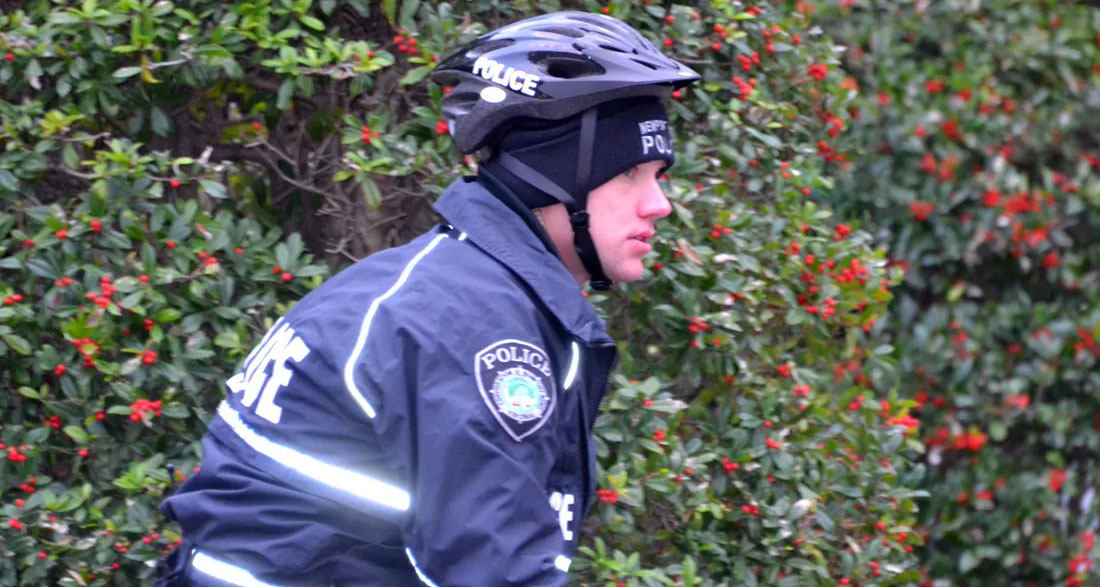
I called a taxi—because I don’t drive anymore, and honestly, at ninety-one, I shouldn’t—and went to the police station.
The officer at the desk looked about twelve himself.
“Ma’am, can I help you?” he asked.
“I hope so,” I said. “I’m worried about a boy on my street. I might be wrong. I’d like to be wrong. But if I’m right and say nothing…”
He nodded and grabbed a clipboard.
“What’s your name?”
“Helen. I live on Maple Street.”
“And the boy?”
“Jack. He’s twelve. Lives next door. I don’t see any adults there much.”
He didn’t laugh or brush me off.
“You did the right thing coming in,” he said. His badge read LEWIS. “Let me get Officer Murray. He handles welfare checks.”
Officer Murray was older, calm, and steady—the kind of man who made you feel like things might turn out okay.
“Tell me about Jack,” he said.
So I did. Everything.
When I finished, I twisted my hands in my lap. “I know I’m just the old lady next door,” I said, “but if something happens to that boy and I sat on my hands…”
“You’re not ‘just’ anything,” he said. “You noticed. That matters. I’ll stop by this afternoon. Would you like to be there?”
“Yes,” I said without thinking.
That afternoon, his cruiser pulled onto our street. He knocked on my door first.
“You ready?” he asked.
“Not even a little,” I said. “But let’s go.”
We walked to Jack’s together. Murray knocked, firm but gentle.
After a moment, the door opened a crack.
“Jack?” Murray said. “I’m Officer Murray. Your neighbor was worried.”
Jack’s eyes flicked to me.
“Is your mom home?” Murray asked.
“She’s working,” Jack said quickly.
“Mind if I step in and talk?” Murray asked. “You’re not in trouble.”
“Do you have a warrant?” Jack shot back.
I almost laughed. Twelve going on forty.
“No warrant,” Murray said calmly. “Just making sure you’re okay.”
Then we heard a loud crack from inside the house.
I jumped.
“The house is old,” Jack said fast. “It does that.”
But the place felt wrong.
Inside, there was almost nothing. One old couch. A table that wobbled. Boxes. No pictures. No lamps. No sign of grown-up life.
“How long has your mom been gone?” Murray asked.
Jack stared at the floor. “A while.”
“How long is ‘a while’?”
“A week,” he said. Then rushed, “Or nine days.”
My hand flew to my mouth.
“I’m fine,” Jack said quickly. “I go to school. I make food. Mom sends money when she can.”
“You shouldn’t be handling this alone,” Murray said gently.
“I’m almost thirteen,” Jack said, like that explained everything.
His eyes filled with tears.
“Please don’t take me away,” he whispered. “Please.”
He turned to me. “Tell him I’m okay, Mrs. Doyle.”
I stepped closer.
“You’re brave,” I said softly. “But you’re not okay. You’re scared and alone. That’s not okay.”
Murray looked at me. “Mrs. Doyle, you live alone?”
“Yes. For a long time.”
“If we get permission,” he said, “would you be willing to have Jack stay with you for now?”
“Yes,” I said instantly. “Absolutely.”
Jack blinked. “You’d want me there?”
“I’ve had too much quiet,” I said. “I think we’ll manage.”
And we did.
Paperwork followed. Calls. CPS visits. His mom cried on speakerphone.
“I thought it would be three days,” she kept saying.
Jack moved into my guest room with his backpack, his game console, and his skateboard.
“What do I call you?” he asked.
“Whatever feels right,” I said.
“Grandma Helen?” he tried.
My heart cracked open.
Life came back into my house. Noise. Laughter. Homework complaints.
“Did you have this kind of math?” he groaned.
“No,” I said. “We traded goats.”
Years passed.
Then came cancer.
“At your age,” the doctor said gently, “we focus on comfort.”
I went home and rewrote my will.
Everything went to Jack and his mother.
“My family,” I said, “is whoever knocks on my door.”
Jack hugged me tight.
“You’re stuck with me,” he said.
I don’t know how much time I have left.
But I know this:
I won’t leave this world as a ghost.
This house will stay full of life.
All because one night, I heard a kid crying—and chose not to look away.