

For more than ten years, Sundays were sacred in our house. Not because of faith or tradition, but because they belonged to us.
Pancakes stacked high on plates. Cartoons humming softly in the background. Pajamas until noon. Lazy laughter. The occasional Target run if we felt ambitious.
That was our church.
So when my husband suddenly insisted we start attending church every weekend, I never imagined the real reason would quietly tear our family apart.
My husband, Brian, and I had been together for twelve years, married for ten. Religion had never been part of our lives. Not once—not Easter, not Christmas, not even our wedding. We’d skipped all of it without guilt or hesitation.
That just wasn’t who we were.
I work in marketing for a nonprofit. Brian works in finance, managing corporate accounts. Our lives were busy but predictable. Structured. Ordinary in the best way.
We have a daughter, Kiara, who had just turned nine.
Sundays were our reset button. Sleeping in. Pancakes. Cartoons. Peace.
So when Brian casually brought up church one Sunday morning, I laughed at first. I honestly thought he was joking.
“Wait,” I said, tilting my head. “Like… actually attend a service?”
“Yeah,” he replied, still focused on his eggs. “I think it would be good for us. A reset or something.”
I laughed harder. “You? The man who once called a church wedding ‘a hostage situation with cake’? That man wants to go to church?”
He smiled, but it didn’t reach his eyes.
“Things change, Julie,” he said quietly. “I’ve been feeling stressed. Burned out. Like I’m carrying too much. Work’s overwhelming. I just need somewhere to breathe.”
I studied him. His shoulders were tight. Dark circles lived under his eyes. He hadn’t been sleeping well.
Then he added, softer this time, “I feel really good when I’m there. I like the pastor’s message. It’s positive. And I want something we can do as a family. Community.”
I didn’t want to be the wife who shut down something that sounded healthy. So I agreed.
Just like that, church replaced pancakes.
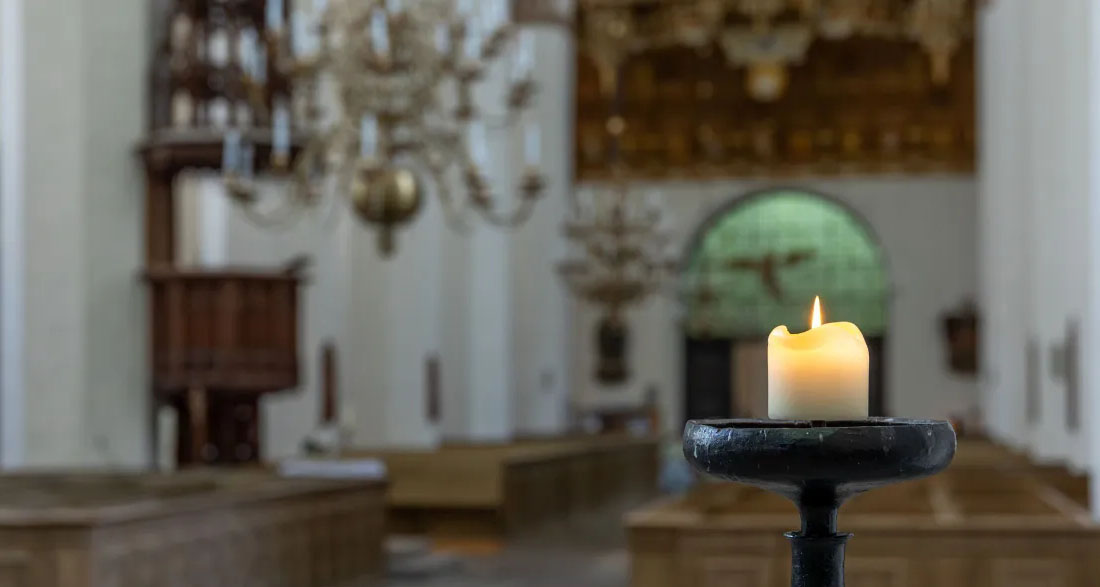
The first Sunday, I felt completely out of place. The building was beautiful, bright, and spotless. Everyone smiled too much, asked too many questions.
We sat in the fourth row—Brian seemed very sure about that. Kiara doodled on a children’s bulletin while I scanned the stained-glass windows, wondering how long this phase would last.
But Brian looked… calm. Peaceful. He nodded along with the sermon. Closed his eyes during prayer like it was second nature.
Every week after that was exactly the same.
Same church. Same row. Same routine.
Brian shook hands, smiled, waved. He lingered afterward, chatting with ushers, helping carry donation bins. He looked like a man who belonged.
And honestly? It all seemed harmless.
Strange, yes. But harmless.
Until one Sunday, everything changed.
After service, as we reached the parking lot, Brian turned to me and said, “Wait in the car. I just need to use the bathroom.”
Ten minutes passed.
I called him. No answer.
I texted. Nothing.
Kiara shifted beside me, asking when we were leaving. A heavy feeling settled in my stomach—that quiet warning that something was wrong.
I asked a woman I recognized, Sister Marianne, if she could watch Kiara for a moment. She smiled warmly, chatting about lemonade and cookies as she took my daughter’s hand.
Inside, the men’s bathroom was empty.
That’s when I saw him.
At the end of the hallway, through a half-open window, Brian stood in the church garden with a woman I had never seen before.
She was tall, blonde, elegant. Cream sweater. Pearls. The kind of woman who chaired book clubs and neighborhood associations.
Her arms were crossed tight. Brian leaned toward her, animated, stepping closer than I liked.
The window was cracked open.
And I heard everything.
“Do you understand what I did?” Brian said, his voice low and raw. “I brought my family here so you could see what you lost when you left me.”
My entire body went cold.
“We could’ve had it all,” he continued. “A family. More kids. A real life. You and me. If you wanted the house, the church, the picture-perfect life—I’m ready now. I’d do anything. Anything.”
I couldn’t move. Couldn’t breathe.
The woman replied calmly, her voice sharp with steel. “I feel sorry for your wife. And your daughter. Because they have you as a husband and father.”
Brian blinked like she’d struck him.
She didn’t stop. “We are never getting back together. This obsession you’ve had since high school isn’t love. It’s creepy. Stalker-level creepy.”
He tried to speak. She raised her hand.
“If you ever contact me again, I will file a restraining order. I will make sure you never come near me or my family again.”
Then she walked away.
Brian stood frozen. Defeated. Like a man watching his fantasy collapse.
I backed away from the window.
I don’t remember walking back to the car. Only that Kiara was laughing, untouched by the storm that had just destroyed my world.
Brian joined us minutes later, kissed Kiara’s forehead like nothing happened, and said, “Sorry I took so long. Bathroom line.”
I smiled.
I drove home in silence.
I needed proof. I couldn’t let doubt destroy my marriage.
So I waited.
The next Sunday, we went again.
Same row. Same smiles.
After service, Brian said, “Bathroom.”
This time, I didn’t hesitate.
I found the blonde woman by the coffee table. Alone.
“Hi,” I said softly. “I’m Brian’s wife.”
Her face tightened. She followed me to a quiet corner.
“I heard everything,” I said. “The window was open.”
She sighed and pulled out her phone.
“My name is Rebecca,” she said. “And you’re not imagining anything.”
Years of messages filled the screen. Love letters. Angry rants. Silence. And one recent photo of the church sign with the message: I see you. I know where you go now.
“He found me again,” she said quietly. “This has been happening since we were seventeen.”
I handed the phone back, shaking.
“He’s dangerous,” she said. “Even if he doesn’t look like it.”
That night, I didn’t sleep.
Because I finally understood.
I wasn’t the destination.
I was the prop.
When I confronted Brian, he denied. Then minimized. Then begged.
“My attorney is sending the divorce papers this week,” I said.
“What am I supposed to tell Kiara?” he asked.
“Tell her the truth,” I replied. “And show her accountability.”
That night, I watched my daughter sleep.
And I chose something stronger than heartbreak.
I chose resolve.
Because I would never again let someone use me to chase a fantasy.