

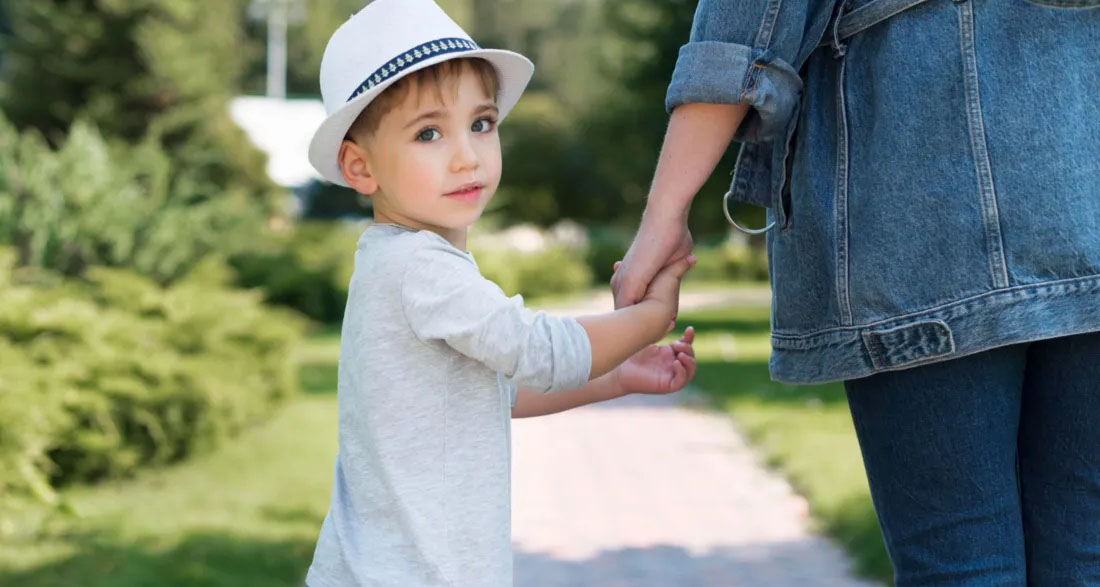
My husband walked out when our café failed, leaving me with our six-year-old son and a mountain of debt. He called it “needing space.” I called it abandonment. Three years later, I was buying a used car when I saw him across the room, sobbing. The reason why shook me to my core.
Our café closed on a Tuesday.
Not with drama or yelling. No slammed doors, no shouting matches. Just a quiet click of the keys turning in the lock for the last time. The dream we’d built together—the café, our savings, the future we imagined—vanished in that quiet moment.
He called it “needing space.”
John drove home that night in silence. His hands gripped the steering wheel so tight I thought he might break it. His jaw moved as if he were chewing words he couldn’t say.
Our son, Colin, was already asleep. I peeked in on him like I always did, smoothing his hair back and kissing his forehead. Then I went to the kitchen, and there John stood, staring at nothing, completely lost.
“We’ll figure it out,” I said, even though I didn’t know how.
He didn’t look at me. “I need space.”
I froze. “What?”
“Space. Time to think. I can’t breathe right now, Laura. I can’t think straight. I’m suffocating.”
I wanted to scream, to shake him and tell him that I was suffocating too, that we had a six-year-old who needed both of us, that marriages don’t run on “space”—they run on effort, on love, on fighting together. But I didn’t say a word.
“How much space?” I whispered, my voice breaking.
“A few weeks. Maybe a month. I’ll stay with my buddy, Dave,” he said finally, looking at me as if the words were painful to form. “This isn’t about you. I just… need to clear my head.”
That night, he packed a bag, kissed Colin’s forehead while he slept, and told me he’d call soon. Then he left.
A few weeks became silence.
No calls. No texts. Nothing.
Colin started asking questions I couldn’t answer.
“Is Daddy mad at me?”
“Did I do something wrong?”
“When’s he coming home?”
I made excuses at first. “Work trip. Helping a friend. Daddy needed some time alone.”
But kids aren’t stupid. They just pretend to believe your lies because the truth is too heavy to bear.
Then one afternoon, a neighbor stopped me at the mailbox. Her face held that particular pity that makes your stomach twist into knots.
“I’m so sorry,” she said softly. “I didn’t know if you knew.”
“Knew what?” I asked, my hands freezing around the envelope I was holding.
“About John… and the woman he’s been seeing. She was one of your regular customers. I saw them at the grocery store last week.”
My hands went numb.
The “friend” wasn’t Dave. It was a mistress. Someone he’d met at the café months before it closed. Someone who didn’t come with debt or a crying child or the weight of failure.
I learned to cry silently after Colin went to bed. And smile brightly when he woke up. He deserved at least one parent who didn’t disappear.
The first year was about survival.
I sold our couch, our dining table, the TV we’d saved for. I picked up weekend shifts at a diner, hired a part-time nanny for Colin, and learned how to stretch a box of pasta across four meals.
Bills came in waves—utilities, rent, the business loan we’d co-signed. They didn’t care who left or who stayed. Some mornings, I’d wake and forget, just for a second, that everything had changed. Then I’d see the empty side of the bed, and reality crashed back.
Colin started first grade. I packed his lunches—nothing fancy, just peanut butter sandwiches, apple slices, a juice box—and pretended I wasn’t crying in the car afterward. The other parents would chat about vacations or weekend plans, and I’d smile and nod, feeling like I was in a parallel universe.
John never called. Never sent money. Never sent a birthday card when Colin turned seven. He never asked about his son.
One night, Colin climbed into my bed, clutching his stuffed bear. “Does Daddy still love me?”
I held him tight, my arms aching. “Of course he does, baby. Sometimes grown-ups just get confused about what’s important.”
But I didn’t believe it anymore. And I don’t think Colin did either.
The nights were the hardest. After Colin fell asleep, I’d sit in the dark kitchen with cold coffee, letting myself break in ways I couldn’t during the day.
My hands shook, tears fell. And yet, slowly, you stop being afraid of breaking. You learn that you can shatter into a thousand pieces and still get up in the morning.
By the second year, things began to shift—not dramatically, just small, steady changes. I got a better job. Colin laughed more. We built routines that didn’t feel like drowning.
I started taking freelance gigs online at night. Colin began reading chapter books, curling up on the couch next to me, stumbling over big words but smiling proudly when he got them right.
By the third year, I could breathe again—not fully, but enough. We had a small apartment, an old car that mostly ran, groceries without counting every penny. I thought that chapter of my life was closed.
Then, I walked into the car dealership.
I was signing the final paperwork for a used sedan—our old car had been on its last legs for months. That’s when I noticed him.
A man hunched over in the waiting area, elbows on knees, face buried in his hands. His shoulders shook like the weight of the world was crushing him.
I looked away politely. Then something made me glance again.
It was John.
My first instinct was to leave. Sign the papers, grab the keys, get out before he saw me. But he looked up, and our eyes met.
He wiped his face with the back of his hand and stood slowly, like every movement hurt.
“Laura…” His voice was hoarse.
I didn’t answer. Just waited.
“I knew you’d be here,” he said. “I’ve… I’ve been following you. Not in a creepy way, I swear. I just… I didn’t know how to approach you. Didn’t know if you’d even talk to me.”
“So… talk.”
“I’ve been watching from a distance for days,” he rushed out. “Saw you drop Colin off at school. Saw you at the grocery store. I kept chickening out. Then I heard from a mutual friend you were getting a car here. I came. I needed to talk to you.”
He looked desperate.
“Everything fell apart,” he said, voice cracking. “Everything. She left me six months ago. Took everything—my savings, my car, even the furniture. Said I was dragging her down.”
He laughed bitterly. “Ironic, right?”
I didn’t respond.
“I’ve been sleeping in my car for two weeks,” he said, hands shaking. “Lost my job. Can’t pay rent. My credit’s destroyed. I can’t even…” He stopped, taking a deep breath. “I can’t believe this is my life now.”
All I could think about was Colin wobbling on his bike in the parking lot that summer, yelling, “Mom, look! I’m doing it!” and I wasn’t there.
“Colin learned how to ride a bike,” I said quietly.
His face shifted. A small smile appeared. “Yeah? That’s great. When did that happen?”
“Last summer. Without training wheels.”
“Without…?” His smile faded.
“Without dad there, either,” I said softly.
He looked crushed, the weight of three years missing pressing down.
“He asked if you’d be proud,” I added. “I told him you would be.”
John’s face crumpled. “Laura…”
“I have to go.” I picked up the folder with my registration.
“Can I… see our son?” His voice broke.
I looked at him for a long moment, at the man who’d left us when it got hard, who chose someone else, who’d missed three years of his son’s life and only came back when he had nowhere else to go.
“That’s not my decision to make anymore,” I said. “It’s Colin’s.”
I walked past him toward my car. He didn’t follow.
I unlocked the door, sat down, and glanced in the rearview mirror. John was still standing there, staring at the asphalt like it could swallow him whole. Colin’s booster seat was in the back, his drawing of our family taped to the visor. Just the two of us… and our dog.
I started the engine and pulled out. And I realized something I hadn’t expected: not anger, not satisfaction. Clarity.
Life didn’t punish him for leaving. It just moved forward without him.
Colin and I had rebuilt. We had routines, inside jokes, movie nights where he’d fall asleep on my shoulder halfway through. We had a life. A good one.
John had missed all of it. He walked away assuming we’d wait. But we weren’t waiting. We were living.
That night, Colin chattered about recess while we ate dinner at our tiny kitchen table.
“It was fine, baby,” I said. “Got another car. Runs great.”
“Can we go for a drive tomorrow, Mom?” he asked, eyes sparkling.
“Absolutely, sweetie.”
And I felt it again—that quiet, steady peace that had replaced the pain somewhere along the way.
I didn’t need closure from John. I didn’t need an apology or an explanation. Because we’d already moved on. And, as it turned out, that was the best revenge of all.