

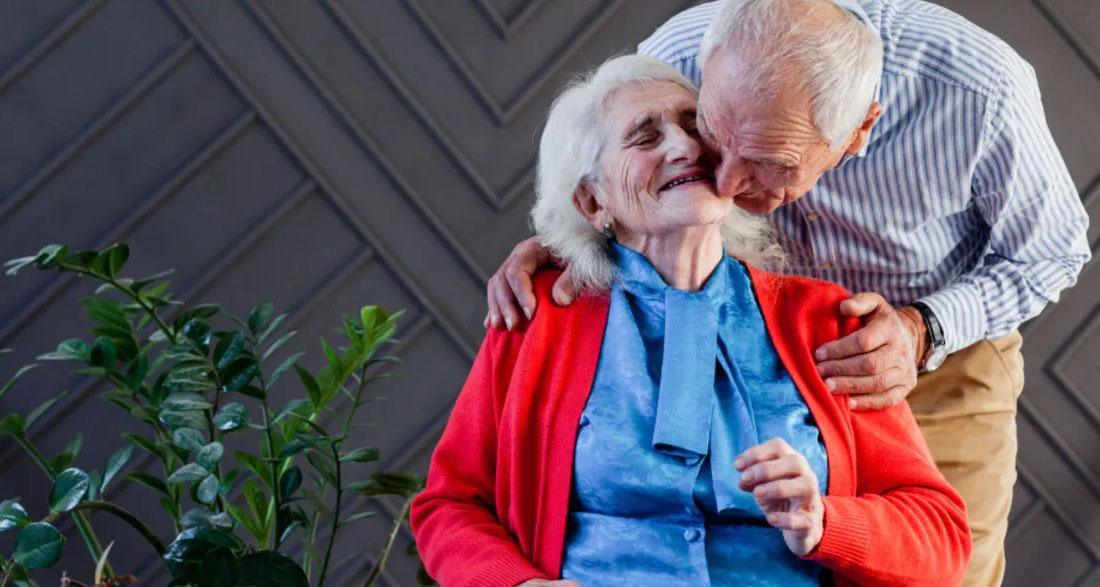
My husband begged me, pleaded even, never to step inside his garage. I trusted him enough not to ask why.
For nearly 60 years, I obeyed that simple rule. But the day I finally opened that door, I discovered something that shook me to my core—a truth I wasn’t ready to face, one that made me question six decades of marriage.
My name is Rosemary. I’m 78, and I’ve been married to Henry for almost 60 years.
We met in high school, sitting side by side in chemistry class because our last names were close alphabetically. He made me laugh, that easy, contagious laugh that stayed with me even in the hardest moments.
After graduation, we worked together at the same factory. We got married when we were just 20, full of dreams and hope. Over the years, we had four children, seven grandchildren, and one great-grandchild.
Every Sunday, we grilled in the backyard. Every night, without fail, he said, “I love you, Rosie.” And he still does.
He knows exactly how I like my tea. He notices when I’m quiet, brushing crumbs off my sweater without a word. People used to say we were inseparable. Lucky. That we’d found each other young and never let go. And I agreed with them.
Henry had one rule. One request that he repeated for decades:
“Please don’t go into my garage.”
The garage was his sanctuary. Late at night, I’d hear old jazz music drifting from his radio, the scent of turpentine slipping out beneath the door. Sometimes it was locked, sometimes he spent hours just tinkering, painting, or staring at something I couldn’t see.
Once, I joked, “Got another woman in there?”
He laughed, that deep chuckle I knew by heart. “Just my mess, Rosie. Trust me, you don’t want to see it.”
I didn’t push. I knew that everyone needs their own space. I thought I trusted him completely.
But over the past months, something felt off. I’d catch him staring at me, but not in a romantic way. His eyes were worried, almost afraid.
One afternoon, Henry was getting ready to go to the market and left his gloves on the kitchen table. Assuming he was still in the garage, I went down to give them to him.
The door was slightly open. A thin beam of afternoon light cut through the dust floating in the air.
I hesitated. Then, my curiosity pushed me forward. I opened the door—and froze.
Every wall was covered with hundreds of portraits of a woman at different stages of life. In some, she laughed; in others, she cried. There were paintings of her asleep, angry, or impossibly soft. In the corners, dates were scribbled—even future years.
I moved closer and pulled one down. Studied it.
“Who is she?” I whispered.
Henry appeared behind me, his face pale.
“Sweetheart, I told you not to come in here,” he said, his voice tight.
“Who is this woman, Henry?”
He swallowed hard. “Rosie… I paint to hold on to time.”
“What does that mean?”
“I… I told you not to come in here. Please… trust me.”
“Trust you? You’ve been painting pictures of another woman for years! Is she your mistress? Did you decide to cheat on me in your old age?”
He shook his head frantically. “Rosie, it’s not what you think.”
“Then explain it to me!”
“Okay,” he said slowly. “I’ll tell you. It’s a long story, and you might not believe me. But not today.”
“After 60 years, you can’t tell me the truth?” I whispered, my voice breaking. I walked out of the garage, trembling.
The days that followed were quiet. Henry became even more attentive, almost watchful. He seemed to be guarding me, and I didn’t understand why.
I needed answers.
One morning, I pretended to be asleep. Through barely open eyes, I watched him move around the bedroom. He went to the safe, entered the combination, and pulled out a thick envelope of cash.
Where was he going with that much money?
He got dressed quietly.
“I’m going for a walk,” he whispered, thinking I was still asleep.
But he didn’t wear his walking shoes. He put on his good jacket—the one reserved for important appointments. My heart raced. I got dressed faster than I had in years and followed him in my car, careful not to be seen.
Henry didn’t go to the park. He drove across town to a private neurology clinic.
I parked and went inside. The receptionist didn’t notice me, busy on the phone. I crept down the hall and stopped outside a consultation room, hearing voices inside.
A doctor spoke first: “Henry, her condition is progressing faster than we initially hoped.”
Her condition? My condition?
“How much time do we have, Doc?” Henry asked, his voice breaking.
“We may have three to five years before significant deterioration,” the doctor said. “Eventually… possibly… she may not recognize her children, or her grandchildren.”
I held my breath.
“There is an experimental treatment,” the doctor continued. “It’s expensive. Around $80,000. Not covered by insurance, but it could slow the progression significantly.”
“I’ll pay it. I’ll sell the house if I have to,” Henry said, his voice trembling. “Just give me more time with her.”
My heart clenched. They were talking about me.
The doctor explained projected timelines: 2026—early memory loss, 2027—difficulty recognizing faces, 2029—significant cognitive decline, 2032—advanced stage.
I remembered the dates on the paintings. They weren’t random. Henry had been painting me in advance—preserving who I was before memory could take me away.
I pushed the door open. Henry looked up and froze.
“So… I’m the woman on the walls?”
“Rosie… you followed me?”
“Yes. And I heard everything.”
Henry knelt in front of me, taking my hands. “I’m so sorry. I didn’t want you to find out like this.”
“How long have you known?”
“Five years. But it feels like a lifetime.”
“Five years? And you didn’t tell me?”
“I couldn’t. Every time I tried, I couldn’t find the words.”
I looked down at my hands. “What’s wrong with me, Henry?”
“Early-onset Alzheimer’s. It’s slow… for now. But it will get worse.”
I thought of the past months—the small lapses in memory, the grandchild’s name I forgot last week, the recipes I’d made a thousand times suddenly feeling unfamiliar.
“You’ve been preparing for the day I forget you,” I whispered.
He held me tightly. “If you forget me, I will remember enough for both of us.”
I saw the envelope of cash, the trips to the clinic. “I saw you taking money.”
“I ran out of art supplies!” he said softly, tears in his eyes.
I sat down. “I want to see it all. Every painting.”
“That’s a lot, Rosie.”
“Please, Henry. I need to see it.”
That night, he led me into the garage. We stood in front of the walls covered with portraits.
The woman in them didn’t look exactly like me. Her features were softer, blurred in places. Henry had never painted from photographs—only from memory.
“This one is from the year we met.”
“I look so young,” I said, touching the canvas.
“You were 17. Paint on your nose from art class.”
“This one is from our wedding day.”
“I painted it from memory. You were the most beautiful person I’d ever seen.”
We walked through the years—our children’s births, family vacations, quiet nights in.
Then came the future.
“This is 2027,” he said, showing me a portrait where I looked confused, lost.
“You painted me forgetting?!” I whispered.
“I painted you as you might be. So I’ll recognize you even when you don’t recognize yourself.”
I studied the painting, seeing the uncertainty in my eyes, the tilt of my head, the confusion that would one day come.
“Show me the rest.”
He showed me 2028, then 2029. By 2032, I sat in a chair, distant, and in the corner, Henry had written:
“Even if she doesn’t know my name, she will know she is loved.”
Tears ran down my cheeks. I picked up a pencil and wrote beneath his words:
“If I forget everything else, I hope I remember how he held my hand.”
Henry pulled me close. “I’m scared, Henry. What if I forget our children?”
“Then I’ll tell you about them every day.”
“What if I forget you?”
“Then I’ll introduce myself every morning. And I’ll fall in love with you all over again.”
“I’m going to fight this. As hard as I can.”
“I know you will. And I’ll be right beside you.”
The next day, I called the doctor myself. I wanted to know everything—the treatments, the trials, the costs.
“I want to try,” I said. “Every extra day I can get with my family. With Henry.”
The doctor nodded. “Then we’ll start next week. Also… write things down. It will help.”
I began a journal. Henry helped me record dates and moments I might forget. And so I tell this story now, while I still can.
Last week, I forgot our daughter’s name for a moment. I wrote it down immediately: “Iris. Our daughter. Brown hair. Kind eyes. Loves gardening.”
Sometimes, I go back to the garage and look at the walls. The woman I was, the woman I am, the woman I might become. And I think about Henry—the man who has loved me for 60 years and will keep loving me, even when I cannot remember why.
Yesterday, I added a final note to my journal:
“If one day I look at Henry and don’t know who he is, someone please read this to me: This man is your heart. He has been your heart for 60 years and counting. Even if you don’t remember his name, your soul knows him. Trust the love you can’t recall but that has never left you.”
Henry read it, tears streaming down his face. He held me like he was afraid I’d vanish.
And maybe someday, in a way, I will. But until then, we have today. If memory leaves me, I hope love remains. Even in forgetting, my Henry was never forgotten.
“Even if you don’t remember his name, your soul knows him,” I whisper to myself every day.