

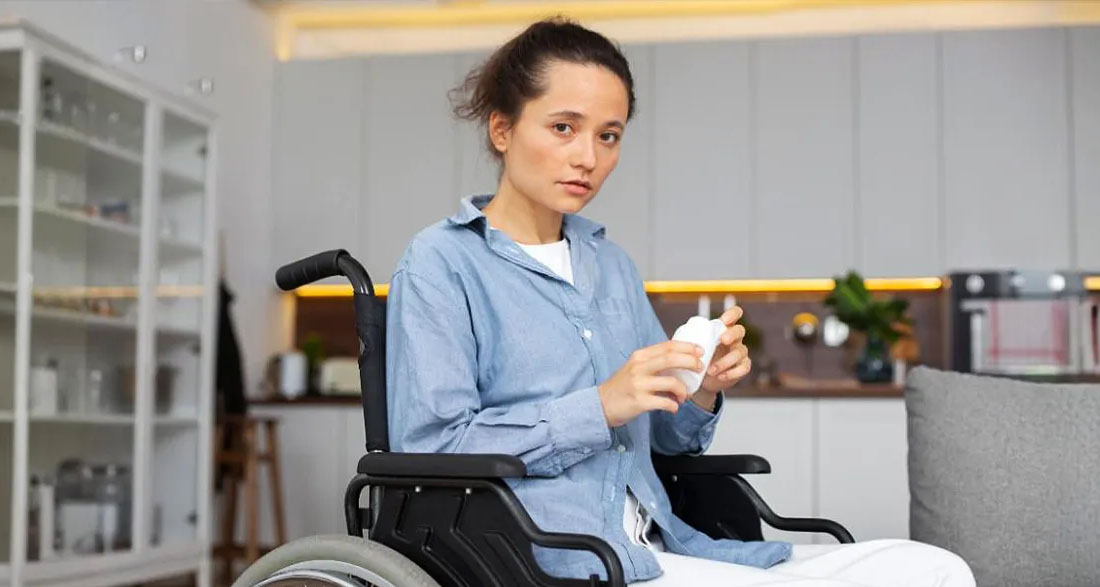
When Karma Came Knocking
My husband promised he’d be by my side forever. He swore it. But when his mistake left me shattered, he decided I was too heavy to carry. He didn’t see it coming, but karma had already bought a ticket to his doorstep.
I never imagined I’d tell my story like this—not like this, and not with everything I’d lost. My name is Jane. I’m 34. Until a few months ago, I thought my life was simple but steady. I wasn’t rich or famous.
I wasn’t living some glamorous story. But I was independent, strong, and I believed I didn’t need anyone’s help.
I worked full-time as a veterinary nurse at a busy clinic just outside Portland.
My days were long, messy, and exhausting—but I loved every second. After work, I’d swing by the grocery store, then take the long way home, windows down, music blasting, pretending I was the only soul on the road. That’s the life I built for myself—one I thought was unshakable.
And then there was Matt.
Matt had that easy charm, the smile that could light up a room, the right amount of mystery to keep you hooked. He ran an IT business from home and somehow made you feel like you were the only person in the world. At least, that’s how it felt at first.
We met at a friend’s barbecue five years ago. I laughed so hard at something he said that I spilled my drink down my shirt. Without missing a beat, he handed me his hoodie. Before the night ended, he asked, “Want to grab tacos?” That was Matt: bold, spontaneous, and magnetic.
But charm only carries you so far. Life eventually tests what’s underneath.
The night everything changed didn’t feel like a setup for tragedy. We were just leaving a late dinner with his old college buddies. The rain was light, just enough to slick the roads. I offered to drive, but he waved me off with that familiar grin.
“I’ve had two beers. I’m fine, babe. Trust me.”
I didn’t trust him. Not really. I could see it in his eyes—the glaze, the over-the-top laugh, the way he leaned a little too much on confidence that wasn’t there. But I didn’t push. I buckled in, heart thudding.
The wipers squeaked and rattled, barely keeping up. As soon as we hit the freeway, I knew I should’ve insisted.
“Matt, slow down,” I said, gripping the edge of my seat.
He looked at me, grinning like it was all a game. “Relax. I’ve driven this road a hundred times.”
“Matt, please,” I said, louder this time. “You’re scaring me.”
He laughed—a real, booming laugh—as if my fear was ridiculous. Then he swerved between lanes, ignoring every word I said.
And then it happened.
The screech of tires. The crunch of metal. The flash of headlights. Pain exploded everywhere. The airbag smacked me in the face, and suddenly nothing made sense.
I woke up two days later in a hospital bed. Pain radiated through every inch of me—sharp, pulsing, unrelenting. My legs, my spine, my arms, my head—it all hurt like fire. Tubes ran from my arms, monitors beeped around me.
Matt sat there, eyes red-rimmed, hand trembling slightly as he kissed mine.
“Jane,” he whispered, voice shaky, “I’m so sorry. I thought I had it under control. I swear, I’ll take care of you. We’ll get through this.”
Groggy and drugged, I nodded. I wanted to believe him. I needed to. Because isn’t that what marriage is for? For better or worse?
Weeks passed. The doctors were kind but careful. My lower spine had suffered severe trauma. I’d walk again, they said, but not without help and never without pain. Lifting, standing too long, bending—everything was permanently limited.
Home was a minefield. Stairs became mountains. Showers were battles. My body, once strong, refused my commands. I needed Matt more than ever.
At first, he tried. He brought meals, helped me get dressed, installed railings. But the effort didn’t last.
The first real sign came when I asked him to pass the remote.
He let out a long, dramatic sigh. “It’s right there, Jane.”
“I know. I just can’t reach it right now,” I said, voice small.
He handed it over silently. But the warmth, the care—it was gone.
Little things started to show the cracks: the eye rolls when I asked for help, the hours he spent hiding in his office, the coldness that grew heavier each day.
The breaking point came on a rainy Thursday afternoon. I sat on the edge of the bed, trying to fold laundry. My braces made even bending excruciating. I winced at a dropped shirt.
Matt walked in, looked at me, and shook his head. Not angry. Just tired, distant.
“You’re… different now,” he said.
I blinked at him. “Excuse me?”
He avoided my gaze. “I didn’t mean it like that.”
“Yes, you did,” I said, voice firm despite the pain.
Silence. A silence louder than any argument we’d ever had.
Then came the final blow. The windows fogged, rain streaking the glass. I traced a raindrop while waiting, legs aching, pain sharp as knives. Matt walked in, dripping wet, eyes cold and distant.
“I can’t ruin my life by being your nurse,” he said flatly. “You need to leave. Two days.”
I froze. My chest tightened. “Are you serious?”
“You heard me,” he replied.
The man who promised forever—whose mistake had stolen my independence—was now tossing me out like a burden. And the house wasn’t even mine.
Matt had bought it five years before. Back then, love had felt like enough. “Ours,” he’d said. I believed him. Naive, I trusted.
I dug through the finances after the accident. My name was barely on the joint account for bills.
Everything else—savings, investments, money he transferred to secret accounts—was locked out of my reach. By the time I realized it, the hospital bills were piling high. And he gave me two days to leave.
I sat in numb despair, rain tapping the windows in rhythm with my humiliation.
But karma had already clocked in.
The doorbell rang at 7 p.m. Matt flinched. “Probably a package,” he muttered.
He opened the door. A woman in a navy blazer, folder in hand, and a tall man with a notepad stood on the porch.
“Mr. Thompson?” she asked.
Matt hesitated. “Yeah… Who are you?”
“I’m with the insurance company,” she said, firm but polite. “We need to discuss the accident from three months ago. May we come in?”
Matt’s face went pale.
They walked in, documents spread across the coffee table. My heart hammered, frozen but alert.
The woman’s eyes never left Matt. “Mr. Thompson, witness statements confirm you were speeding, weaving, ignoring road signs. Financial disclosures show irregularities in your claim—duplicate medical submissions, rerouted payments.”
Matt stammered. “That’s not… She told me to drive faster.”
I whispered, “No, I didn’t.”
“The evidence suggests otherwise,” she said. “You returned to work within a week, yet billed for ongoing therapy. Accounts your wife was unaware of were used for diversion.”
He opened his mouth, then closed it. Cornered.
The woman turned to me. “Mrs. Thompson, the remainder of your medical settlement will be redirected under your name. You are entitled to full compensation. Legal will formalize it shortly.”
Matt looked at me, stunned. “You can’t… That money…”
“No, Matt. You tried to steal it,” I said quietly.
He whispered, voice cracking, “I was handling it… for both of us.”
The investigators left, footsteps echoing. Silence fell.
“This is your fault,” Matt snapped.
“No,” I said calmly. “This is karma.”
That night, I didn’t cry. I called my sister, Leah. “I’ll be there in an hour,” she said, instantly. She arrived after midnight with her husband Aaron, hugged me tight, and helped pack my things.
Matt stood in the kitchen, arms crossed, watching everything he built fall apart. I looked back once—not with sadness, but to remember the moment I finally walked away from someone who never deserved to stay.
Recovery took time. Not straight, not easy. But I had love now. Leah never let me miss an appointment. Her kids cheered me on, brought snacks, treated my brace like armor. I even started a small remote job at a nonprofit helping women recover from trauma. Not glamorous, but mine.
Matt? Legal trouble, debt, frozen accounts, house up for sale. Pain he caused me handed him ruin. And life, finally, gave me peace.
Sometimes I see mail addressed to “Mrs. Thompson” and feel the old sting—but I never open it.
He handed me pain. Life handed me justice. And it felt better than I ever imagined.