

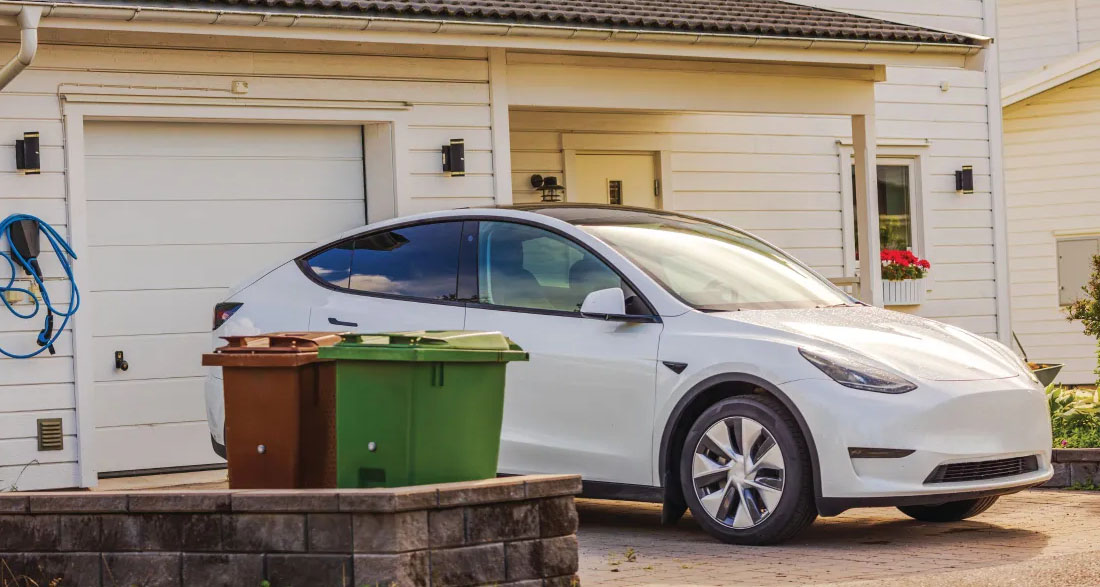
When my husband, Daniel, told me I had to pay $80 a day just to use our own car, I didn’t argue. I didn’t even raise my voice. I walked out instead. I needed air, space, and distance from his nonsense.
By the time I came home the next day, I was ready to explode. My mind was racing with all the things I wanted to say. But I didn’t have to unleash my fury—because karma had beaten me home. And it had already started teaching him a lesson he wouldn’t forget.
For years, my life revolved around schedules I didn’t control.
Grocery shopping? Juggling bags and a stroller, racing against bus timetables.
Picking up our daughter from daycare? Leaving work early to avoid the nightmare of a late bus.
Running errands? Delayed endlessly because the logistics alone were exhausting.
When Daniel and I finally bought a car, all that stress vanished in a heartbeat.
The day we brought it home, Daniel tossed me the keys.
“Go ahead. Take it around the block,” he said casually.
“For real? Right now?” I asked, heart pounding with excitement.
He laughed. “It’s a car, not a spaceship.”
But to me, it was freedom. Suddenly, I could drop our daughter off in the morning without racing the clock. I could swing by the store without budgeting an extra hour. I could say yes to things without first asking myself the question that had been my constant companion: How will I get there?
“It’s amazing,” I said one afternoon, loading groceries into the trunk. “I don’t know how I survived before.”
Daniel smiled distractedly, scrolling on his phone. “It’s just a car,” he said.
To him, maybe. To me, it was independence. And we’d bought it together—or at least, that’s how I saw it.
Daniel had paid the down payment; we split the monthly payments evenly. The registration was in his name, but I hadn’t thought twice. We were married. We shared a life, a daughter, a home, a bed. Why wouldn’t we share a car?
I didn’t know that question would come back to haunt me.
A few weeks later, my mom called from the hospital.
Her voice was thin, tired.
“The doctor says I can go home tomorrow,” she said.
“That’s wonderful! How are you feeling after the surgery?” I asked, relief flooding me.
“Sore. Slow. Ready to leave.”
“I’ll pick you up. Don’t worry about a thing.”
She hesitated. “Are you sure? I don’t want to be a burden.”
“You’re not. I’ll get Mila from daycare first, then head straight to the hospital. I’ll bring you home and help you settle in.”
“Thank you, sweetheart,” she said softly.
The plan was perfect: daycare pickup at five, hospital discharge paperwork right after, dinner at my mom’s. Finally, all because we had a car.
I grabbed my bag, reached for the keys… and froze.
Daniel was standing there, arms crossed, a frown on his face that made my stomach drop.
“Is something wrong, hon?” I asked cautiously.
He didn’t answer at first. Then, like a punch to the gut, he said:
“Listen, you have to pay me to use my car. $80 a day should cover it.”
I laughed, certain he was joking.
“What are you talking about?”
His jaw set like steel. “You heard me. You have to pay me to use my car.”
I blinked. “Daniel… I paid the down payment, and we split the monthly payments. The car is registered under your name, sure, but it’s ours. We’re married!”
He sighed, exasperated. “Well, of course. You use it constantly—grocery runs, daycare, errands. Gas, maintenance, wear and tear. None of that is free. $80 a day is cheap. Try renting a car; it’ll cost you more.”
I froze. I couldn’t argue. My own husband, my partner, was treating me like a client instead of a wife.
I put the keys down, ordered a taxi, picked up our daughter, and went straight to the hospital.
“I thought you were fetching me in your car,” Mom said as I opened the taxi door for her.
“That was the plan,” I said, forcing a smile. But inside, I was fuming.
It was late when we finally reached Mom’s place. Without a car, we stayed the night. Mila asked why we weren’t going home, and I told her Grandma needed us—which was true, but also true was that I needed distance from Daniel before I said something I might regret.
The next day, I returned home, furious and ready to confront him.
I had rehearsed every word in my head: how much he had hurt me, how small he made me feel, how he had turned our marriage into a transaction.
But when I walked in, the house was too quiet. No TV, no clatter from the kitchen, no sound of life.
Daniel sat at the dining table, shoulders hunched, phone face down like it had personally betrayed him. He looked up.
“Oh. You’re back,” he said.
I didn’t respond immediately. I set my bag down slowly and took in his bloodshot eyes, his tense jaw. Something was wrong.
“What happened?” I asked.
He ran a hand through his hair. “I need to talk to you… about the car.”
My heart sank.
“I lent it to Mike last night,” he admitted.
I blinked. “You what?”
“He needed it. His car’s in the shop, he had an early shift… I figured…” He exhaled heavily. “It’s my car.”
“And?” I pressed.
“He got into an accident.”
The room tilted. I gripped the back of a chair.
“Nothing major. No one’s hurt. But… the other car was damaged. Police, insurance, claims…”
I nodded slowly, savoring the moment.
“Exactly,” he said, frustrated. “The insurance company called. Since the car’s in my name and Mike isn’t listed as a driver, coverage might be limited… or denied. They need paperwork, statements, a claim dispute. The other driver is calling already.”
I pulled out a chair and sat down, calm as a surgeon.
“Well,” I said, smiling, “since it’s your car, this is your problem, right?”
He stared at me, stunned.
“You’re joking,” he said sharply.
“You said access costs money. Time costs money. Wear and tear. Stress. Expertise. This will take time—calls, paperwork, follow-ups, maybe days. And I’m very good at it.”
Daniel’s face dropped. “You can’t be serious!”
“Yesterday, I needed the car to pick up our daughter and my mother. You looked me in the eye and told me that didn’t matter. That fairness meant charging me.”
He opened his mouth, then closed it. Silence hung between us.
“When you charged me to use the car, you turned our marriage into a transaction. I can’t live like that,” I said quietly.
He swallowed. “I… I was wrong. I shouldn’t have acted like the car mattered more than you. More than us.”
“Then this ends here. Either we’re partners, or we’re not. Either what’s mine is yours and what’s yours is mine—including responsibility—or I’m leaving. I love you. But if you’re keeping score like a bank, this isn’t a marriage.”
He shook his head quickly. “I don’t want to live like that either.”
“Good,” I said. “Apology accepted. We’ll handle the insurance together. Like partners. Like we should have been doing all along.”
The next three days were exhausting—calls, paperwork, statements—but we did it together. I didn’t charge him a cent.
A week later, the claim was settled. Our insurance went up slightly, but not as much as it could have. Daniel kept apologizing, not just for the car incident, but for everything it had represented: keeping score, acting like our marriage was a ledger instead of a partnership.
I forgave him, but I made it clear—loud and clear—I would never tolerate that attitude again. I even showed him exactly how much I had paid toward the car, just in case he forgot.
Now, when I grab the keys, he doesn’t say a word. He doesn’t keep track.
Because we’re not roommates splitting bills, or business partners balancing accounts.
We’re married. And that means something.