

After Grandma Evelyn died, I thought the hardest part of losing her would be packing up her little house. I didn’t expect the hardest part to be facing a locked basement door she had never let me near—and the secret it held would change my life forever.
If someone had told me a year ago that my life was about to turn into a complicated, emotional detective story about my grandma, I would have laughed right in their face.
Grandma Evelyn had been my anchor since I was twelve.
I never knew my father, and after my mom died in a car accident, Evelyn had taken me in without hesitation. Her house became my sanctuary. I was small, scared, and lost, but she made me feel safe.
She taught me the things that mattered: how to survive heartbreak, how to bake the perfect apple pie, and how to look a person in the eye when saying ‘no.’ Grandma could be strict, but she had one unbreakable rule: don’t go near the basement.
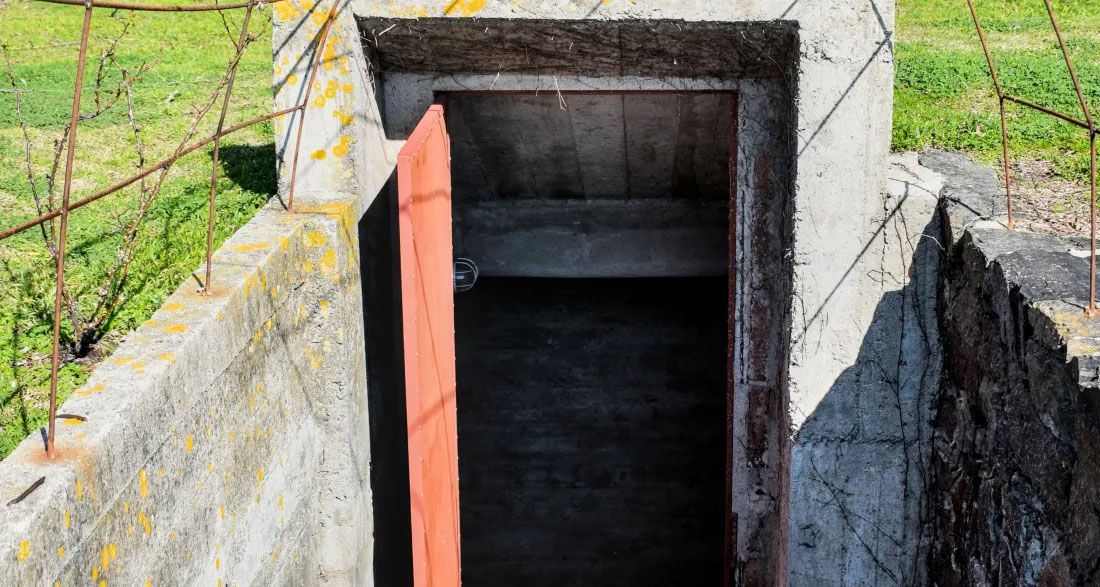
At the back of her house, down the steps behind the kitchen, there was a heavy metal door. Always locked. I had never seen it open.
“Grandma, what’s down there?” I asked countless times as a curious kid. “Why is it always locked?”
“Sweetheart,” she would say firmly, “there are a lot of old things in the basement you could get hurt on. The door is locked for your safety.”
End of conversation. No exceptions.
Eventually, I stopped asking. I never imagined she was hiding something monumental down there.
Life moved on. I went to college, came home most weekends to recharge, and eventually met Noah. What started as “staying over” soon became moving into his small apartment across town. We built our future together, full of groceries, paint swatches, and new memories.
Grandma Evelyn remained my steady presence, even as age crept in. At first, it was small things: forgetfulness, fatigue during chores.
“I’m old, Kate, that’s all. Stop being dramatic,” she would say whenever I worried.
But I knew her better than anyone. Slowly, the humming in the kitchen stopped. Porch sitting became “too much effort.”
Then came the call I had been dreading.
“I’m so sorry, Kate,” Dr. Smith said gently. “She’s gone.”
I had baked her a chocolate cake just last month for her birthday. Noah ran to me, holding me as I tried to make sense of the emptiness left behind.
We buried her on a windy Saturday. Friends and the few relatives we had attended, but afterward, the house and its memories were mine to manage. My mom had been an only child, Evelyn’s brothers were gone, and the rest were distant cousins.
“Do whatever you think is best with her things,” they all said, leaving me and Noah alone.
A week later, we drove to Grandma’s house. It was frozen in time: curtains carefully pulled aside, wind chimes tinkling softly in the breeze. Slippers were still by the couch, her faint, sweet scent lingering in the air.
Noah squeezed my hand. “We’ll take it slow,” he promised.
Packing up her life was heartbreaking. We uncovered a birthday card I’d made in third grade, a cracked photo of Mom as a toddler, and so many more fragments of memories.
Once we finished, I found myself staring at the basement door—the one place Grandma had never let me see. Now, she wasn’t there to stop me.
I grasped the cold, old lock. I had never seen a key.
“Noah,” I whispered, “I think we should open it. There may still be some of Grandma’s things down there.”
“Are you sure?” he asked, his hand steady on my shoulder.
I nodded.
We broke the lock. It groaned and snapped, then we pushed the door open. A blast of cold, dusty air greeted us. Noah went first, flashlight cutting a path through the darkness. I followed, heart pounding.
What we found was more than I could have imagined.
Along one wall were stacks of boxes, neatly labeled in Grandma’s handwriting. Noah opened the first one. On top was a tiny, yellowed baby blanket and a pair of knitted booties. Then a black-and-white photograph.
It was Grandma Evelyn, no more than sixteen, sitting on a hospital bed. Her eyes were wide, exhausted, terrified. And she was holding a newborn.
Not my mom.
I screamed.
“What is this?” I cried, opening another box. My hands trembled.
It wasn’t just stuff. It was a hidden life. More photos, letters, adoption papers stamped CONFIDENTIAL or SEALED. Rejection letters.
Then I found a notebook. Thick, worn, filled with dates, names of agencies, and heartbreakingly brief notes:
“They won’t tell me anything.”
“Told me to stop asking.”
“No records available.”
The last entry, only two years ago: “Called again. Still nothing. I hope she’s okay.”
My strict, loving grandmother had had a baby girl at sixteen—before my mom—and had spent her life searching for her.
Noah crouched beside me as I cried.
“She never told anyone,” I sobbed. “Not Mom. Not me. She carried this alone for forty years.”
I looked around the dim basement, understanding her silence at last.
“She didn’t lock this away because she forgot,” I whispered. “She locked it away because she couldn’t…”
We moved everything upstairs. I sat in the living room, staring at the boxes.
“She had another daughter,” I said again, voice shaking.
“And she looked for her,” Noah added quietly. “She looked her whole life.”
I opened the notebook to the margin where a name was written: Rose.
“We have to find her,” I said.
The search was relentless—anxiety, late nights, phone calls to agencies, online archives. Almost nothing survived from the 1950s and 60s. Every dead end made me want to give up. But Grandma’s note whispered in my mind: “Still nothing. I hope she’s okay.”
I signed up for DNA matching, thinking it was a long shot. Three weeks later, an email: a match.
Her name was Rose. Fifty-five, living only a few towns away.
I typed the message with trembling hands: Hi. My name is Kate, and you’re a direct DNA match for me. I think you may be my aunt. If you’re willing, I’d really like to talk.
The next day, the reply came: I’ve known I was adopted since I was young. I’ve never had answers. Yes. Let’s meet.
We chose a quiet coffee shop midway between our towns. I arrived early, nervously twisting a napkin. Then she walked in.
I knew instantly—it was the eyes. Grandma’s eyes.
“Kate?” she said softly.
“Rose,” I breathed, standing.
I slid the black-and-white photo of Evelyn holding her baby across the table.
“That’s her?” Rose asked, holding it gently.
“Yes,” I said. “She was my grandmother. And Rose… she spent her whole life looking for you.”
Rose listened as I shared the story: the secret basement, the lifelong search, the hidden boxes. Tears ran down her face.
“I thought I was a secret she had to bury,” Rose said finally, voice raw. “I never knew she searched.”
“She never stopped,” I said firmly. “Not once. She just ran out of time.”
We talked for hours. When we finally hugged outside the café, it felt like the last puzzle piece had locked into place.
I had found the answer to Evelyn’s oldest question.
Rose and I stay in touch every day. It’s not some perfect movie reunion, but it’s real. Every time she laughs, and I hear that slight, throaty catch in her voice, I feel like I finally finished the one thing Evelyn never could.
I had found the answer to Evelyn’s oldest question.