

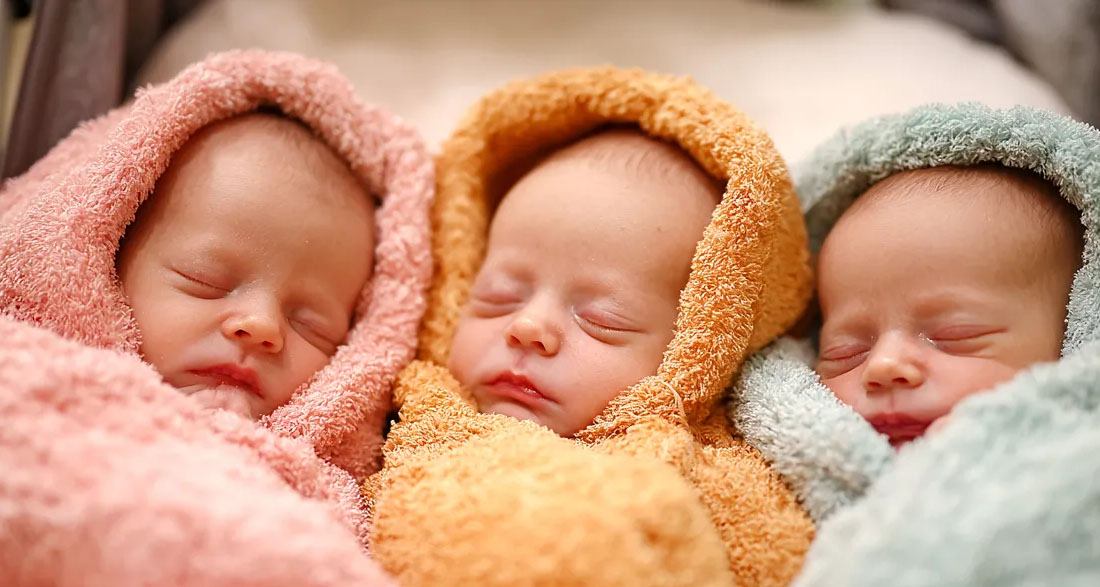
People always said parenting would change me.
No one ever warned me it would start with a folded note under a coffee maker… and end nine years later with my daughter whispering, “Dad, we still have you.”
I was twenty-six years old when my whole life split in two.
I was barely out of the honeymoon phase of my twenties. I had a steady job I didn’t hate, a secondhand crib set up in a freshly painted nursery, and a woman I believed would walk beside me forever.
Nancy wasn’t just my fiancée. She was my home.
We met in college and fell hard and fast. Our love wasn’t flashy. It was built on grocery runs, inside jokes, and late-night talks about what kind of parents we wanted to be. We talked about kindness. About patience. About raising good people.
So when she got pregnant with triplets, I was terrified—but I was ready to be terrified with her.
I thought that was love.
I thought we were stepping into our forever.
But forever lasted six weeks.
One morning, Nancy kissed my forehead like she always did and said, “I’m heading into work. I’ll see you later.”
She never came back.
At first, I assumed the worst. A car accident. Something sudden. Something terrible.
I called her phone.
Once.
Twice.
Again and again.
Voicemail.
I called her office. They told me she never showed up.
That’s when panic turned into something colder. Heavier.
That’s when I saw it.
A small piece of paper, folded neatly, tucked under the coffee machine. It didn’t have my name on it. It didn’t have our daughters’ names either.
No apology.
Just four words.
“Please don’t look for me.”
And just like that… she was gone.
The police searched for weeks. Missing person reports were filed. Traffic cameras checked. Coworkers interviewed. Her credit cards stayed silent. Her phone stayed dark.
Her car vanished too.
There was no sign of violence. No struggle. No goodbye to anyone.
It was like she had carefully folded herself out of our lives.
I kept telling the police, “She wouldn’t just leave. Something has to be wrong.”
But deep down… I already knew.
The grief didn’t crash over me all at once. It crept in slowly, like fog filling my lungs. Quiet. Constant.
But I didn’t have the luxury of falling apart.
I had three newborn daughters who needed someone to keep breathing for them.
My parents, Julie and Malcolm, moved in without even asking. One day my dad just showed up with a suitcase and a dented thermos and said, “We’re staying.”
He smiled at me and added, “We’ll take the night shift, son. You sleep. That’s how we survive this.”
And somehow… we did.
Barely.
My mom struggled to understand Nancy’s choice.
One morning, while scrambling eggs, she shook her head and said, “Ben, I understand postpartum depression. I really do. But leaving these beautiful babies at six weeks? That’s unforgivable.”
I didn’t argue. I didn’t agree.
I just stayed quiet.
The house smelled like formula, baby powder, and fear. I moved through my days like I was wearing someone else’s body.
Some nights, I sat in the rocking chair with all three girls pressed against my chest, whispering the same lie over and over.
“Mommy’s coming back. Mommy will be back.”
One night, while folding tiny onesies at two in the morning, I finally admitted the truth.
“She’s not coming back,” I said to my dad. “Nancy is definitely not coming back.”
He looked exhausted. But steady.
“I know,” he said softly. “But you are here. And you come back every single day. That counts for everything.”
The years blurred together after that.
Lizzie grew up fast. She was curious, bold, and never afraid to ask hard questions. She wanted honest answers—and expected them.
Emmy was quiet but strong. She spent hours drawing in spiral notebooks, always listening even when she pretended not to.
And May… my little shadow. Every night she climbed into my lap, wrapped her tiny fingers around mine, and held on like she was anchoring me to the world.
They didn’t just become my responsibility.
They became my reason.
I tried dating again eventually. Carefully. Slowly.
It never lasted.
One woman laughed on a second date and said, “Three kids? Wow. You must be exhausted. I don’t think there’d be time for fun.”
“I’m not tired,” I replied. “I’m built differently now.”
She didn’t understand.
Most of them didn’t.
So I stopped trying.
Being their dad was more than enough.
Almost exactly nine years later, on New Year’s Eve, my parents came over to celebrate. The girls were laughing, arguing about fireworks, and chasing each other through the living room.
I was in the kitchen pouring sparkling juice into plastic cups. The smell of cinnamon rolls filled the house.
It felt full. Warm. Safe.
Then someone knocked.
I opened the door—and time froze.
Nancy stood there.
Snow clung to her coat. Her face looked older. Tired. But unmistakably hers.
I stepped outside and closed the door behind me.
“What the hell are you doing here?” I asked.
“I want to talk,” she said quietly. “And I want to see the girls.”
“After nine years?” I demanded. “You think you can just knock and walk back in?”
“I’ve been back in the States for two years,” she said. “I didn’t know how to reach you. I didn’t even know if you’d open the door.”
“You left a note under the coffee machine,” I said sharply. “No goodbye. No explanation. Just gone.”
“I panicked,” she whispered. “I was drowning. I couldn’t breathe. I felt trapped.”
“So you left your newborn daughters?” I asked.
“There was a man,” she admitted. “Mark. He worked at the hospital. He said he could help me escape. I wasn’t thinking clearly.”
“Where did you go?”
“Dubai. Then India. Then the UK. He controlled everything. I wasn’t allowed to contact anyone.”
“And it took you seven years to leave?”
“Yes,” she said. “I escaped during a visa renewal. I’ve been working at a diner in Chicago. Saving money. Trying to make things right.”
“You don’t decide when consequences end,” I said.
“They’re my daughters,” she said. “I gave birth to them.”
“And I raised them,” I replied. “Every scraped knee. Every nightmare. You’re a stranger.”
Her voice hardened.
“Then we’ll let the court decide.”
A week later, the papers arrived.
She was suing for custody.
I told the girls the truth that night.
“She wants to reconnect,” I said. “Only if you’re comfortable.”
They nodded.
At the coffee shop, Nancy tried to smile.
“Hi, girls,” she said.
“Why did you leave us?” Emmy asked.
“I wasn’t ready,” Nancy admitted.
“And now you are?” Lizzie asked.
“We lived without you,” May said quietly.
“We’ll meet you,” Lizzie decided. “But only if Dad’s there.”
Two weeks later, the court denied her custody request.
She texted me one last time.
“Coming back was a mistake. They’re better off without me.”
When I told the girls, Lizzie smiled and said, “It’s okay, Dad. We still have you.”
That broke me.
So I took them to the nail salon. Then Disneyland.
Because love isn’t about showing up once.
It’s about showing up every day.
And I always will.