

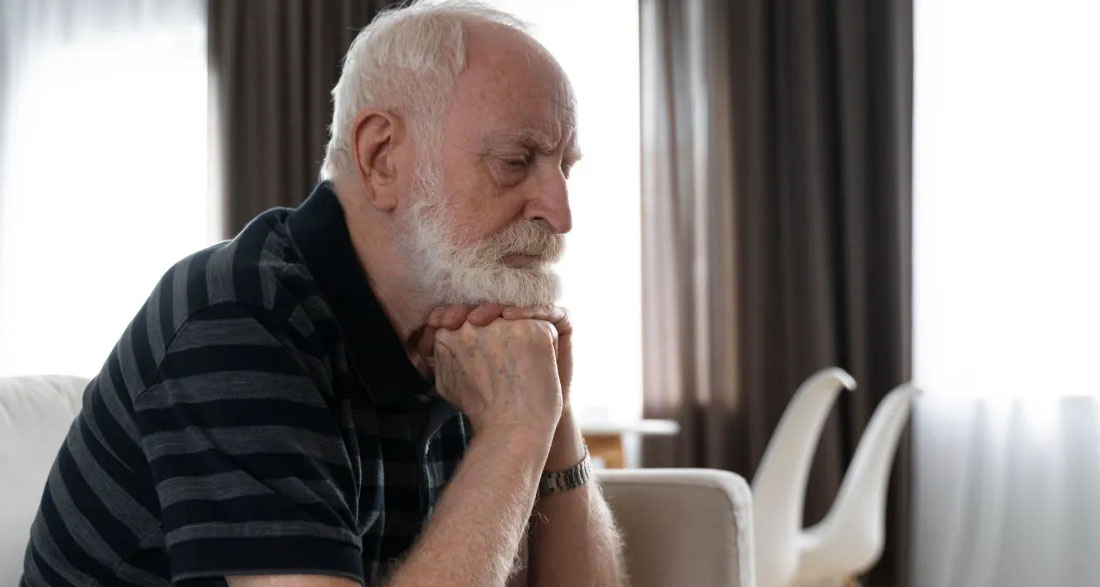
My father cut me off after I adopted a child he said “wasn’t really mine.”
We didn’t speak for four long years.
And then one ordinary afternoon in a grocery store, my son saw him, walked straight up without fear, and said something that shattered everything my father believed — and left him in tears.
But the breaking point didn’t start there.
It started years earlier, at a dinner table that felt more like a courtroom.
My father sat at the head of the table, his posture stiff, his hands folded tightly, like he was conducting an interview instead of meeting my boyfriend for the first time.
“And what do you do again?” my father asked, his voice flat.
“I manage a logistics team,” Thomas replied.
Calm. Steady. Confident.
That was Thomas. Always grounded, always sure of himself.
Unlike me. My stomach was in knots. My hands trembled in my lap.
My father nodded once and pursed his lips, the way he always did when he was silently judging, filing away information for later use.
This wasn’t just a slightly awkward first-meeting dinner.
Thomas and I were already in our mid-thirties. He had been married before. And he had a six-year-old son named Caleb.
That alone was enough to make my father uncomfortable.
Caleb sat quietly beside Thomas, his legs swinging under the chair. His eyes moved from face to face, watching us like he was following a tennis match. He didn’t speak unless spoken to. Around new people, he never did.
The silence stretched so long it hurt.
I reached for my water glass, just to give my hands something to do.
My father noticed immediately. His eyes snapped to me.
“So…” he said slowly, glancing between Caleb and me. “He’s very quiet.”
“He likes to listen,” I said quickly. “He’s observant.”
My father hummed, unconvinced.
I gathered the plates and escaped to the kitchen, desperate for air. But I didn’t get far.
“Julie, a word.”
Dad followed me in, leaning against the counter with his arms crossed.
“So this boy,” he said. “Where is his mother?”
“She left when he was little.”
He raised an eyebrow. “Left?”
“She walked out when he was a toddler. He barely remembers her. Just that she stopped coming back.”
“And his father just… raised him alone?”
“Yes.”
Dad shook his head slowly. “That’s not natural.”
I counted to ten in my head.
“But where is the mother now?” he pressed.
“She died a few years ago. Car accident. Before I met Thomas.”
That seemed to confirm something ugly in his mind.
“So now,” he said coldly, “you’re playing house with a widower’s child.”
“I’m marrying a man I love,” I snapped.
“And inheriting someone else’s mess.”
“He’s not a mess,” I said. “He’s a child.”
Dad shook his head, disappointment written all over his face.
“You could do better, Julie. You should be having your own children, not taking in strays.”
The words hit like a slap.
What do you even say to that?
How do you explain that love isn’t a transaction? That family isn’t always about blood?
I didn’t explain.
I walked back to the table.
Thomas proposed soon after.
We married a few months later in a small, quiet wedding. No grand hall. No dramatic decorations. Just close friends, simple vows, and a reception in my best friend’s backyard.
My father hated that too.
“It’s your wedding day,” he scoffed. “Where are the decorations? Where’s the proper dress? Just because he’s been married before doesn’t mean you should settle.”
“This is what I want,” I said.
“Could’ve just gone to a judge,” he muttered.
Life moved forward without him.
Thomas, Caleb, and I settled into our family rhythm. I never tried to replace Caleb’s mother. I just showed up.
I packed his lunches. Helped with homework. Sat beside him at night when nightmares woke him crying, rubbing circles on his back until his breathing slowed.
One night, after I tucked him in, he looked at me with serious eyes.
“Can I call you Mom?”
Tears burned my eyes.
“I’d be honored.”
A year later, I made it official.
I adopted him.
We signed the papers downtown. Thomas held my hand. Caleb stood between us in his superhero shirt, beaming.
When I told my father, his anger exploded.
“What are you thinking, Julie? That child isn’t yours!”
“He’s mine in every way that matters.”
“You’re throwing your life away,” he snapped. “Blood matters.”
“That’s not how love works,” I said, my voice shaking. “Thomas and Caleb are my family.”
There was a long pause.
Then he said, “There are limits. Blood is one of them. Don’t call me again. Not until you come to your senses.”
And just like that, he hung up.
He didn’t just reject my choice.
He rejected my son.
So I didn’t call him again.
Four years passed.
Caleb grew taller. His voice deepened. He started reading chapter books.
Thomas got promoted. We bought a house with a backyard big enough for a swing set.
Then one day, in a grocery store, everything changed.
I looked up from my shopping list and froze.
My father stood a few aisles away.
He looked older. Thinner. His hair was completely white.
“Mom?” Caleb asked softly.
“That’s your dad, right?” he whispered. “You don’t talk?”
“No.”
“Why?”
“He doesn’t accept us,” I said gently.
Caleb nodded, thinking. Then he squared his shoulders.
“Then I think I should tell him something.”
Before I could stop him, he walked straight toward my father.
Dad turned, confused. Then his face went pale when he saw me.
Caleb stopped in front of him.
“Julia is my family,” he said clearly. “She’s my mom.”
Dad scoffed. “No, she isn’t. Blood matters.”
Caleb didn’t flinch.
“She’s my mom because she chose me. My real mom left. Julia packs my lunches. She stays with me when I’m scared. She’ll never leave me.”
Dad opened his mouth, then closed it.
Caleb continued, “You’re her dad, right? So you were supposed to choose her. But you didn’t.”
Silence.
“I don’t understand how someone who stopped choosing their own child gets to decide who a real parent is.”
My father’s shoulders sagged.
“I… didn’t think of it that way,” he whispered, tears filling his eyes.
I stepped forward.
“You don’t get to judge my motherhood,” I said. “If you want to know your grandson someday, you’ll have to learn what choosing someone really means.”
I turned the cart away.
Behind us, my father called my name. Soft. Broken.
I kept walking.
Caleb looked up at me. “Are you okay?”
I squeezed his shoulder. “Yeah.”
And I meant it.
Because being chosen is more powerful than being born.
And choosing someone to be your family is the most radical act of love there is.
I had already made my choice.