

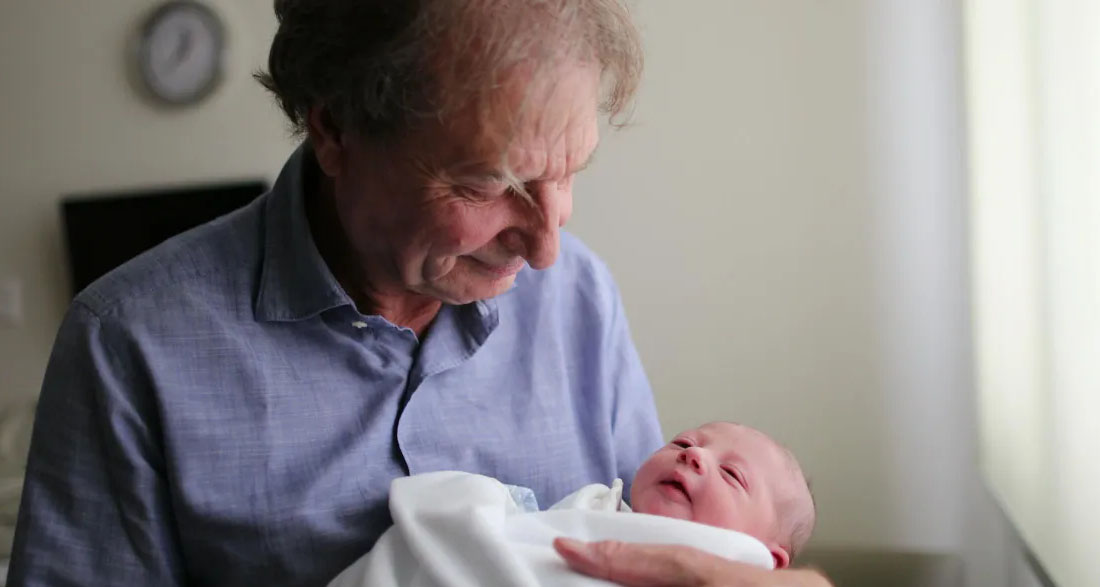
I’m a 65-year-old janitor who thought my daughter had quietly outgrown me. I thought she’d moved on, built her life, and didn’t need me anymore. Then, nearly a year after she told me she was pregnant, she showed up at my door in tears, holding a baby carrier.
I’m a 65-year-old man. I work as a janitor. I live alone.
Most nights are the same. A grind. A blur.
That night started like all the others.
I came home from cleaning office bathrooms, my knees aching, my back screaming, my hands still smelling of bleach.
I dropped my keys on the counter, kicked my boots off by the mat, and dumped the mop bucket in the sink. I heated whatever was in the freezer, sat in my chair, and let the TV talk to nobody while I let my body collapse.
But then… a knock.
Sharp. Fast. Insistent. Not casual. Not the polite tap of a neighbor. My heart skipped. I frowned, wondering who could be there at this hour.
And then I opened the door.
There she was. Gillian. My daughter.
“Dad… I need you now,” she whispered, voice cracking, eyes red and wet.
I froze.
The daughter I hadn’t really seen or heard from in almost a year was standing on my porch with a baby carrier in both hands. Her fingers were white from gripping it so hard. She was crying so badly she could barely breathe.
Something inside me snapped.
Twelve months of silence. No visits. No pictures. No updates. Twelve months of waiting to be part of this life I had helped start. Twelve months since she called me and said, “I’m pregnant.” And now… here she was.
“Come in, sweetheart,” I said, my voice breaking.
She stepped inside, gently placing the baby carrier on the living room floor. Suddenly, my little house felt smaller, tighter, like it was holding its breath too.
I knelt down.
Inside the carrier was a tiny baby girl in a pink dress, fists tucked under her chin, dark hair sticking up in soft little wisps. My late wife’s name came to me before anything else.
“Her name is Rosie. After Mom.”
The air left my lungs.
“That’s… that’s a beautiful name,” I whispered.
“You can hold her,” Gillian said softly.
I froze. My hands hovered above the tiny bundle. After almost a year of distance, I didn’t know if I had the right.
“You can hold her,” she said again, “Please. I want you to.”
My hands shook as I slid them under Rosie’s head and back. I lifted her like she was made of glass. She snuffled softly, scrunched her little face, then relaxed against my chest.
I sat down hard in my old armchair and… broke.
I cried like a kid. Not quiet, polite tears. Real, ragged, soul-shaking sobs. Shoulders shaking. Nose running. Tears soaking into my beard and my work shirt.
Gillian sat on the couch, hands over her mouth, crying right along with me.
To understand why it mattered so much, you need to know the story behind it.
I met Gillian when she was a baby. Not mine by blood. Her birth mother was young and scared. She left her at the hospital and disappeared—no name, no note. My wife and I couldn’t have children. Three miscarriages. Three times putting away tiny clothes and dismantling nursery decorations.
When social services called about a baby girl, my wife said yes before the worker finished speaking. We were tired. We were broke. And we were so, so happy.
We brought Gillian home at six weeks old. She cried all night. We walked the floors singing off-key lullabies. My wife was a natural. She swaddled her, calmed her, made her laugh.
Then cancer came. My wife got sick. It didn’t matter that our daughter was eight, that my wife was kind. It didn’t care about us at all. Chemo. Hospitals. Sleepless nights. And then… the doctor spoke softly. There was nothing left to fight.
After my wife died, everything went quiet.
Bills needed paying. Food needed buying. Gillian needed a dad. I went back to work Monday. Then night shifts. Two jobs. Walking around other people’s trash while trying to figure out how to keep my kid’s life from falling apart.
I tried. That was all I could do. I learned how to braid hair from a magazine I found in the break room. I burned dinners. Forgot picture day. Sent her to school in two different shoes. She still brings that up.
When she was 16, she wrote a paper about her “hero.” I read it when she was at a friend’s house:
“My dad does everything wrong, but he never quits.”
I cried like the kid and she was the parent. She grew smart, tough, stubborn. College. Job. New city. Then Evan.
Polished. Rich family. They shook my hand at the wedding, smiling, but their eyes didn’t reach. They looked at my uniform like it was contagious. Visits got shorter. Calls got briefer.
“You’re gonna be a grandpa,” she said on the phone. Then two minutes of talk before: “I’ll call you back later, okay?”
And then… nothing.
No baby shower invite. No ultrasound photos. No updates.
I told myself not to be needy. That she was busy. That she’d call when she was ready.
But late at night, alone in my little house, I pictured her in a big, bright kitchen with her in-laws, dressed nice, talking about investments. And me? Old. Faded uniform. Smell of old coffee and regret.
Was she embarrassed of me?
I never told her. I just cried quietly in the dark, then got up and went back to work.
Now, standing there in my living room with Rosie on my chest and Gillian on my couch, I felt like my heart was going to burst.
“I’m so sorry,” she whispered.
I handed Rosie back and sat beside her. Her hair was in a messy bun. Dark circles under her eyes. Cheeks streaked with dried tears.
“I’m so sorry,” she said again. “I’m sorry I waited. I’m sorry I kept her from you.”
“You don’t understand,” I said softly.
“I was never ashamed of you,” I tried.
Her head snapped. “Dad, no. That’s not it. I was never ashamed of you.”
Then the story spilled out.
“His parents backed him,” she whispered, tears falling. “Evan left. When I was pregnant.”
I stared.
“They said I trapped him. They said it was my fault. I thought I could do it alone. I read the books, took the classes… but it’s not like the books. She cries. I don’t know why. She won’t sleep. The apartment’s a mess. I feel like I’m failing her every minute.”
“And I knew,” she said, voice trembling, “If I brought her to you, I’d see how easy it is for you. How natural. You raised me without Mom. Worked two jobs. Read me stories. Did my hair. I thought if I saw you with her… I’d realize how bad I am at this.”
“You were perfect,” I said, voice cracking.
“No,” she whispered. “I am nothing like that.”
I laughed, rough and short. “You always knew what to do.”
She shook her head. “No. You stayed.”
“Yes,” I said softly. “I wasn’t perfect. I just loved you enough to keep showing up. That’s all she needs from you, Rosie. Just showing up. Every single day.”
She let out a sob-laugh. “Will you help me?”
“Every single day,” I promised, kissing her head. “As long as I’m alive.”
That was three months ago.
Now, every Wednesday, my house isn’t quiet.
“Grandpa!”
A knock. Lighter. Happier. I open the door. Gillian. Rosie on her hip, kicking her legs.
I pretend to be shocked every time.
Rosie squeals, grabs my beard. I sit in my old rocking chair and reach for the stack of children’s books I’ve kept all these years. Same stories I read to Gillian. Same worn pages. Same dumb voices.
Sometimes she falls asleep on my chest, drooling. Sometimes she grabs my nose. She laughs like it fills her whole body.
Last week, Gillian handed me a small paper bag.
“So everybody knows the scary-looking janitor is actually the best grandfather in the world,” she said.
Inside: a cardboard badge. GRANDPA, in big letters, flowers drawn around it.
I pin it to my uniform before work.
I snorted. “Scary-looking? I thought I was handsome.”
She rolled her eyes. “Sure, Dad. Very handsome. Now put it on.”
And I do.
Most people still just see the janitor.
Rosie sees Grandpa. She sees my voice, my arms, the way I rock her. The way I show up. And after everything… that’s more than enough.