

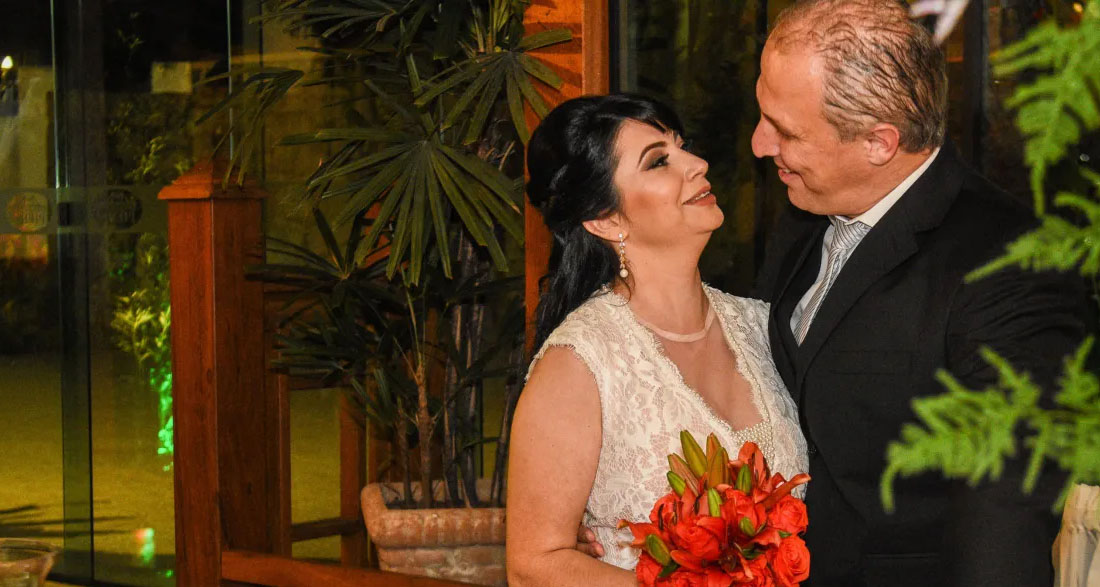
Eight days after my mother died, my dad married her sister. I know how that sounds. Even now, it feels impossible.
While guests clinked champagne glasses and smiled for photos, I was crouched behind the shed, hearing a truth that shook my world. It started with a whisper, a sentence I wasn’t supposed to hear, and it ended with a secret no one expected me to uncover.
You think there’s a rock bottom.
You think it’s the knock at the door, the uniformed officer shifting awkwardly, asking if your name was Tessa. You think it’s the sound your dad makes—the half-human, half-animal sound when something inside him splits. You think it’s the moment your knees hit the floor before your brain catches up.
You’re wrong.
Rock bottom is watching your father stand in the backyard eight days after your mother’s funeral, wearing a boutonniere and holding hands with your aunt.
I was thirty when it happened. My mother, Laura, was gone after a car accident. One second she was picking up her prescription, the next, an officer was standing on our porch, hat in hand, lips forming words I couldn’t process.
The days after her death were a blur. Casseroles piled up. Flowers wilted. Aunt Corrine, my mother’s sister, cried louder than anyone and made sure I knew how devastated she was.
“We’ll get through this,” she said over and over, voice soft but commanding. “Everything will be fine, Tessa. We’ll get through this, I promise.”
Apparently, she meant it… with my father.
Aunt Corrine had been my mother’s sister, my supposed ally, and she knew exactly what to do to seem caring. She sobbed at the funeral, held my hands in the kitchen, promised me the world.
“We’ll get through this, I promise,” she repeated, her glossy, pink nails flashing as they caught the light. Only three days after Mom was buried.
“I should probably redo these, Tess,” she said, noticing my stare. “I chipped one while hugging everyone.”
I didn’t answer. I clutched my coffee mug, cold, untouched, and tried to remember what normal conversation felt like. I just nodded, letting her act out her performance.
Eight days later, Aunt Corrine married my father.
There was no dating, no easing in, no explanation, no warning. Just a wedding. White chairs. Vows. A towering cake.
“Is this real?” I asked my dad, voice tight. “Seriously?”
“It just happened quickly, Tessa. Let’s not dwell on the details,” he said, like it was nothing.
“That’s one way to put it,” I muttered.
The wedding was in our backyard, right where Mom used to kneel every spring to plant tulips. I watched through the kitchen window as Corrine ordered someone to yank them out.
“They’ll look messy in photos,” she said, brushing dirt from her hands.
“Those were Mom’s,” I called out, stepping outside.
“Your mom loved projects,” Corrine said loudly, enough for Mrs. Dobbins next door to hear. “But she made this yard, and this family, hard to live in. We’re fixing that.”
Mrs. Dobbins froze, tray in hand.
I still wore black when the chairs were arranged. My father, Charles, stood at the altar like a man reborn—relaxed, smiling, happy. Guests looked puzzled, but they smiled anyway.
Some whispered to me afterward:
“God brings comfort in surprising ways.”
“At least he’s not alone, darling.”
I nodded. That’s what daughters are expected to do.
An hour before the ceremony, Aunt Corrine cornered me in the kitchen. She held out her hand, diamond ring catching the light like a spotlight.
“You should be grateful,” she said. “Your dad needs someone.”
I stared at the ring.
“My mom hasn’t even been gone two weeks,” I said.
“Honey,” she said, tilting her head, voice soft and saccharine, “this is what healing looks like.”
“It looks fast,” I said. “Like a… mistake.”
She laughed lightly, like I had made a joke.
“Don’t be sour. Today is about love and joy. Fix your mood, please, Tessa.”
Then my father walked in.
“You couldn’t wait two weeks? Dad? Just a little more time…”
“Not today, Tessa,” he said, jaw tight.
And that’s when I realized it wasn’t about timing. It was about choosing her.
I left before I could say something I’d regret. I crouched by the side gate, trying not to throw up, while I heard champagne glasses clinking and laughter floating through the air.
Then I heard footsteps. Mason.
Mason, Corrine’s son, nineteen, quiet, always polite. That day, he looked pale, drained, like life had been wrung from him.
“Tessa,” he said, voice cracking, “can we talk?”
I straightened but stayed silent. He glanced over his shoulder, then grabbed my wrist—not rough, just insistent.
“Please. Over here.”
He led me behind the shed, into shadows. I braced for an apology for his mother or a speech about moving on.
“It’s… different,” he said. “That ring on her finger? My mom showed it to me last Christmas.”
“What?”
“She said your dad had picked it out already. She even showed me the box. Made me promise not to tell anyone. I thought maybe… maybe they’d wait. Or maybe it wouldn’t happen like this.”
The world cracked. My mom had been alive. And even then, they were planning their vows.
“Do you know where they got it?” I asked.
“Ridgeway Jewelers. I took a picture of the card in the box. It had a handwritten note: ‘For our real beginning.’”
I nodded, numb. I drove straight to Ridgeway Jewelers. The woman behind the counter didn’t flinch.
“I’m looking for a receipt,” I said. “White gold, diamond halo. Bought in December, by a man named Charles.”
She typed slowly. Then she showed me the screen. There it was. December 18th, 2025. My mother had been alive. Baking cookies. Humming off-key. Wrapping gifts.
I snapped a photo. Proof. Facts. Nothing anyone could spin.
Back home, the wedding raged on. Champagne, platters, laughter. Corrine’s head thrown back, radiant, smug. People I’d known forever congratulated themselves for showing up.
Someone handed me a glass. I stepped into the yard, raised it like a challenge.
“Eight days ago,” I said, voice steady, “I buried my mother.”
Chatter died. Forks paused. A breeze lifted the eucalyptus centerpieces Corrine had chosen to replace Mom’s tulips.
“Today, I’m standing in her backyard, watching her sister wear a ring my dad bought while my mother was still alive,” I continued.
Gasps. Someone dropped a fork.
“Tessa, that’s enough,” my father said. “You’re grieving. You don’t know what you’re saying.”
“I know where and when you got the ring, Dad. I know the date. And I know why this wedding happened eight days after the funeral. You two didn’t find each other in grief. This affair has been going on a long time.”
Corrine’s smile cracked.
“How dare you embarrass us,” she hissed. “This was supposed to be a day of healing.”
“You embarrassed the memory of my mother! Of your own sister! I’m just stating the timeline and telling your guests the truth.”
Her face went cold. She turned to the guests, syrupy sweet:
“She’s not herself. Grief makes people… confused.”
I set my glass down and walked away.
Two days later, my father found me in the garage, packing Mom’s vintage dresses.
“You humiliated us, Tessa,” he said quietly.
“No. I revealed what you buried. You could have divorced Mom if you weren’t happy. You could have respected her. Aunt Corrine has always been horrible. I thought you were better.”
“We were separated,” he said, sighing.
“You should have done better by her. My mother was the best part of you, Dad. Now that she’s gone, we have nothing.”
Silence. His answer in itself.
I left the garage with Mom’s dresses, keys in hand. Tulip beds torn apart, soil scattered. I picked a few bulbs, still clinging to life, and drove to the cemetery.
I placed them at her headstone. Not perfect, but alive. And they belonged to her.
Mason had followed me. He stood quietly behind the gravestone.
“I didn’t want you to find out later, Tess,” he said.
“They really thought they’d won, huh?”
“But they didn’t,” he whispered.
There was no neat lesson. No forgiveness. Just tulips, dirt under my nails, and a silence that didn’t need fixing.
I didn’t get my mother back, but I didn’t let them bury the truth with her. The tulips would come back in spring—hers always did. And for the first time since the funeral, I wasn’t angry. I was done.