

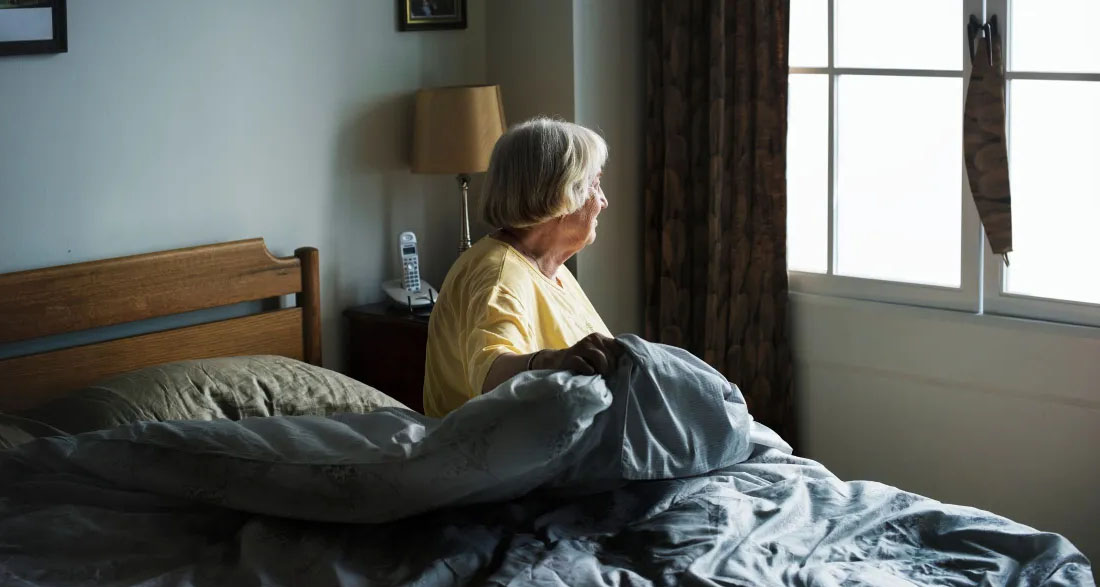
When the doctor said our mother couldn’t live alone anymore, the room went quiet so fast it felt heavy. Then, almost like they had practiced it, my siblings started giving excuses—one after another, quick and polished.
I stood there, watching it all happen.
Honestly, I was the last person anyone expected to say anything. Which is exactly why what I said next changed everything.
The doctor looked at all of us and said clearly, “Your mother’s balance is getting worse. She’s already had two serious falls this year. Living alone is dangerous.”
No one answered.
Not a single word.
Our mother, Margaret, sat on the hospital bed, hands folded in her lap. She wore that small, hopeful smile older parents have—the kind that says, maybe this time, my children will step up.
I stood there with my six brothers and sisters. Seven of us. Seven people she had raised, mostly on her own.
The doctor glanced at us again, waiting.
Then Jack, the oldest, spoke first—as usual. He always had something to say when it didn’t cost him anything.
“I wish I could help, Mom,” he said, shaking his head, “but we’re barely keeping up with the mortgage.”
Eliza sighed dramatically, like she was already tired just thinking about it. “Unfortunately, I’m moving to Dallas in a few weeks. Everything’s already arranged.”
Nick rubbed his forehead, refusing to even look at Mom. “If I miss more work, I’ll lose my job. I wish I could help, Mom. I really do.”
Kirk shifted uncomfortably. “My wife wouldn’t allow it.”
Nancy forced a tight smile. “My place is too small for both of us.”
And then Sam just shrugged. “I can check in on her during weekends.”
Excuse after excuse.
I watched my mother’s smile slowly fade. Not all at once. Just little by little—enough for the truth to reach her before the tears did.
My wife wouldn’t allow it.
That line echoed in my head.
This was the same woman who worked night shifts at a grocery store after my father left just weeks after I was born. The same woman who packed lunches, stretched every dollar, paid bills late but never gave up.
Growing up, no one said it out loud—but I felt it.
Sometimes, I caught the way she looked at me.
Like everything started falling apart when I arrived.
I wore hand-me-downs from all my siblings. Ate whatever was left. I was the youngest. The unexpected seventh child.
I was never my mother’s favorite.
That’s not bitterness.
That’s just the truth.
But still… seeing her sitting there, trying not to cry in front of strangers, something inside me shifted.
When the room went completely quiet, I stepped forward.
I walked to her bed.
She looked at me carefully, like she wasn’t sure what I was about to say.
I leaned closer and said, “I’ll take Mom in.”
Everyone turned.
The room practically exhaled.
Relief spread across their faces so quickly it was almost insulting.
They thought I was doing it out of guilt.
They were wrong.
I straightened and looked at all of them.
“But only if we sell the house.”
The relief disappeared instantly.
“What?” Jack snapped.
“No way,” Eliza added.
Kirk shook his head. “That’s not happening.”
Their voices started piling up, louder and sharper.
“But only if we sell the house,” I repeated calmly.
“Enough!” Mom suddenly said. “Don’t embarrass me in front of the doctor.”
That shut everyone up.
I kept my voice steady. “We need to talk about this properly. Tomorrow. At the house. Six p.m.”
Jack scoffed. “And you think we’ll just agree to sell it?”
I met his eyes. “I think the sooner we figure this out, the sooner Mom gets what she needs.”
Silence again.
Then, one by one, they nodded.
That afternoon felt endless.
I sat in my car outside the hospital for a long time, staring at nothing.
Of course they cared about the house.
It was the only real thing left. No savings. No investments. Just that house.
And suddenly, everything made sense.
They weren’t just avoiding responsibility.
They were protecting what they thought was theirs.
I let out a long breath and finally drove home.
All day, I kept replaying the look on my mother’s face.
By night, I already knew what I was going to do.
The next day, I arrived at the house two hours early.
Mom was sitting in her chair in the kitchen, resting.
“You came early,” she said softly.
“I wanted to check on you,” I replied. “Make sure you have everything you need.”
She nodded.
I started preparing a meal. The sound of chopping and cooking filled the silence.
For a while, we didn’t talk.
Then the question came out before I could stop it.
“Why was I always the one you kept at a distance?”
She froze.
“Oh, Miranda, that’s not—”
“No,” I said gently but firmly. “Please don’t brush it off.”
She stayed quiet for a long moment.
Then she sighed.
“You reminded me of the moment your father left,” she said slowly. “The bills… the fear… everything came crashing down. And you were there, right in the middle of it.”
I didn’t interrupt.
Her voice cracked. “It wasn’t because of who you are. It was just… wrong timing. I thought if I didn’t get too close, it wouldn’t hurt as much.”
That hit me harder than I expected.
She looked at me with tears in her eyes. “And now, when I need my children the most… the only one willing to take me in is the one I pushed away.”
Something inside me softened.
I nodded slowly.
“I wasn’t unloved,” I realized.
I was just loved… carefully.
From a distance.
By the time my siblings arrived, I felt different.
Stronger. Clearer.
Jack walked in first. “Let’s get this over with.”
The others followed, filling the house with noise.
“You can’t just force a sale,” Jack said immediately.
“Yeah,” Eliza added. “This house is all we have left.”
I stayed calm.
“I want to be clear about three things,” I said.
They all quieted.
“This house is unsafe for Mom to live in alone.”
“None of you are willing to step up.”
“And if you’re going to pretend to care, you should at least do something that actually helps.”
That hit hard.
To my surprise, Mom spoke up.
“She’s right.”
Everyone froze.
Jack blinked. “Mom—”
“Stop,” she said sharply.
Silence.
Then Nancy broke.
“Look… I tried,” she admitted. “Last year, when she stayed with me. But she’d forget where she was. She accused me of moving her things. She even called neighbors at odd hours.”
Mom frowned. “I don’t remember that.”
Nancy shook her head. “That’s the point.”
One by one, the truth came out.
Nick admitted he was scared to leave her alone.
Kirk said he didn’t know how to handle it.
Eliza whispered, “I wouldn’t know what to do if something happened.”
I looked at Mom.
She looked confused. Lost.
And suddenly, I realized something painful.
No one had been paying close enough attention.
Not really.
“Well,” I said, “the house is the only asset we have. Selling it gives Mom access to proper care.”
Jack rubbed his jaw. “And you expect us to just go along with it?”
“I’m not asking you to like it,” I said. “I’m telling you what needs to happen.”
No one had a better argument.
I stood up. “I’ll start calling real estate agents.”
No one stopped me.
The house sold faster than any of us expected.
Within days, we had a strong offer.
My siblings reacted exactly how I thought they would—concerned about money, distracted, hesitant.
But we moved forward.
When everything was finalized, I made sure most of the money was set aside for Mom’s care.
No one argued.
They had already gotten what they wanted.
Money.
In the middle of all this, I took Mom to a specialist—Dr. Harris.
I didn’t tell my siblings at first.
I needed answers.
After reviewing everything, he said, “I’d like to run more tests. Bring her in. We’ll take a closer look.”
Days later, he called us all in.
We sat together as he spoke.
“I’ve reviewed your mother’s records,” he said. “The decline you’ve noticed isn’t as advanced as you believed.”
Confusion spread across the room.
“What does that mean?” Jack asked.
“It means,” the doctor continued, “many of her symptoms were caused by medication mismanagement. Incorrect doses. Overlapping prescriptions. Wrong timing.”
Nancy blinked. “So… her behavior wasn’t all from her condition?”
“Not entirely,” he said. “With proper adjustments, she can improve.”
Relief washed over me.
And she did improve.
Within days of adjusting her medications, she became more present. More aware.
Not perfect.
But better.
“You seem different,” Nancy said one afternoon.
“I feel it,” Mom replied.
One by one, my siblings started showing up more.
Sam brought groceries.
Nick fixed things around the apartment.
Eliza called often.
Even Jack came by.
Living together wasn’t easy, but we made it work.
One night, after dinner, Mom looked at me and said softly, “I didn’t expect it to be you.”
I smiled a little. “Yeah… me neither.”
She looked down at her hands.
“I wish I’d done things differently.”
I thought about it for a moment.
“I get it,” I said. “You were trying to survive.”
“I’m sorry,” she whispered.
“I know.”
And for the first time in my life, I felt something settle inside me.
Not perfect.
Not erased.
But understood.
And somehow… that was enough.