

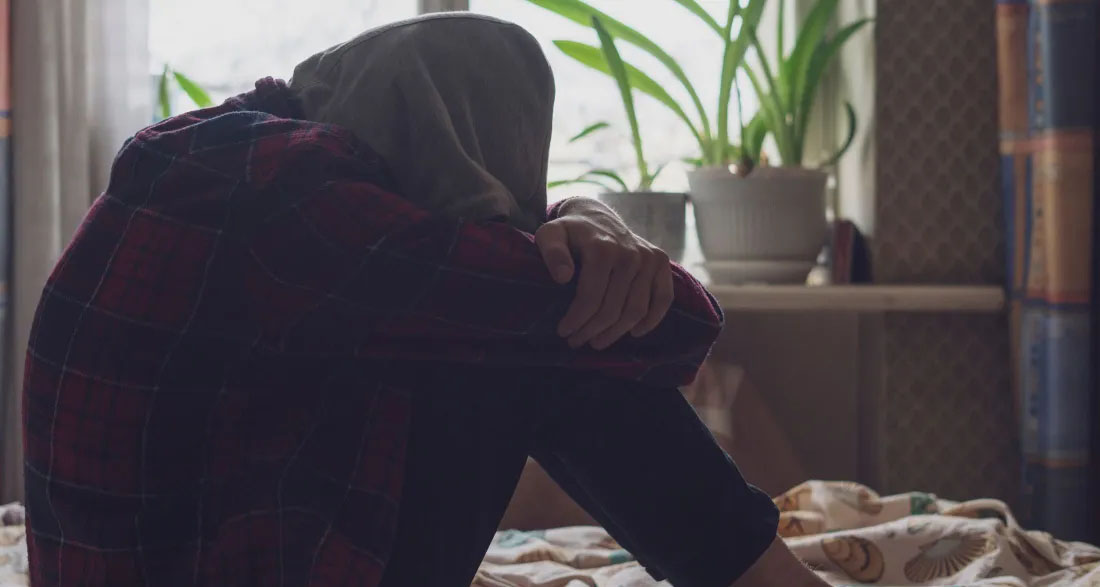
Laura used to think her niece’s silence was just part of being fifteen.
Mia barely talked anymore. She wore the same faded black jeans and the same gray hoodie every single day. Her eyes looked tired, far away, like she was somewhere else even when she was sitting right in front of you.
Laura told herself it was normal teenage behavior. Teenagers pulled away. Teenagers changed. Teenagers went quiet.
But one quiet afternoon, Laura discovered something much darker on her niece’s phone.
Something that explained why a responsible, kind teenager was slowly disappearing.
And once Laura saw it, there was no turning back.
Six months earlier, Laura had moved into her sister Jenna’s house, and honestly, she never expected it to last this long. She thought it would be temporary. A few weeks, maybe a month.
Instead, it was January, and she was still sleeping on Jenna’s lumpy couch.
Life, she learned, doesn’t care about your plans.
Everything started last July, on a normal summer afternoon.
Tom, Laura’s brother-in-law, had been outside grilling burgers. He was laughing, flipping patties, complaining about the heat. Then, without warning, he collapsed.
One minute he was standing. The next, he was on the kitchen floor, half his face drooping, words coming out wrong.
The doctors said he was lucky to be alive.
But “lucky” felt like a cruel word when talking about a 43-year-old man who could barely move the left side of his body.
Tom survived the stroke. But survival came with a price.
Jenna needed help. Real help. Not the kind where people drop off casseroles and say, “Let me know if you need anything,” then disappear.
So Laura packed two suitcases, gave up her apartment lease, and moved into their cramped three-bedroom house in suburban Ohio.
From that moment on, life turned into a nonstop routine.
Every morning started at six.
Laura helped Tom with his medications first. Pills had to be counted carefully. Some crushed, some whole. Then came the feeding tube routine. Jenna showed Laura how to do it, her hands shaking, tears slipping down her cheeks as she explained.
After that, Laura and Tom did physical therapy exercises right there in the living room. Stretching arms. Lifting legs. Repeating the same motions again and again.
All of this happened while Jenna slept.
Jenna worked nights at the hospital as a nurse. Which sounded ironic until you realized how different it was to care for strangers versus caring for your own husband.
She needed the money badly, so she picked up every overtime shift she could.
And Mia?
Mia drifted through the house like a ghost.
Every morning, she came downstairs wearing those same black jeans and gray hoodie. She grabbed a granola bar, barely looked at anyone, and left for school.
No complaints. No drama. No mess.
Just silence.
“It’s just a phase,” Jenna said one morning when Laura mentioned it. “Teenagers get weird about clothes. You know how it is.”
Laura wanted to believe her.
Mia had always been the good kid. Straight A’s. Never in trouble. Always responsible. Maybe this was just her way of coping with her dad’s condition.
Still, something didn’t feel right.
That feeling turned into dread on a Thursday evening.
Laura had just finished helping Tom into bed when she heard quiet crying from the bathroom. The door was slightly open. Through the crack, she saw Mia sitting on the edge of the tub, her face buried in her hands.
Laura knocked softly. “Mia? Honey, are you okay?”
Mia jumped and wiped her face fast. “Yeah, Aunt Laura. I’m fine.”
“You don’t sound fine.”
“It’s nothing,” Mia said, but her voice cracked. “I’m just tired.”
When Mia opened the door, Laura saw bloodshot eyes and shaky hands. Mia grabbed the doorframe to steady herself.
“Bad day at school?” Laura asked gently.
Mia shrugged. “School’s school. I should go help Dad with his exercises.”
She slipped past Laura before she could say anything else.
Laura stood there, her stomach twisting.
The next afternoon, while Mia was helping Tom stretch his arm in the living room, Laura made a decision that scared her.
She walked into Mia’s bedroom.
The room was spotless. Almost too perfect. The bed was made tightly. Books were lined up by height. Homework was stacked neatly.
Laura found Mia’s phone under the bed, plugged into a charger.
It was unlocked.
Her heart raced as she opened TikTok.
The first video made her chest tighten.
It showed Mia walking down a school hallway. Someone had zoomed in on her clothes. The caption read:
“POV: one outfit, zero effort 💀”
The comments were cruel.
“Does she even own a washing machine?”
“Homeless chic isn’t a vibe.”
“Someone do a wellness check.”
Laura kept scrolling.
There were more videos. Dozens.
Then she saw a group chat called “Mia’s Closet.”
Seventeen members.
Inside were zoomed-in photos of Mia’s frayed jeans, her scuffed sneakers, and a small stain on her hoodie.
Messages read:
“Day 47 of the same fit.”
“Should we start a GoFundMe for her wardrobe?”
Laura’s hands shook.
Then she saw the fake fundraiser.
“Buy Mia Soap.”
It used a photoshopped picture of Mia made to look dirty. The description said, “Help this poor girl afford basic hygiene.”
The name that appeared again and again belonged to Sophie.
Mia’s best friend since third grade.
Laura’s vision blurred with rage.
How long had this been happening?
Then she found a shoebox under the bed.
Inside were stacks of crumpled dollar bills, smoothed out and labeled.
“Dad’s medication — February.”
“Mom’s gas money.”
“Groceries — chicken and rice.”
There was at least $200.
At the bottom was an envelope marked “New clothes (someday).”
Inside: $43.
Laura sank to the floor.
Under the money was a notebook.
It was filled with calculations. Medical bills. Insurance gaps. Grocery costs. Some pages were written at two in the morning.
“Dad’s physical therapy: $480/month. Insurance covers $200.”
“Mom’s car needs tires.”
“Groceries went over budget.”
Mia had been carrying everything alone.
Laura didn’t confront anyone.
Instead, she created an anonymous TikTok account.
She started filming moments of Mia’s life. Quiet moments. Honest ones.
Mia reading to her father.
Mia preparing pills at dawn.
Mia studying late at night after tutoring.
She posted them.
Views climbed.
Then millions.
Finally, Laura posted the truth.
A split-screen video. Mia caring for her father on one side. The cruel messages on the other.
The caption read:
“While you mocked her outfit, she was holding her family together.”
The internet exploded.
Sophie was exposed.
Support poured in.
Clothes arrived. Money. Help.
When Laura finally told Mia, Mia cried hard, then smiled through tears.
“They see me,” Mia whispered.
Three months later, Mia stood on stage wearing a blue dress and her old black sneakers.
“These shoes carried me through hell,” she said. “I’ll never be ashamed of them.”
Tom whispered, “Proud of you.”
And Laura knew that sometimes, love means fighting hard.
Even if it keeps you awake at night wondering what might have happened if you hadn’t.