

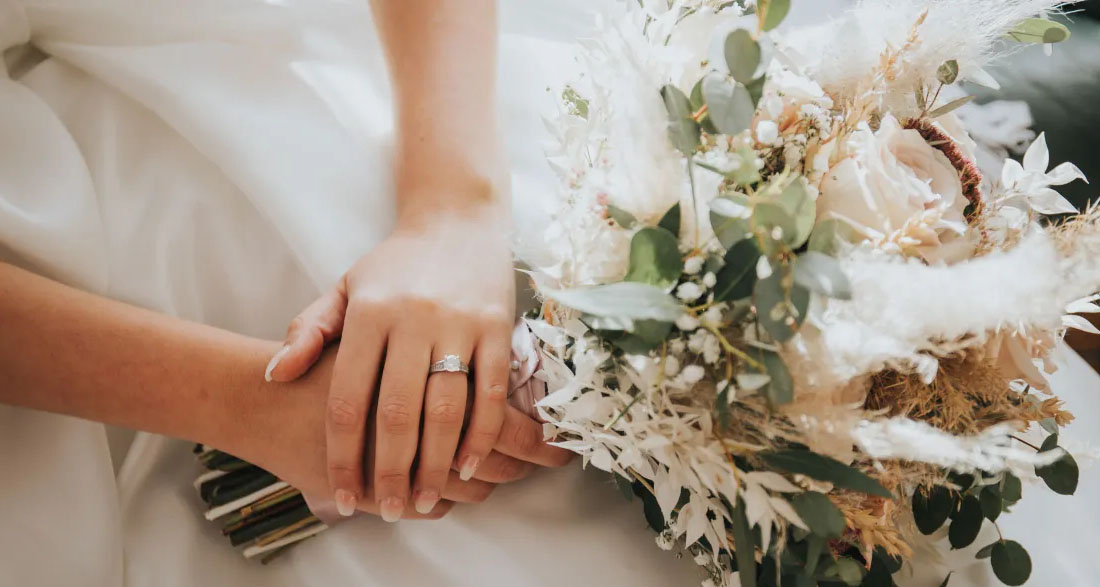
Tara married the man who once made high school feel like a slow, quiet punishment. He swore he had changed. She wanted to believe him. But on their wedding night, one sentence cracked open a past she had carefully buried.
As memory and truth collided, Tara had to face a painful question: was this love real, or was it just another version of silence dressed up as redemption?
I wasn’t shaking.
And that surprised me.
I sat in front of the bathroom mirror, calm in a way that didn’t feel natural, holding a soft cotton pad against my cheek as I wiped away the blush that had smudged during the dancing. My reflection stared back at me like it was waiting for instructions.
My wedding dress hung loose at the back, unzipped halfway, sliding off one shoulder. The room smelled like jasmine from the candles, burnt tea lights, and a faint trace of vanilla from my body lotion.
I still wasn’t shaking.
I was alone, but for once, I didn’t feel lonely.
Instead, I felt suspended. Like I was floating between what had already happened and whatever came next.
There was a gentle knock at the bedroom door behind me.
“Tara?” Jess called softly. “You good, girl?”
“Yeah,” I answered, my voice steady. “I’m just… breathing. Taking it all in.”
“You sure you’re okay?”
I imagined her standing there, arms crossed, eyebrows pulled together, deciding whether to come in. Jess had known me long enough to tell when something was wrong, even when I didn’t say it.
“I’ll give you a few more minutes,” she said. “Just holler if you need help getting out of that dress. I won’t be far.”
I smiled at my reflection, though my eyes didn’t quite follow. I listened as her footsteps faded down the hall.
There was a pause.
The wedding had been beautiful. Simple, but full of meaning. We held it in Jess’s backyard, under the old fig tree that had seen everything — birthday parties, tearful breakups, and even a power outage once that left us eating cake in the dark by candlelight.
It wasn’t fancy.
But it felt right.
Jess wasn’t just my best friend. She was the person who knew the difference between my quiet being peaceful and my quiet being dangerous. She had protected me fiercely since college, never holding back her opinions, especially when it came to Ryan.
“It’s my fault, Tara,” she had said once. “There’s just something about him. Maybe he’s changed. Maybe he’s better now. But I’ll be the judge of that.”
It was her idea to host the wedding. She said it would keep things “close, warm, and honest.” I knew what she really meant.
She wanted to be close enough to watch Ryan. Close enough to look him in the eye if he ever slipped back into who he used to be.
I didn’t mind.
I liked knowing she was there.
Since Ryan and I had decided to take our honeymoon later, we planned to stay in the guest room that night and head home in the morning. It felt easier. Like a soft pause between celebration and real life.
Ryan had cried during the vows.
I had cried too.
So why did I feel like I was waiting for something to go wrong?
Maybe because in high school, that was how life worked for me. I learned to brace myself before entering rooms, before hearing my name spoken, before opening my locker to find something written where I couldn’t erase it.
There were no bruises. No pushing.
Just words. Looks. Laughter.
And Ryan had been the one holding the shovel.
He never yelled. Never raised his voice.
He used strategy instead. Comments loud enough to sting but quiet enough to avoid punishment. A smirk. A fake compliment. And a nickname that didn’t sound cruel at first — until it was repeated so often it hollowed me out.
“Whispers.”
That’s what he called me.
“There she is,” he’d say with a grin. “Miss Whispers herself.”
People laughed. I laughed too. Sometimes. Because pretending not to care was easier than breaking down.
So when I saw him again at thirty-two, standing in line at a coffee shop, my body reacted before my mind could catch up.
I froze.
I turned to leave.
Then I heard my name.
“Tara?”
I stopped. Every instinct told me to keep walking. But I turned anyway.
Ryan stood there holding two coffees. One black. One with oat milk and honey.
“I thought that was you,” he said. “Wow. You look—”
“Older?” I asked.
“No,” he said softly. “You look like yourself. Just more… certain.”
That caught me off guard.
“I was awful to you,” he said soon after. “I remember everything. And I’m so sorry.”
No jokes. No smirk.
His voice shook.
“You were terrible,” I said.
“I know.”
I didn’t forgive him. But I didn’t walk away.
We kept running into each other. Coffee turned into conversation. Conversation into dinners. Slowly, carefully, he became someone I didn’t flinch around.
“I’ve been sober four years,” he told me one night. “I don’t want to stay that version of myself forever.”
He talked about therapy. About volunteering. About regret.
Jess didn’t trust him at first.
“You’re that Ryan?” she asked, arms folded.
“Yes.”
She pulled me aside later. “You’re not his redemption arc, Tara.”
“I know,” I told her. “But maybe I’m allowed to hope.”
A year and a half later, he proposed in the car while rain tapped against the windshield.
“I don’t deserve you,” he said. “But I want to earn whatever you’ll give.”
I said yes.
Not because I forgot.
But because I believed people could change.
Now, standing in the bedroom on our wedding night, I saw Ryan sitting on the bed, sleeves rolled up, collar undone. He looked like he couldn’t breathe.
“Ryan?” I asked. “Are you okay?”
“I need to tell you something.”
The words landed heavy.
“Do you remember the rumor? Senior year?”
My body went still.
“I saw what happened,” he said. “I saw him corner you. I knew.”
“You knew?” My voice shook. “And you said nothing?”
“I panicked,” he said. “I was scared. I didn’t want to be next.”
“And ‘Whispers’?” I asked. “What was that?”
His voice cracked. “I thought it would deflect attention. I thought it would protect you.”
“That wasn’t protection,” I said. “That was betrayal.”
We sat in silence.
“There’s more,” he said. “I’ve been writing a memoir.”
My stomach dropped.
“You wrote about me?”
“I changed names—”
“You didn’t ask,” I said. “You took my pain and made it your story.”
“I wrote about my guilt,” he said. “My shame.”
“And what do I get?” I asked. “I didn’t agree to be your lesson.”
Later, I slept in the guest room. Jess lay beside me like she used to.
“Are you okay?” she asked.
“No,” I said. “But I’m not confused anymore.”
Silence filled the room.
People say silence is empty.
It isn’t.
Silence remembers everything.
And in that silence, I finally heard my own voice — steady, clear, and finished pretending.
Being alone isn’t always lonely.
Sometimes, it’s the beginning of freedom.