

The cold air slapped my face the second I opened the front door.
“Of course it snowed again,” I muttered.
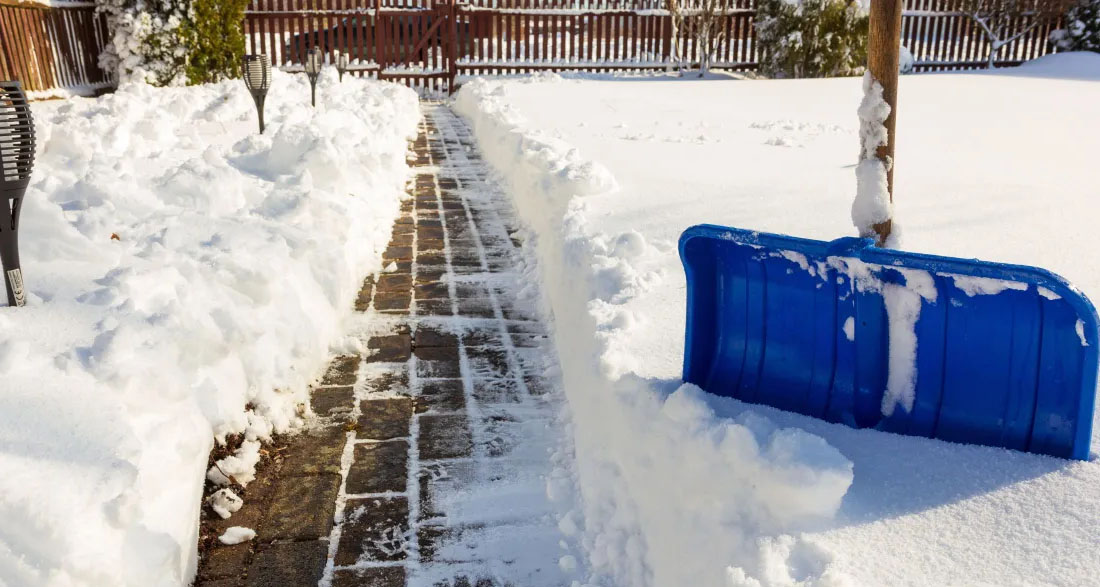
My shovel was already leaning against the porch railing, waiting for me like it knew this would happen. Snowflakes still drifted down, soft but relentless, covering everything I had cleared the day before.
Upstairs, Max was still asleep. I could hear the faint hum of his sound machine through the ceiling.
“Of course it snowed again,” I repeated, louder this time, as if the universe needed to hear my complaint.
“Come on, Kate,” I said to myself. “Let’s get this over with.”
Our neighborhood always looked calm after a snowfall—quiet, white, almost magical. The kind of place people put on holiday cards. But beauty doesn’t shovel itself.
I started clearing our walkway, pushing the shovel back and forth in steady motions. I counted each scoop the same way I used to count tips when I was waitressing—one, two, three—trying not to think about bills or groceries or how long winter still had left.
When I reached the end of the driveway, I stopped and leaned on the shovel, breathing hard. Steam curled up around my face.
That’s when I noticed the porch light three houses down flicker on.
Mrs. Hargreeve’s door cracked open slowly. First her cane appeared. Then her foot. Then her tiny white dog, Benny, poked his head out and barked once before deciding it was far too cold for bravery.
The snowbank blocking her front steps was tall—too tall for her.
Mrs. Hargreeve didn’t argue with it. She didn’t sigh or complain. She simply stepped back inside and closed the door, calm and quiet.
I stood there for a moment, lips pressed together.
Then I turned around, dragged my shovel behind me, and walked straight to her house.
I didn’t knock. I didn’t ask. I just started clearing her steps.
I couldn’t imagine her trapped inside for days, waiting for the snow to melt. That didn’t feel right.
The next morning, I did it again.
And the morning after that.
By the end of the week, it became routine. I cleared my walkway first, then hers, then went home to drink coffee and eat shortbread like a small reward.
Max noticed quickly.
“Mom helps the dog lady,” he told his friends proudly, like it was a rule of the world.
Mrs. Hargreeve never said much. Sometimes she’d nod through the window.
Once, she opened the door just enough to say, “You don’t have to, Kate.”
“I know,” I told her. “And that’s exactly why I do it.”
One morning, after I finished shoveling, I found a thermos sitting on my front step.
It was warm and heavy, wrapped in a folded kitchen towel. When I picked it up, the lid released the scent of cloves and cinnamon.
Tea.
There was no note. There didn’t need to be.
Inside, Max was sitting at the table with crayons spread everywhere.
“Did someone give you that?” he asked. “What’s in there?”
“It’s tea,” I said, smiling. “From Mrs. Hargreeve. I think it’s her way of saying thank you.”
“For the snow stuff, Mom?”
“Yes. For the snow stuff.”
He grabbed a blue crayon.
“Can I draw something for her?”
“Of course you can.”
While I made muffins, Max worked quietly. Ten minutes later, he held up his picture.
“It’s us,” he said. “You, me, the dog, and the angel.”
He’d drawn Benny barking in the snow, Mrs. Hargreeve waving, and a big blue snow angel with wings stretched wide. I was standing on our porch in a green dress.
“It’s perfect,” I said. “I’ll put it in her mailbox.”
Two days later, everything changed.
A piece of paper lay curled on my doorstep, stiff with cold.
I bent down and read it.
“NEVER COME AGAIN OR YOU’LL REGRET IT!!
MRS. HARGREEVE.”
My stomach dropped.
That didn’t sound like her. Not at all.
Inside, I opened the doorbell camera footage. At 5:14 a.m., a younger woman in a brown coat appeared. She placed the note down and walked away without hesitation.
“Who on earth are you?” I whispered.
Days passed. Mrs. Hargreeve’s house stayed silent. No Benny. No light.
On the third day, I saw a man adjusting something near her porch.
“Hi,” I said carefully. “Is Mrs. Hargreeve okay?”
He turned with a tight smile. “You must be Kate. I’m Paul. Her great-nephew.”
“She hasn’t been outside,” I said. “I usually shovel for her.”
“She’s fine,” he said quickly. “Just tired. The cold’s bad for her bones.”
“I haven’t seen Benny.”
“My sister and I moved in,” Paul said. “We’re helping her transition.”
Transition.
The word made my chest tighten.
“She needs family now,” he added. “Thanks, but you’re not… family.”
Behind the curtain, I saw someone watching.
I stopped shoveling her walkway after that.
A week later, new people moved in.
“She went into a care home,” the new neighbor said. “After a fall.”
That night, I searched everywhere for Mrs. Hargreeve.
Nothing.
Twelve days later, a blue envelope arrived.
“Dear Kate,” it read.
“They told me not to write… but I remember what’s real.”
She wrote about the snow. The shovel. Max’s drawing.
“They took everything,” she wrote. “But I found a way to leave something behind.”
Benny was at a shelter.
“There’s a small trust for Max,” she added. “Tell him I miss the snow angels.”
Max looked up at me. “Then we better go get Benny.”
At the shelter, Benny barked when he saw us.
“He didn’t forget us!” Max laughed.
A week later, we visited her.
“You came,” she said softly.
“Of course,” I told her.
“I know,” she smiled. “And that’s why I did it.”
Outside, snow fell again.
Benny led the way.
Max held my hand.
And for the first time in a long while, everything felt right.