

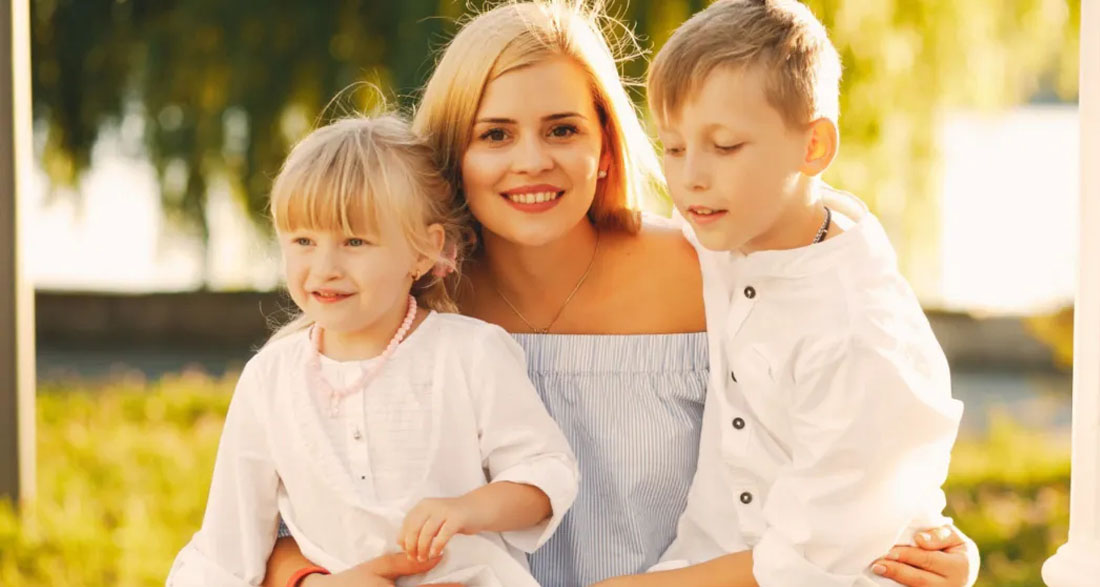
When my sister died, I adopted her infant son. For eighteen years, I loved him as my own. I rocked him to sleep, cheered at his school plays, wiped tears when he fell, and celebrated every small victory.
I gave him my whole heart. But one afternoon, everything changed. He walked up to me, tears running down his face, eyes red and full of hurt.
“I know the truth,” he said, his voice shaking. “I want you out of my life!”
My chest felt like it had been ripped open. The secret I’d carried all these years—the one I thought protected him—had finally caught up with me.
For a long time, I thought I would never say the words, “I’m a mother of two.”
My husband, Ethan, and I had tried for eight years. We endured doctor appointments, fertility procedures, and medications that made me feel like a stranger in my own body. Every negative test was a door slamming shut on the family I longed for.
By the time I turned thirty-three, I had begun to believe that motherhood wasn’t meant for me. And then, against all odds, it happened—I got pregnant.
When I told my younger sister, Rachel, she cried harder than I did. Rachel had been my anchor since we were kids. Our parents died when we were young, and we became each other’s entire world.
Two months into my pregnancy, Rachel called me with a shock of her own.
“Laura… I’m pregnant too!”
Our due dates were two months apart. From that moment, we were inseparable. We compared ultrasound pictures, texted about every symptom, and talked endlessly about raising our children side by side.
We joked that our kids would grow up more like siblings than cousins. For the first time in years, life felt generous instead of cruel.
My daughter, Emily, arrived first on a quiet October morning. Rachel was there the whole time, squeezing my hand like she always had when we were kids. Two months later, Rachel gave birth to Noah.
He was smaller than Emily, with dark hair and a serious expression that made me laugh despite the exhaustion. We took photos of the babies together, lying side by side, and marveled at how fast they were growing.
Those first six months were exhausting and magical all at once. Emily and Noah hit milestones almost simultaneously. Rachel and I spent nearly every day together. For a while, it felt like nothing could go wrong.
Then everything changed.
Rachel died when Noah was six months old—instantly, in a car accident on her way home from work. There was no warning, no goodbye, no time to prepare. The sister who had been my entire world was gone.
Her husband, Mark, vanished almost immediately. At first, I thought he was overwhelmed with grief. But days turned into weeks without a call, without an explanation. He left Noah with me “temporarily” and simply disappeared.
“What are we going to do?” Ethan asked one night, both of us standing over Noah’s crib, his small chest rising and falling with each breath.
I looked at that tiny baby, and I already knew the answer.
“We’re going to raise him,” I said. “He’s ours now.”
I started the adoption process when Emily was nine months old. I didn’t want Noah to grow up feeling temporary, like he was waiting for someone to decide if he belonged.
By the time the adoption was finalized, Emily and Noah were nearly the same size. They crawled together, walked together, laughed together. They became siblings, and I loved them both fiercely.
Emily was bold and confident. Noah was thoughtful and steady. Teachers praised them. Other parents admired them. I was proud—proud beyond words.
Eighteen years passed faster than I could imagine. College applications filled the kitchen table. Emily wanted to study medicine. Noah leaned toward engineering. Life felt full, happy, and ordinary—until one ordinary Tuesday evening in March shattered everything.
Noah walked into the kitchen. His face was tight, jaw set. “Sit down,” he said, his voice breaking, tears streaming down his face.
My heart raced. Something was wrong.
I sat at the kitchen table. Emily froze in the doorway, her eyes wide.
“I know the truth… about you,” Noah said, each word deliberate and icy. “I want you out of my life!”
The room tilted. My hands shook. “What are you talking about?”
“You lied to me. About everything. About my mom. About my dad. You told me my father died in the same car accident as my mom. You let me believe that my entire life.”
“I did that to protect you,” I whispered, voice trembling.
“Protect me?” he shot back. “You lied about my father being alive. You erased him so you wouldn’t have to explain why he abandoned me.”
The words hung in the air like shards of glass.
“I thought that was kinder,” I admitted, tears streaming down my face.
“Your father called me three days after the funeral asking if I could watch you temporarily. Then he vanished. He changed his number. He made it clear he didn’t want to be found. I didn’t want you growing up feeling unwanted.”
“So you made him dead instead?” Noah’s voice cracked. “You stole that choice from me.”
“You can’t be in my life anymore. If you stay, I’ll leave. I won’t live in a house with someone who built my entire existence on a lie.”
He turned toward his room. “Noah, please…” I tried to reach him. He paused in the doorway but didn’t turn around.
“You lied to me, Laura. I can’t look at you right now.”
Hearing my own name instead of “Mom” was a stab I couldn’t describe.
The truth came out slowly in the following days. Emily, unable to watch me crumble, confessed. Years ago, she’d overheard relatives questioning whether I’d made the right choice, and in a moment of thoughtless anger, she had told Noah.
In that moment, nothing else mattered. Not the nights I stayed awake when he was sick. Not the eighteen years I had raised him as my own. All he saw was the lie.
Noah left that night, a note saying he needed space, staying with a friend. I let him go—not because it didn’t hurt, but because protecting him now meant stepping back.
Days passed. Then weeks. Emily stayed close, carrying her own guilt. Eventually, Noah agreed to meet me at a coffee shop.
“I don’t want your explanations,” he said when we sat down. “I just need to understand why.”
So I told him everything, holding nothing back. I told him I had been terrified he would feel unwanted, broken, disposable.
“I was wrong,” I said, tears running freely. “I thought I was protecting you. But I was really protecting myself from watching you hurt.”
He asked if I’d ever tried to find his father. I said yes—constantly for the first year—but he had made it clear he wanted nothing to do with us.
“You should’ve told me,” Noah whispered. “I spent my whole life thinking he died loving me.”
I didn’t ask for forgiveness. I only asked him to understand. Slowly, he asked hard questions, and I answered every one. I gave him everything I knew when he decided to try to find his father.
Three months later, he found Mark two states away, living with a new family. Noah wrote him letters. Mark never replied. The silence hurt more than anything else.
But this time, I was there when Noah broke, and that mattered more than anything.
“Why didn’t he want me?” he asked one night, voice raw.
“I don’t know, honey. But it was never about you. You were perfect then, and you’re perfect now. His leaving was his failure, not yours.”
“You stayed,” he said softly. “You could’ve sent me to foster care, but you stayed.”
Those words unlocked something that had been closed for months. Noah started coming home again—for dinner, for holidays, for ordinary days. The sharp anger softened into something steady. Trust didn’t snap back overnight, but it started to rebuild, brick by brick.
We went to therapy, talked about grief, lies told with love, and the difference between protecting someone and controlling their story. Slowly, painfully, we found our way back.
One night, eight months later, Noah said something I’ll never forget.
“You didn’t give birth to me,” he said, not looking at me. “But you never walked away. That counts for something.”
I gripped the kitchen counter to stay steady. “You’re my son. That was never a lie.”
He nodded slowly. “I know. I’m starting to understand that now.”
Today, we’re not perfect. But we’re real. We argue, we laugh, we choose each other every day. Emily is in medical school, Noah studies engineering but still comes home most weekends. The truth didn’t destroy us—it made us stronger.
I waited eight years to become a mother. I thought that was the hardest part. I was wrong.
The hardest part was learning that loving a child means being brave enough to face the truth with them, not for them. It means admitting failure, giving them space to hurt, to push away, and trusting they might come back.
Last month, on what would have been Rachel’s fifty-second birthday, the three of us visited her grave. Noah stood between Emily and me, taking both our hands for the first time.
“She’d be proud of you, Mom,” he said softly. “For trying. For staying. Even when I made it impossible.”
I squeezed his hands, unable to speak through the tears.
And if I had to do it all over again, knowing everything I know now, I would still choose both of my children—every single time.
Because that’s what love is. Not perfection. Not always knowing the right thing to do. But showing up, telling the truth even when it costs you everything, and trusting that sometimes, the hardest conversations lead to the deepest healing.
Rachel gave me Noah. But Noah gave me the courage to be honest, even when honesty hurts. And that gift is mine forever.