

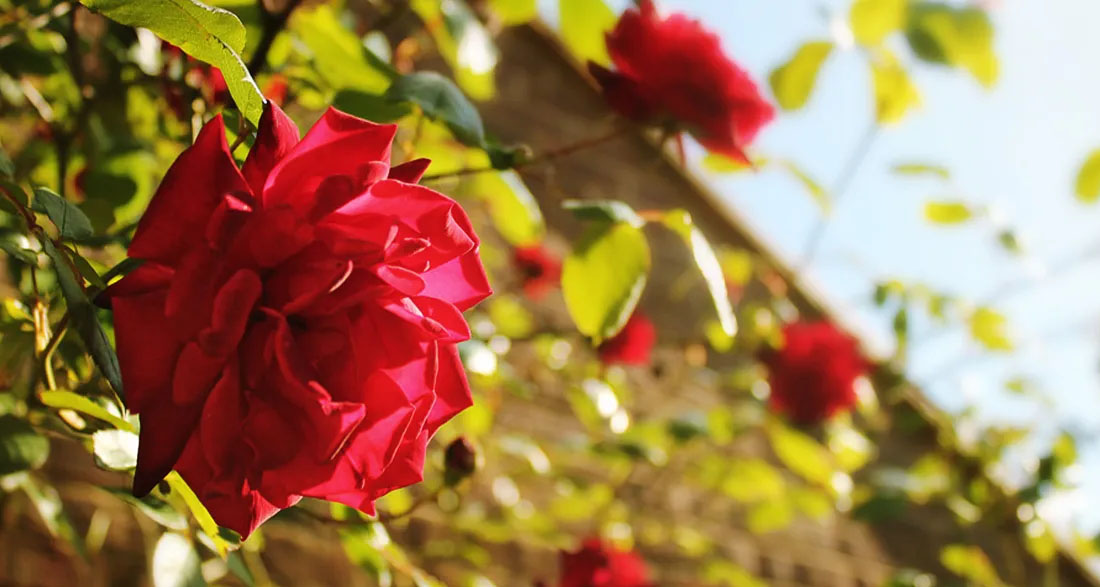
A year after Grandma passed away, I finally kept the promise I had made to her on the hardest night of my life.
I thought I was only going to dig up her favorite rosebush. I expected dirt under my nails, tangled roots, maybe a few tears and memories.
What I found instead uncovered a secret she had carried to her grave — and it set off a chain of events that changed everything.
My name is Bonnie. I’m 26 years old. And for most of my life, I’ve learned one important thing:
Family isn’t just about blood.
It’s about who shows up when it matters.
And who doesn’t.
I grew up in a small town in northern Michigan — the kind of place with cozy front porches, wood-burning stoves, and winters so long and cold that people leaned on each other just to get through them. Snow would pile up against the windows, and the whole world would turn white and quiet.
My mom, Mary, was a school nurse. Gentle. Calm. Always thinking of others.
And then there was her mother — my Grandma Liz.
Grandma wasn’t rich. She didn’t wear fancy clothes or go on big vacations. But she was strong in a quiet way. She was steady. Safe. When life felt scary, she was the one person who made everything feel okay.
Even her silence was comforting. When she sat in a room, it felt warmer.
After school, I would go straight to her house. I’d help her fold laundry or sit at the kitchen table while she sliced apples with the same old paring knife she had used since before I was born. The house always smelled like Ivory soap and cinnamon.
That was home.
But not everything in our family was peaceful.
There was also my Aunt Karen.
Karen was ten years older than my mom. The moment she graduated college, she left town — and she rarely came back unless it benefited her. She lived in a sleek condo in Chicago, wore expensive perfume that lingered long after she left, and acted like our small-town life was something she had outgrown.
Still, Grandma never said a bad word about her.
“She’s just finding her way,” Grandma would say softly, smoothing her skirt like the comment didn’t hurt.
But I saw it.
The sadness in her eyes.
The truth was, Grandma had given Karen everything. She worked extra hours to help pay for her college. She sent money when Karen struggled with rent. She paid for car repairs. She even loaned her money when Karen lost a job in her thirties.
And it was never enough.
Karen had this way of making Grandma feel small — like whatever she gave was the bare minimum.
The last time Karen visited before Grandma got sick, she walked through the house like a critic.
“This wallpaper is ancient,” she said, wrinkling her nose.
“And you still don’t have central air? I don’t know how you live like this.”
Grandma didn’t defend herself. She just kept cooking in the kitchen.
She made Karen’s favorite meal — chicken and dumplings.
Karen barely touched it.
When Grandma started dying, I was 25.
Watching someone you love slowly fade is like losing them piece by piece. The house felt different near the end. Quiet — but not peaceful. It felt like the walls were holding their breath.
One night, Grandma called me into her bedroom.
Her voice was so weak I had to kneel beside her to hear her.
“Sweetheart,” she whispered, her fingers brushing mine, “after I’m gone… promise me you’ll move my rosebush. Dig it up after a year. Don’t forget.”
My throat tightened. My chest hurt.
“I promise, Grandma,” I said, even though I didn’t understand why it mattered so much.
Her eyes were firm.
“And remember,” she added faintly, “the house — I’m leaving it to you and your mother. The lawyer has my will.”
Tears rolled down my face. I wanted to tell her everything would be okay.
But we both knew it wouldn’t be.
After she passed, everything fell apart.
Karen flew in looking like she stepped out of a magazine. Her black dress probably cost more than our monthly groceries. Her heels clicked loudly across the church floor.
At the wake, she walked around the house slowly, her eyes scanning the furniture like a real estate agent.
Three days after the funeral, she knocked on the front door holding a crisp folder.
Her voice was cold.
“The house is mine. Mom left it to me.”
Mom froze. “What are you talking about? She told us she left it to us.”
Karen smiled — but it didn’t reach her eyes.
“Well,” she said smoothly, “looks like she changed her mind.”
She held up a will we had never seen.
We searched everywhere for the one Grandma told us about — the filing cabinet, bedroom drawers, the attic. It was gone.
Vanished.
We talked about fighting it. But Karen had money. Expensive lawyers. Confidence. She made it feel pointless.
So we packed up our lives in cardboard boxes.
And just like that, the only home I had ever known was gone.
She turned it into a rental within weeks.
Mom and I moved into a small cottage across town. It wasn’t much, but it was ours.
Still, I couldn’t forget what Grandma said.
The rosebush.
It had always stood in the backyard near the white fence. Tall. Strong. Blooms the color of deep wine. Grandma used to talk to it while watering it.
Like it was an old friend.
One night, I stared at Karen’s name on my phone.
I didn’t want to call.
But I did.
She answered on the third ring.
“What?” she said sharply.
“I just… wanted to ask if I could take Grandma’s rosebush. The one in the back. I’d like to replant it at the cottage.”
Silence.
Then she scoffed.
“Roses? Take them, for all I care. Just don’t bother me with this nonsense.”
Click.
That was it.
I contacted the tenants — two kind women named Mia and Rachel.
“Of course,” Mia said gently. “Just tell us when you’re coming.”
The day I returned to Grandma’s yard felt strange.
Not because of the tenants. They were lovely.
But the house didn’t feel like hers anymore. The air felt colder. Distant.
Like it didn’t recognize me.
The rosebush stood in its corner, proud as ever.
I knelt down and whispered, “Alright, Grandma. I’m here.”
The soil was hard. Each push of the spade felt like a fight. Sweat ran down my back.
Then—
Clunk.
I froze.
That wasn’t a root.
That wasn’t a rock.
My heart pounded as I dropped to my hands and brushed dirt away.
Metal.
My breath caught.
This wasn’t just about a rosebush.
Grandma had buried something.
I uncovered a rusted iron box wedged deep in the soil. It was heavier than it looked. My hands shook as I pulled it free.
The clasp was corroded.
“Come on,” I muttered, pulling hard.
Snap.
It broke open.
Inside was a folded letter — slightly yellowed but protected — and beneath it, official documents tied with ribbon.
The handwriting on the envelope made my knees weak.
Grandma.
I unfolded it.
“Sweetheart,” it began. “If you’re reading this, then you did as I asked. You moved my roses. I knew you would.”
Tears blurred my vision.
“I left my will with the lawyer, but knowing your aunt, I decided to make sure nothing could be twisted. Enclosed is a signed copy of my will, along with this letter bearing my signature. This house belongs to you and your mother… If things turned ugly — here is everything you need to prove the truth.”
She knew.
She saw the betrayal coming.
I held that box like it was treasure.
“I’ll take you with me too,” I whispered to the rosebush. “Let’s go home.”
Back at the cottage, Mom looked tired but smiled.
“You get the rosebush?” she asked.
“I got more than that.”
When she read the letter, her hands trembled.
“Oh my God,” she whispered. “Bonnie… this is her will. With her signature.”
She cried the way she had the night Grandma died.
But this time, there was hope.
We met with a local attorney, Mr. Leary.
After reviewing everything, he looked up and said, “This isn’t just civil. This looks like fraud. Possibly forgery.”
Mom gasped. “Karen’s lawyer?”
“If the will was replaced with a fake,” he said firmly, “then yes.”
“What do we do?” I asked.
He leaned back.
“We take them to court.”
What followed was a storm of experts — handwriting analysts, forensic accountants, document specialists.
The forged signature didn’t match.
Bank records showed suspicious payments to Karen’s lawyer.
The trial lasted months.
Karen walked in confident. Designer clothes. Smug expression.
But as evidence piled up, I saw cracks form.
The day the judge ruled that Grandma’s original will was valid, Karen’s face went pale.
The house was ours.
The judge ordered her to pay damages — our rent, emotional distress.
The district attorney opened a criminal case.
Karen’s lawyer lost his license.
Karen faced charges for fraud and perjury.
When we stepped outside the courthouse, Mom squeezed my hand tightly.
“Grandma knew,” I whispered.
“She trusted you,” Mom said through tears. “And she was right.”
Weeks later, we walked back into our house.
It smelled faintly of lavender and old wood.
Mia and Rachel hugged me goodbye.
“You saved that house,” Rachel said softly. “Your grandma would be proud.”
“She is,” I replied.
We helped them rent our old cottage at a lower rate. It felt right.
Finally, I brought the rosebush home.
The backyard looked the same. White fence. Stone path.
This time, the soil felt soft. Welcoming.
As I placed the roots into the earth, something inside me settled.
Peace.
The sun painted the sky orange and pink.
I stood back and looked at the small green shoots.
For the first time since we lost Grandma, the silence felt full — not empty.
Her roses had led me to the truth.
Her love had protected us — even from beyond the grave.
The house was ours again.
And so was the garden.