

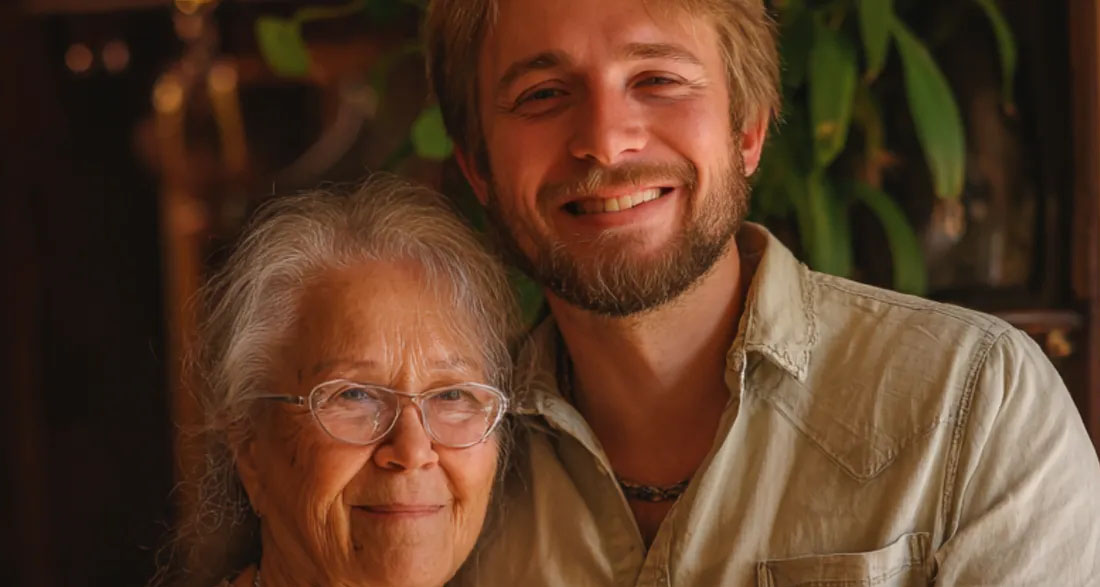
The day Claire died, it felt like the whole house forgot how to breathe.
Sunlight still streamed through the living‑room windows like it always did, painting soft gold across the rug and warming her favorite armchair. But the light felt wrong now — like it didn’t know where Claire had gone or where it was supposed to land without her.
I stood in the doorway, staring at that chair as if it might speak, as if it remembered her better than I did.
“You’ll never win an argument standing in a doorway, James,” she used to tell me with that teasing little smirk, lowering her book just enough to raise one eyebrow. “Come sit and face the music with me.”
I could still hear her voice so clearly that it froze me in place.
She said that exact line the day I suggested painting the kitchen beige.
“Beige?” she gasped dramatically, holding a hand over her heart. “James, darling, we are not beige people.”
And she’d been right. We were everything but beige — loud, messy, dramatic, stubborn… and completely in love.
Now she was gone.
The silence she left behind wasn’t empty. It had weight — heavy and suffocating. It pressed against my ribs and settled into every corner of the house.
We had raised two children, Pete and Sandra. We had fought over parenting tips, made up over tea in bed, and whispered nonsense under blankets late at night. All that history, all that life — and suddenly, it was like someone had ripped the final pages out of our book.
Her death had come too fast. Much too fast.
Just before it happened, she had planned a weekend away at a little inn near the coast.
“I want a room with a balcony,” she told me while folding her favorite cardigan. “I want to sit outside with a book, a cup of tea, and no emails at all.”
“You? No emails?” I teased. “You haven’t turned your phone off since 2008.”
She slipped a paperback into her tote and smirked at me.
“Then it’s about time, isn’t it?”
But we never made it to that inn.
Instead, we spent the weekend in a hospital room, surrounded by white walls and the soft, endless beeping of machines.
Her body gave out before any of us could catch up.
On her last night, her hand slipped into mine, light as a feather.
“You don’t have to say anything,” she whispered. “I already know.”
And she did. She always did.
After the funeral, I wandered around the house like a ghost. Her chamomile tea sat cold on her nightstand. Her glasses rested neatly beside the last book she’d read. It looked like she had just stepped out of the room.
But she wasn’t coming back.
I couldn’t move anything she left behind. Not yet.
Three days later, while searching for her will, I found the box.
It was buried deep in our bedroom closet under winter coats and old photo albums. Someone had taped it recently — the edges looked too clean, too new.
I pulled it out and set it on the bed. My hands were shaking, but I didn’t know why.
Inside, I expected to find letters or trinkets.
Maybe an anniversary card.
Maybe a grocery list in her handwriting.
Instead, the first thing I saw was a manila envelope.
I opened it.
A divorce decree.
My breath stopped.
Her name. My name. A judge’s signature dated twenty‑one years earlier.
My own signature was shaky, uneven.
Claire’s was perfectly graceful.
I traced her name with one finger and felt my entire world tilt sideways.
“Claire,” I whispered, my voice cracking. “What… what is this?”
I tried to tell myself it was some draft we never filed. A mistake. A misunderstanding. But everything was too official. Too real.
Then it hit me: the accident.
The sleet storm on Route 5. The guardrail. The hospital. The coma. The surgeries. The memory loss.
And Claire — who always protected me — filling in only what she thought I was ready to know.
Maybe this was something she didn’t want to reopen.
My chest tightened.
We had celebrated our 30th anniversary just last year. We toasted with wine and laughed. She said,
“We didn’t run, my love. Even when we wanted to.”
Now that line felt heavier. Sadder.
I dug deeper into the box.
Another envelope.
A birth certificate.
Lila T.
Female. Born May 7, 1990.
Mother: Claire T.
Father: Unlisted.
My heart slammed into my ribs.
A daughter.
Claire had a daughter before we married. A child she had never told me about. A whole life she had lived without me.
My head spun.
What else had she hidden?
Was the divorce because of this?
Had I asked for it?
Had she?
Before I could even breathe properly, someone knocked at the door.
It wasn’t soft or hesitant. It was firm, purposeful — like someone who knew exactly why he was there.
I opened the door to a man in a charcoal suit holding an envelope.
“James?” he asked. “Are you Claire’s husband?”
“Yes.”
“I’m Mr. Johnson. Your wife’s attorney. May I come in?”
I stepped aside silently.
He handed me an envelope with my name on it — written in Claire’s familiar loops and curves.
The sight of her handwriting cracked something inside me.
I opened it slowly.
Her voice spilled out through the page.
“My dearest James,
If you’re reading this, then I’m gone.”
My throat closed.
She told me about Lila — the baby she had at 20, the choice she made to place her with another family, the years she spent wondering if she did the right thing.
She told me she found Lila again before my accident.
And she told me she filed for divorce because she felt guilty — guilty for her secrets, guilty for our distance, guilty for how hard everything had become.
“You forgot about the divorce.
I didn’t correct you.
I couldn’t.
I loved you too much.”
Then she wrote the words that broke me:
“Lila has had a difficult life.
Please reach out to her.
You can be her father… if you want to be.
I hope you will.”
When I finished reading, my hands were trembling.
“She never told me any of this,” I whispered.
Mr. Johnson nodded sadly.
“She said she didn’t want to break the life you rebuilt together,” he replied.
“She did that… for me?”
“She loved you, James. All the way through.”
Four days passed before I called Lila.
I stared at her number forever before finally pressing the button.
“Hello?” she answered sharply, defensive.
“Hi… is this Lila?”
“Yes. Who’s this?”
“My name is James,” I said quietly. “I knew your mother, Claire.”
Silence.
“She passed away last week,” I added softly. “She left something for you.
And… I think I might be your father.”
Another long, painful silence.
I rushed to add, “I don’t know for sure. She had you before we were married. But I’d like to meet you. If you want that.”
She hesitated, then said, “Where?”
We met a week later in a small café. I sat by the window, clutching a mug that had long gone cold.
When she walked in, my heart jolted.
Claire was in her eyes. In her chin. In her posture.
“You’re him,” she said simply as she sat down.
We talked carefully, like stepping over broken glass.
“She called me once,” Lila said quietly. “She just asked if I was okay.”
“She wanted more,” I whispered. “She just didn’t know how to begin.”
Later, in her small kitchen, she told me her truth.
Her life had been rough. Survival had pushed her into adult films.
She met my eyes, steady and unashamed.
“I’m not broken,” she said. “I’m just tired of pretending I haven’t been through hell.”
“I’m not here to fix you,” I told her. “I’m just here. If you want me to be.”
She held my wrist before I stood up.
“You can stay,” she murmured. “And… we can do a DNA test. If you want.”
But I shook my head gently.
“I’ll stay no matter what the results say. None of this is your fault. Or Claire’s.”
That was the start.
Over the next months, I helped her find a safer apartment. We picked curtains together, argued over toaster ovens, and built something fragile but real.
Eventually, she met Pete and Sandra.
It was awkward — painfully awkward — but they showed up with open hearts.
Sandra hugged her first.
Pete made too many jokes.
Lila actually laughed.
One evening, I stood on the porch watching the three of them sip hot chocolate from mismatched mugs. Lila was leaning on Sandra’s shoulder. Pete was telling some ridiculous story.
And something inside me shifted.
My grief didn’t disappear.
But it made space.
Claire was everywhere — in my children, in Lila, in the strange, unexpected family we were building.
And slowly, painfully, beautifully…
I began to understand:
This had been her plan all along.
To bring us together.
To give us all a chance at healing.
To turn her secrets into something new.
And maybe—just maybe—into something good.